





Aladdin
Aladdin is a well-known character from the Middle Eastern folk tale collection *One Thousand and One Nights* (Arabian Nights), though the story was actually added to the collection by a French translator in the 18th century. The tale follows a poor young man who gains wealth
Ure Dam
The Ure Dam, located in Maharashtra, India, is a significant irrigation and water storage project constructed across the Ure River. Built primarily to support agriculture in the region, the dam has played a vital role in managing water resources for nearby farmlands and communities. Its construction reflects efforts to enhance local water security and boost rural livelihoods.
Oshima Dam
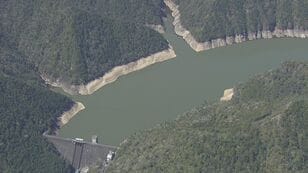
Oshima Dam is a concrete gravity dam located in Yamaguchi Prefecture, Japan, constructed primarily for flood control and water supply. Completed in 1965, it was built on the Oshima River as part of regional infrastructure development following post-war reconstruction efforts. The dam also helps manage water resources for nearby communities and agricultural areas.
Toyogawa irrigation system
The Toyogawa irrigation system is a historic network of canals and aqueducts in Aichi Prefecture, Japan, constructed in the 17th century to channel water from the Toyogawa River to arid farmlands. Built under the direction of the daimyo of the Toyohashi domain, it transformed the region into productive agricultural land and remains a vital water source today. The system is recognized as an important cultural heritage site, showcasing early modern Japanese engineering and sustainable water management.
Nagoya
Nagoya is a major industrial and cultural hub in central Japan, best known for its role in the country’s feudal history as the seat of the powerful Owari branch of the Tokugawa clan. The city’s iconic Nagoya Castle, originally built in 1612, was largely destroyed in World War II but has been partially reconstructed, symbolizing the city’s resilience. Today, Nagoya blends its historical heritage with modern innovation, serving as a center for manufacturing, including the automotive and aerospace industries.
Aichi
Aichi is a prefecture in central Japan, historically significant as the heartland of the powerful Oda, Toyotomi, and Tokugawa clans during the Sengoku period. Its capital, Nagoya, is home to the iconic Nagoya Castle, originally built in 1612, and the Atsuta Shrine, one of Shinto’s most important shrines. Today, Aichi is a major industrial and cultural hub, blending samurai-era heritage with modern innovation.
Related news

“Heatstroke alert issued for three prefectures in Tokai region: Expected highs of 37°C in Gifu City, 36°C in Nagoya and Iga City, 35°C in Takayama City”
Today's expected high temperature in Nagoya is 36°...

“Police learn sketch drawing techniques; 33 out of 163 sketches helped identify suspects last year, proving traditional methods remain vital for solving cases in Aichi Prefecture.”
Even though it's analog, it's quite effective.
(Wi...

27-year-old son dies day after COVID-19 vaccination: “He texted saying he had a fever over 40°C and was suffering” — families suddenly bereaved.
A 27-year-old son died the day after receiving the...

Shohei Ohtani hits to left field, Dodgers win 5-2!
Here’s a quick update on Game 3 against the Giants...

City Sues Planning Company Over Local Film Dispute, Demands Return of Subsidy in Gifu Prefecture’s Seki City
The city of Seki in Gifu Prefecture has filed a la...