A man has been arrested on suspicion of fraudulently obtaining points that were only available to people who purchased toys. The method involved…
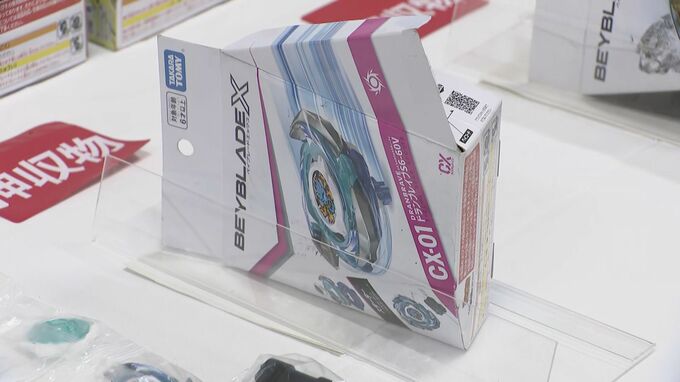
Takara Tomy’s “Beyblade X” product offers “Bey Points” when customers purchase the item and scan the QR code printed inside the box. These points provide benefits such as receiving limited edition products.
A 32-year-old company employee from Nakagawa Ward, Nagoya, allegedly exploited this system by opening boxes without purchasing the products at a store in Minato Ward, and fraudulently obtained points for 24 items. He has been arrested on suspicion of electronic computer fraud.
The incident came to light when the store reported to police that legitimate customers couldn’t scan the QR codes, as each code can only be scanned once. The suspect has admitted to the allegations.
Beyblade X
“Beyblade X” is not a physical place or cultural site, but a modern iteration of the long-running “Beyblade” franchise of spinning top toys and media. Launched in 2023, it introduces new high-speed mechanics and is centered around the fictional X Tower stadium, a key location in its accompanying anime series and competitive battles. Its history is part of the broader Beyblade brand, which began in 1999 and has evolved through multiple generations of toys, manga, and animated shows.
Bey Points
I am unable to find any significant cultural, historical, or geographical site known as “Bey Points.” It is possible that there may be a spelling error or that it refers to a very localized or lesser-known place. If you have more context or can confirm the name, I would be happy to try again.
QR code
A QR code (Quick Response code) is a two-dimensional barcode invented in 1994 by the Japanese company Denso Wave for tracking automotive parts during manufacturing. Its design allows it to be scanned quickly from any direction and to store significantly more data than a traditional barcode. Originally used for industrial logistics, its use has since expanded globally for commercial tracking, marketing, and mobile payments.
Nakagawa Ward
Nakagawa Ward is a residential and commercial ward located in Nagoya, Japan, established in 1994 when the city was reorganized into political wards. Historically, the area was part of a network of rivers and canals that were vital for transportation and commerce during the Edo period, contributing to Nagoya’s development as a castle town. Today, it is known for its quiet neighborhoods and the scenic Shonai River, which runs through it.
Nagoya
Nagoya is a major city in central Japan, historically known as the seat of the powerful Owari Tokugawa clan during the Edo period. Its most famous cultural site is Nagoya Castle, a symbol of the city built in the early 17th century, though the current main keep is a modern reconstruction. The city is also a prominent industrial and economic hub, home to companies like Toyota.
Minato Ward
Minato Ward is a special ward in Tokyo, Japan, known as a major commercial and business hub hosting numerous embassies, corporate headquarters, and the iconic Tokyo Tower. Historically, it was a collection of small fishing villages before developing into a key port area during the Edo period, with its modern identity solidifying post-World War II as a center for international business and diplomacy.
electronic computer fraud
“Electronic computer fraud” is not a physical place or cultural site but a category of crime. It refers to illegal activities, such as hacking, phishing, or deploying malware, conducted through digital systems to steal data or money. This type of crime emerged with the rise of interconnected computer networks and has evolved alongside advancements in technology.