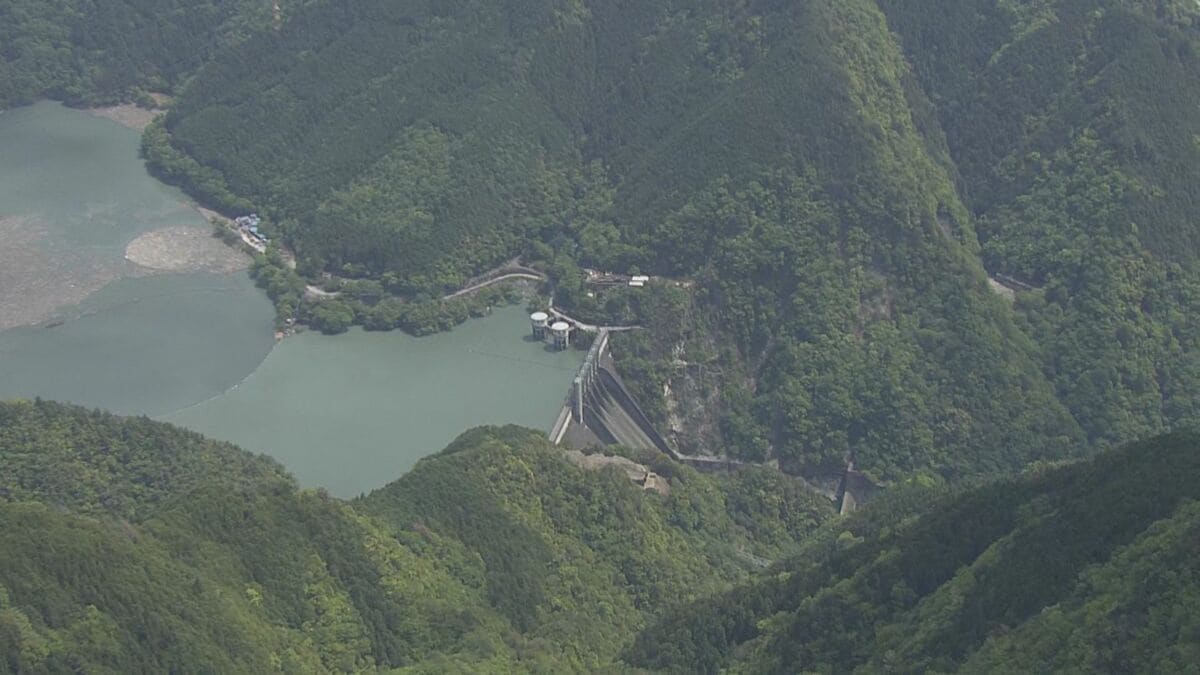
In the Toyokawa irrigation system, which continues to face water shortages, emergency water diversion from the Sakuma Dam in Shizuoka Prefecture began on the 25th, ahead of the full-scale rice planting season.
In the Toyokawa irrigation system, which supplies water to the Higashi Mikawa region, the largest water source, the Ure Dam, dried up last month, leading to a severe water shortage.
Following subsequent rainfall, as of midnight on the 25th, the overall water storage rate in the Toyokawa irrigation system recovered to 63.6%. However, this is still only about 70% of the average annual level, and water conservation continues.
Ahead of the upcoming full-scale rice planting, emergency water diversion from the Sakuma Dam, which uses the Tenryu River in Shizuoka Prefecture as its water source, began at 10 a.m. on the 25th to supply water to the Toyokawa irrigation system. The emergency diversion will continue until the 5th of next month.
Water diversion from the Sakuma Dam is typically conducted from May to September, and this is the first time water has been supplied in April.
Toyokawa Irrigation System
The Toyokawa Irrigation System, located in Aichi Prefecture, Japan, is a historic network of canals and waterways constructed during the Edo period (early 17th century) to transform arid land into fertile farmland. It was commissioned by the local feudal lord to channel water from the Toyokawa River, significantly boosting agricultural productivity and supporting regional development. Today, it remains an important cultural heritage site, recognized for its engineering ingenuity and enduring role in the area’s rural landscape.
Sakuma Dam
Sakuma Dam is a large hydroelectric dam located on the Tenryū River in Hamamatsu, Shizuoka Prefecture, Japan. Completed in 1956, it was a major post-war infrastructure project designed to meet the region’s growing energy demands and was, at the time, one of the largest dams in Asia. The dam created Lake Sakuma, a popular recreational area, and played a significant role in Japan’s industrial recovery and development.
Ure Dam
Ure Dam is a small but historically significant dam located on the Ure River in central Serbia, near the town of Koceljeva. Built in the late 19th century (completed around 1900), it was originally constructed to supply water to a nearby sugar factory and later contributed to local irrigation and flood control. Today, the dam and its surrounding area are recognized for their industrial heritage and scenic value.
Tenryu River
The Tenryu River is a major river in central Japan, flowing 213 kilometers from Lake Suwa in Nagano Prefecture to the Pacific Ocean in Shizuoka Prefecture. Historically, it served as a vital transportation route for timber during the Edo period, with logs floated downstream to coastal towns. Today, it is known for its scenic gorges, rafting, and the dramatic Tenryu Gorge, which showcases the region’s natural beauty.
Toyokawa irrigation system
The Toyokawa irrigation system is a historic water management network in Japan, constructed in the early 20th century to bring water from the Toyokawa River to the arid Mikawa Plain for agricultural use. Developed through the efforts of local farmers and engineers, the system features canals, tunnels, and aqueducts, and played a crucial role in transforming the region into fertile farmland. Today, it is recognized as an important cultural and engineering heritage site, reflecting early modern Japanese irrigation technology.
Sakuma Dam
The Sakuma Dam is a large hydroelectric dam located on the Tenryū River in Shizuoka Prefecture, Japan. Completed in 1956, it was a major post-war engineering project that helped power Japan’s rapid industrial recovery. The dam also created Lake Sakuma, a popular recreational area, and played a key role in flood control and water supply for the region.
Ure Dam
Ure Dam is a small, historic dam located on the Ure River in the town of Cervera de Pisuerga, in the Palencia province of northern Spain. Built in the mid-20th century, it was primarily constructed for hydroelectric power generation and water regulation, playing a key role in the region’s industrial development. Today, the dam and its surrounding reservoir are also known for recreational activities like fishing and boating, set within a scenic rural landscape.
Tenryu River
The Tenryu River is a major river in central Japan, flowing from Lake Suwa in Nagano Prefecture through the Akaishi Mountains to the Pacific Ocean in Shizuoka Prefecture. Historically, it has been a vital waterway for transporting timber and goods, and its scenic gorges, like the Tenryu-kyo, have long been celebrated in Japanese art and literature. Today, the river is also known for its rafting and as a source of hydroelectric power.
Toyokawa River
The Toyokawa River flows through Aichi Prefecture, Japan, and has historically been vital for irrigation and flood control in the region. Its waters support rice cultivation and local ecosystems, and the river is also known for the Toyokawa Bridge, a notable Meiji-era structure. Today, it remains an important natural and cultural landmark, with riverside parks and walking paths enjoyed by locals and visitors.
Lake Sakuma
Lake Sakuma is a man-made reservoir located in Shizuoka and Aichi Prefectures, Japan, created by the construction of the Sakuma Dam on the Tenryū River, which was completed in 1956. The dam was built primarily for hydroelectric power generation and flood control, and its creation submerged parts of the former town of Sakuma. Today, the lake is a popular spot for outdoor recreation, including boating and fishing, and offers scenic views of the surrounding mountains.
Tenryu Gorge
Tenryu Gorge is a scenic valley located along the Tenryu River in Japan, renowned for its dramatic cliffs, emerald waters, and seasonal beauty. Historically, the gorge has been a vital transportation route since the Edo period, used for logging and river trade, and was later designated as part of the Tenryu-Okumikawa Quasi-National Park. Today, it is a popular destination for boat cruises and hiking, offering visitors a glimpse into both natural splendor and cultural heritage.
Lake Suwa
Lake Suwa is a scenic lake located in Nagano Prefecture, Japan, known for its stunning natural beauty and cultural significance. Historically, it has been a site of religious importance, with the Suwa Taisha shrine complex situated nearby, and it features a unique natural phenomenon called “omiwatari,” where ice ridges form across the lake in winter. The area has long been a popular destination for hot springs and tourism, blending ancient traditions with modern recreation.