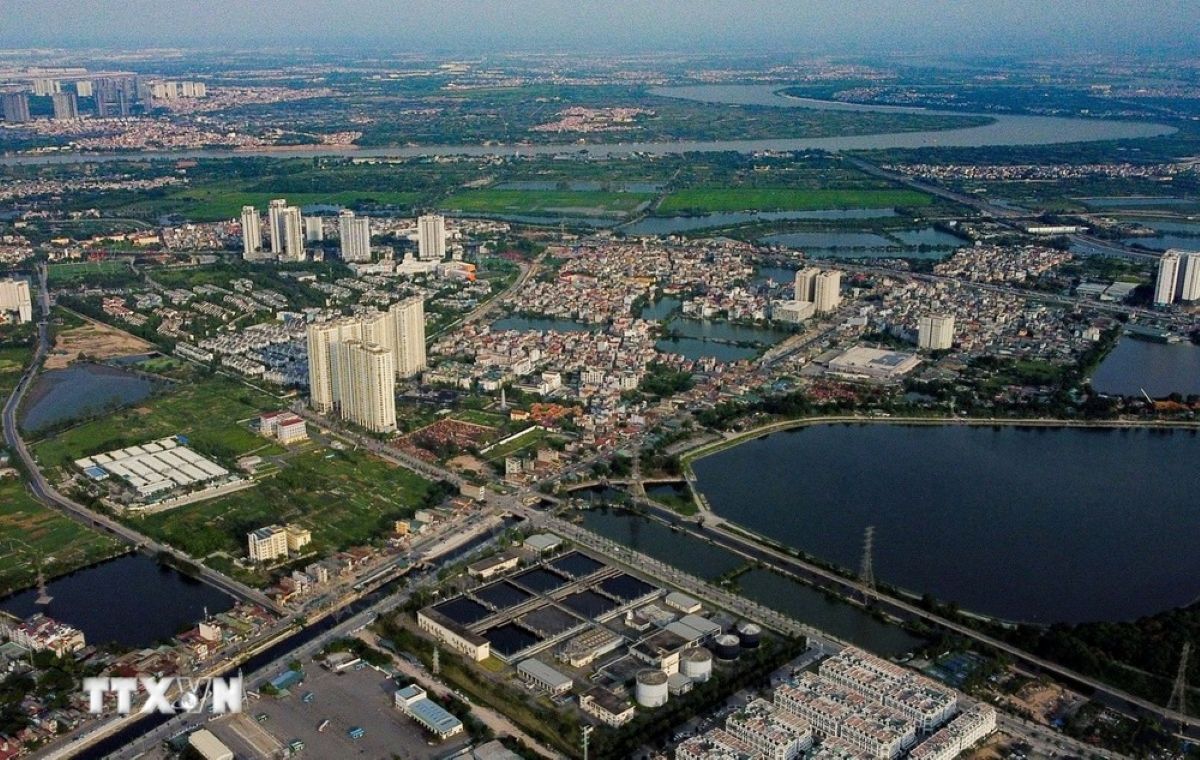
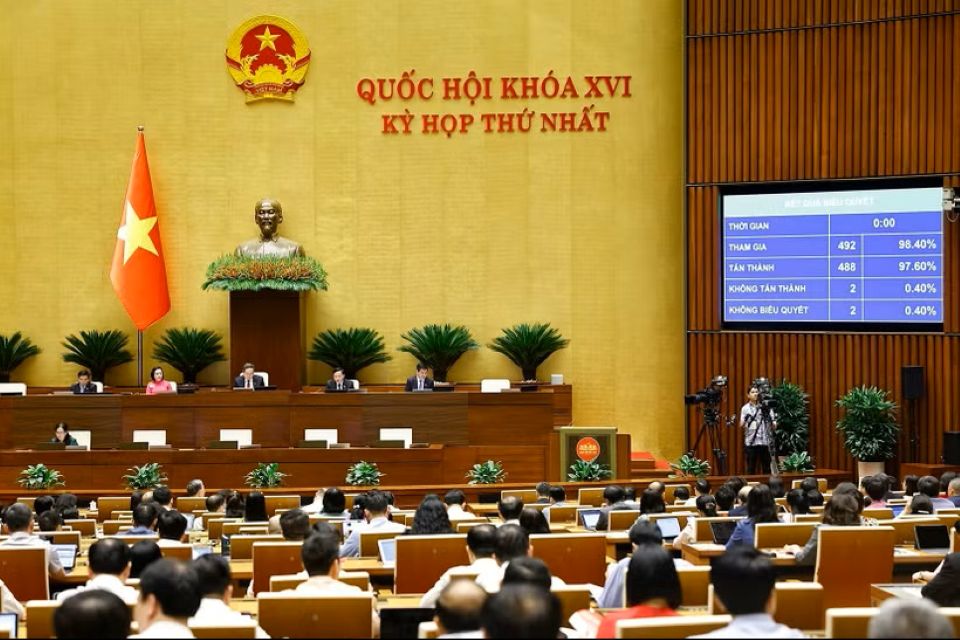
HCMC – The National Assembly has approved the revised Capital Law, granting a broad set of special powers and financial mechanisms to address infrastructure bottlenecks and drive long-term growth.
The law, passed on April 23, introduces 199 special powers for Hanoi City, marking one of the most comprehensive decentralization efforts for the capital city to date. The revised Capital Law will take effect on July 1, 2026.
The legislation comes as Hanoi comes under mounting pressure from traffic congestion and environmental pollution. A key feature is the formal adoption of transit-oriented development (TOD), allowing the city to retain all additional revenues generated from land value increases and infrastructure improvement fees within TOD areas to reinvest in urban rail projects.
Hanoi will also be entitled to retain 100% of revenues from land use fees and land leases, and, for the first time, income from carbon credit transactions, providing a significant boost to its financial capacity for sustainable development.
The law permits Hanoi to pilot new governance models and policies under a controlled framework. It introduces legal definitions for underground and elevated urban spaces, opening the door to multi-layer urban development. To attract investment, companies engaged in research and development (R&D) in Hanoi will be eligible for tax incentives of up to 200% of actual expenses.
The law also grants authorities stronger enforcement tools, including the suspension of electricity and water services for projects that violate planning regulations or fail to meet fire safety standards. Another key provision is the establishment of a capital region development fund to strengthen coordination between Hanoi and neighboring localities in addressing regional infrastructure and environmental challenges. The law also includes safeguards for public officials, exempting them from legal liability when acting in accordance with procedures for the common good, in an effort to encourage innovation and initiative-taking governance.