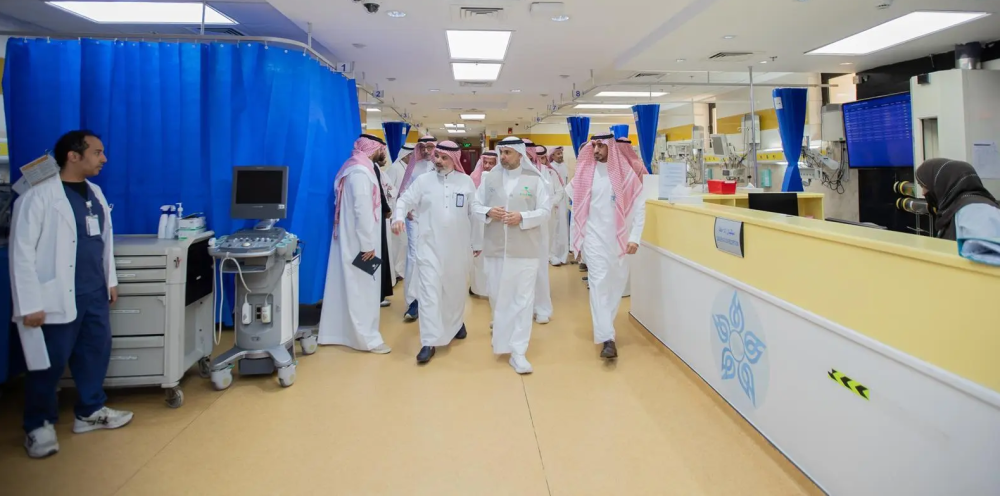
The Minister of Health, Fahd bin Abdulrahman Al-Jalajel, conducted a two-day inspection of several health facilities in Mecca to assess their readiness for the Hajj season of 1447 AH. This reflects the commitment of the government of the Custodian of the Two Holy Mosques and His Highness the Crown Prince to provide the best healthcare for the guests of God and to ensure their health and safety, in line with the goals of the Health Sector Transformation Program, which is part of Saudi Vision 2030.
His Excellency emphasized that the readiness of health facilities in Mecca is a top priority, noting that operational plans focus on enhancing capacity, integrating preventive, therapeutic, and emergency services to ensure comprehensive healthcare for the guests of God. This includes improving the readiness of medical and technical staff and coordinating roles across the health system to handle various cases efficiently and professionally, ensuring the safety of the guests of God during their rituals.
Integrated Services
The tour in the central area included visits to Ajyad Hospital, Al-Jiwar Hospital, as well as the Command and Control Center of the General Authority for the Care of the Two Holy Mosques. It also reviewed the readiness of emergency service providers from the private sector. The tour extended to include King Faisal Hospital, Mecca General Hospital, King Abdulaziz Hospital, and Al-Noor Hospital.
The tour also included a visit to King Abdullah Medical City to assess its readiness as a leading referral center for specialized care and its role in supporting the health system during the Hajj season. During the visit, advanced medical technologies used to facilitate monitoring the health status of the guests of God were showcased, helping to speed up procedures and improve response quality.
During his inspection tours, His Excellency reviewed the operational readiness and integration of health services provided to the guests of God. He examined the preparedness of emergency and intensive care departments, plans for handling critical cases, rapid response mechanisms, as well as the integration of the command and control system and the level of coordination between health and emergency authorities to ensure quick response and efficient service delivery during the Hajj season.
These tours are part of the Ministry of Health’s commitment to monitoring the field readiness of health facilities and enhancing the integration of health services across all locations to achieve the highest levels of health safety during the Hajj season of 1447 AH.
Mecca
Mecca is the holiest city in Islam, located in western Saudi Arabia. It is the birthplace of the Prophet Muhammad and the site of the Kaaba, the sacred structure within the Masjid al-Haram mosque that Muslims face during prayer. Every year, millions of pilgrims visit Mecca to perform the Hajj, a mandatory religious duty for Muslims, a practice that dates back to the time of Abraham.
Ajyad Hospital
Ajyad Hospital is a medical facility located in Mecca, Saudi Arabia, near the Grand Mosque. Historically, it was established to provide healthcare services to pilgrims performing Hajj and Umrah, playing a vital role in managing health emergencies and outbreaks during the pilgrimage seasons. Over time, it has become a key part of the city’s healthcare infrastructure, supporting both residents and visitors.
Al-Jiwar Hospital
Al-Jiwar Hospital, located in the historic Al-Jiwar neighborhood of Mecca, Saudi Arabia, was established in the early 20th century to provide medical care for pilgrims during the Hajj season. It played a vital role in managing health crises and outbreaks among the large influx of visitors. Over time, the hospital underwent expansions and modernizations, reflecting the region’s growing importance in serving Muslim pilgrims.
King Faisal Hospital
King Faisal Hospital is a major medical institution located in Kigali, Rwanda, named after the late King Faisal bin Abdulaziz Al Saud of Saudi Arabia, whose government funded its construction. Opened in 2011, it serves as a leading referral and teaching hospital, offering specialized healthcare services and contributing to the development of Rwanda’s medical infrastructure. The hospital reflects the strong diplomatic and health cooperation between Rwanda and Saudi Arabia.
Mecca General Hospital
Mecca General Hospital, also known as King Faisal Hospital in Mecca, is a major medical facility serving pilgrims and residents in the holy city of Mecca, Saudi Arabia. Its history is closely tied to the needs of the millions of Hajj and Umrah visitors, leading to expansions and modernization to handle large-scale emergencies and routine care. The hospital plays a critical role in providing healthcare during the annual pilgrimage, reflecting the kingdom’s commitment to the well-being of worshippers.
King Abdulaziz Hospital
King Abdulaziz Hospital, located in Makkah, Saudi Arabia, was established in the late 20th century to provide advanced medical care, particularly during the Hajj pilgrimage. It was named after King Abdulaziz Al Saud, the founder of modern Saudi Arabia, and has since become a key healthcare institution in the region. The hospital is known for its specialized services and role in managing public health during large religious gatherings.
Al-Noor Hospital
Al-Noor Hospital, located in Mecca, Saudi Arabia, is a major medical facility known for providing healthcare services to pilgrims and residents. Established in the late 20th century, it has grown to become a key institution in the region, offering specialized care and emergency services. Its location near the holy sites underscores its role in supporting the health needs of millions of visitors during Hajj and Umrah.
King Abdullah Medical City
King Abdullah Medical City (KAMC) is a leading tertiary healthcare institution located in Mecca, Saudi Arabia, established to provide specialized medical care for pilgrims and the local population. It was inaugurated in 2009 as part of the kingdom’s efforts to modernize its healthcare infrastructure and support the growing demands of the Hajj and Umrah seasons. The facility is known for its advanced treatments in oncology, cardiology, and emergency medicine, serving as a vital resource during mass gatherings.