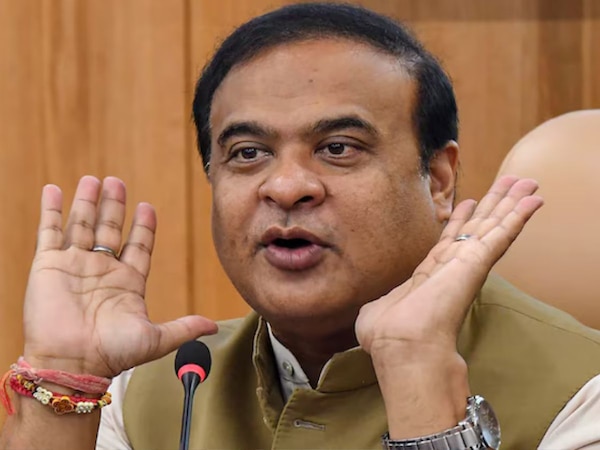
Bengal will teach a lesson to those attacking BJP candidates, CM Himanta vents anger.
Himanta Biswa Sarma
Himanta Biswa Sarma: The Chief Minister of Assam, Himanta Biswa Sarma, made a major political statement after the first phase of voting in the West Bengal Assembly elections. He stated that if the Bharatiya Janata Party (BJP) comes to power in the state, those who attack the party’s candidates and workers will be taught a lesson. Sarma also made a strong claim about the BJP’s electoral prospects. He said the party is going to win at least 100 seats in Assam and 200 seats in West Bengal. His statement came as the first phase of voting in Bengal concluded at 6 PM on Thursday.
People participated enthusiastically in the voting process
According to the latest data from the Election Commission, the first phase in West Bengal recorded a voter turnout of 91.91 percent, which is significantly higher compared to previous phases. Sarma described this high turnout as a sign of the strength of the democratic process. Several districts in the state recorded over 90 percent voter turnout. South Dinajpur led with 94.85 percent, while districts like Cooch Behar (94.54%), Birbhum (93.70%), Jalpaiguri (93.23%), and Murshidabad (92.93%) also saw heavy voting.
Also read:
Sarma praised the Chief Election Commissioner
Sarma also heavily praised the Chief Election Commissioner, Gyanesh Kumar. Appreciating his contribution to the Special Intensive Revision (SIR) process, he said that he should be awarded the Bharat Ratna. Additionally, he suggested that this process should also be implemented in Assam. It is noteworthy that voting for the remaining 142 assembly seats in West Bengal is scheduled for April 29, while counting of votes for all phases will take place on May 4. Amidst heavy voting and political accusations, the electoral atmosphere in the state remains heated.
Meanwhile, it is worth noting that Bengal and Tamil Nadu recorded historic voter turnout in the first phase. An unprecedented number of voters participated in both states, making this electoral phase one of the highest-turnout phases ever. According to the Election Commission, the first phase in West Bengal recorded a voter turnout of 91.78%, the highest since 1947. Similarly, Tamil Nadu also saw a new record with 84.69% voter turnout. Previously, in 2011, West Bengal had recorded 84.72% and Tamil Nadu 78.29% voter turnout.
Women showed greater participation
The most notable aspect of this election was the increased participation of women. Female voters outnumbered male voters in both states. In West Bengal, the female voter turnout was 92.69%, while male turnout was recorded at 90.92%. Similarly, in Tamil Nadu, female participation was 85.76%, higher than the male participation of 83.57%. The Election Commission also highlighted the notable participation of third-gender (transgender) voters, with 60.49% turnout in Tamil Nadu and 56.79% in West Bengal.
West Bengal
West Bengal is a culturally rich state in eastern India, known for its vibrant arts, literature, and history. It was once the center of British colonial power in India, with Kolkata serving as the capital of British India until 1911, and played a key role in the Indian independence movement. Today, it is famous for its diverse heritage, including the Sundarbans mangrove forest, the Darjeeling Himalayan tea plantations, and the annual Durga Puja festival.
Assam
Assam, a state in northeastern India, is renowned for its rich biodiversity, tea plantations, and the mighty Brahmaputra River. Historically, it was the seat of the powerful Ahom Kingdom, which ruled for nearly 600 years until the British annexation in the 19th century. Today, it is celebrated for its vibrant culture, including Bihu festivals, and is home to the famous Kaziranga National Park, a UNESCO World Heritage site.
South Dinajpur
South Dinajpur, a district in the Indian state of West Bengal, was historically part of the larger Dinajpur region, which was divided during the Partition of India in 1947. The area is known for its rich cultural heritage, including ancient temples and archaeological sites like the 11th-century Baneswar Shiva Temple. Today, it is primarily an agricultural region, with a blend of Hindu and Muslim traditions shaping its local customs and festivals.
Cooch Behar
Cooch Behar, a city in the Indian state of West Bengal, was the capital of the princely state of Cooch Behar under the Koch dynasty. Its history dates back to the 16th century, and it is renowned for the magnificent Cooch Behar Palace, built in 1887 in a unique blend of classical European and Mughal architectural styles. Today, the city is a cultural hub, known for its royal heritage, temples, and the annual Rash Mela festival.
Birbhum
Birbhum is a district in the Indian state of West Bengal, renowned for its rich cultural heritage and historical significance. It is famously home to Shantiniketan, the university town established by Nobel laureate Rabindranath Tagore, which serves as a hub for art, music, and education. The region also features ancient temples, such as those in the town of Surul, and a history tied to the 19th-century Bengal Renaissance and the Santal rebellion.
Jalpaiguri
Jalpaiguri is a city in the Indian state of West Bengal, located in the foothills of the eastern Himalayas. Historically, it gained prominence during the British colonial era as a key administrative and commercial center for the region’s tea and timber industries. Today, it serves as a gateway to the Dooars region and is known for its natural beauty and cultural diversity.
Murshidabad
Murshidabad, located in the Indian state of West Bengal, was the capital of Bengal during the 18th century under the Nawabs. It served as the seat of power for the Bengal Subah and was a major center of trade, politics, and culture, most notably under Nawab Murshid Quli Khan, who renamed the city after himself. The city is home to historic landmarks like the Hazarduari Palace and the Katra Mosque, reflecting its rich Mughal and colonial heritage.
Tamil Nadu
Tamil Nadu is a state in southern India renowned for its rich Dravidian culture, classical arts, and ancient temple architecture. Its history spans millennia, with powerful dynasties like the Cholas, Pandyas, and Pallavas ruling the region and leaving behind magnificent temples such as the Brihadeeswarar Temple and Meenakshi Amman Temple. Today, it remains a vibrant center for Tamil language, literature, and traditional festivals.