Sudanese refugees in Chad escaped war only to fall into a hell of thirst and hunger.
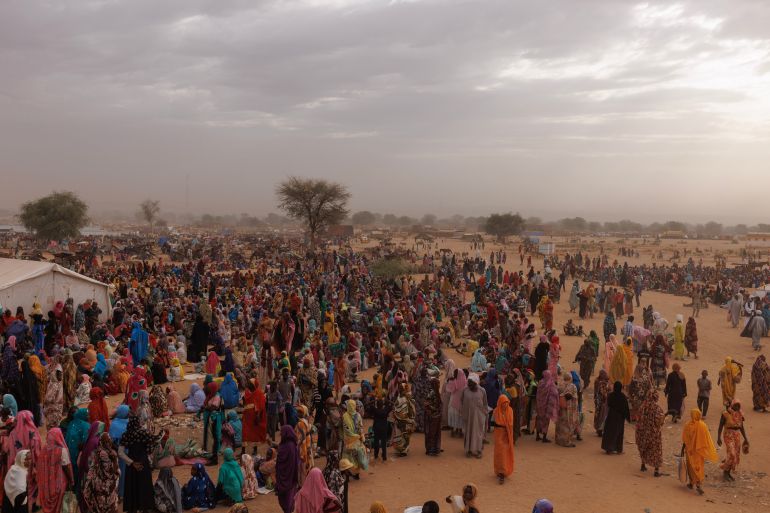
Hundreds of thousands of Sudanese refugees who fled the war in their country face harsh humanitarian conditions, with temperatures nearing 50 degrees Celsius amid severe shortages of food and water supplies and disease outbreaks, making their survival a daily struggle.
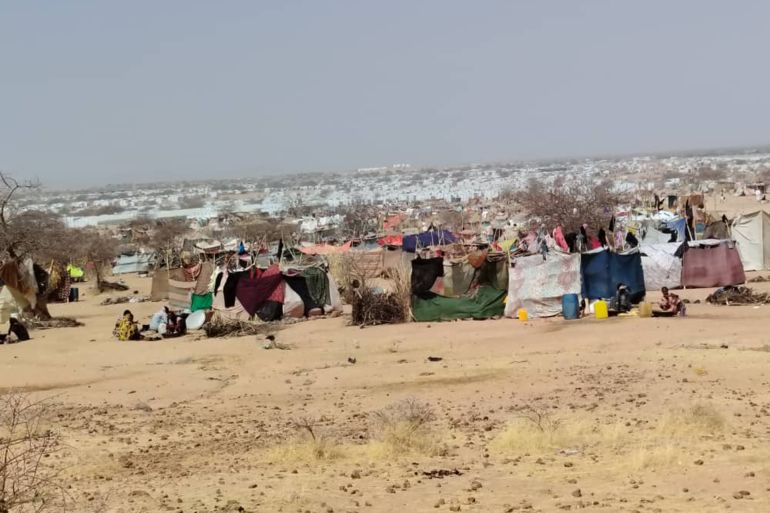
Survivors of the brutal conflict in Sudan, who endured horrific experiences including severe violence and abduction, now find themselves facing an existential crisis as basic resources in refugee camps that lack minimum living standards begin to run out.
One of the largest displacement crises in the world
Field reports indicate that eastern Chad has become the final destination for one of the largest displacement crises on earth, with over 1.3 million Sudanese refugees, more than 900,000 of whom have fled since fighting erupted in April 2023.
UN aid agencies have warned that assistance provided to over one million people may face severe cuts unless a funding gap of $428 million is filled, while the World Food Programme has halved food rations.
In the Ennedi East region, refugees live on less than half the minimum daily water needs, while one teacher faces over 100 children in overcrowded classrooms, and about 80,000 families lack shelter to protect them from the weather.
Temperatures nearing 50 degrees Celsius
The director of the Norwegian Refugee Council in Chad stated that temperatures are currently 43 degrees Celsius and are expected to exceed 50 degrees in the coming months, noting that most families crossing the border are women and children who sleep on the ground under trees seeking shade.
Families in transit camps rely on water tankers that arrive with difficulty, with refugees waiting for hours to get just a few liters—no more than 4 liters per person per day—far below the World Health Organization standard of 15 liters, leading to the spread of diseases and epidemics.
Refugees are forced to wait for hours to get just a few liters—no more than 4 liters per person per day—far below the World Health Organization standard of 15 liters, leading to the spread of diseases and epidemics
Horrifying stories
Regarding the horrors refugees endured during their journey to Chad, two stories are shared about two refugees: Hawa and
Darfur
Darfur is a region in western Sudan with a complex history as an independent sultanate before being incorporated into Sudan in the early 20th century. It gained international attention in 2003 when a rebellion by local groups against the Sudanese government led to a brutal conflict, resulting in widespread atrocities and a humanitarian crisis. The United Nations and other bodies have since described the violence as genocide, and the region continues to struggle with political instability and displacement.
Sudan
Sudan, located in northeastern Africa, is home to more pyramids than Egypt, with the ancient Nubian kingdoms of Kush leaving behind iconic sites like the pyramids of Meroë. Its history stretches back to powerful civilizations such as the Kingdom of Kerma and the later Christian kingdoms of Makuria and Alodia. In modern times, Sudan experienced colonial rule under the British and Egypt, followed by decades of internal conflict, culminating in the secession of South Sudan in 2011.
Chad
Chad is a landlocked country in north-central Africa with a rich history as a crossroads of trade and cultures, home to ancient kingdoms like the Kanem-Bornu Empire. Its most notable cultural site is the Ennedi Plateau, a UNESCO World Heritage site featuring stunning rock formations and prehistoric cave paintings that date back thousands of years. Today, Chad is known for its diverse ethnic groups and traditions, though it faces challenges from political instability and desertification.
Ennedi East
Ennedi East is a breathtaking region in northeastern Chad, renowned for its dramatic sandstone arches, rock pillars, and deep canyons carved by ancient waterways. This remote area is part of the larger Ennedi Massif, a UNESCO World Heritage site known for its exceptional rock art, with some paintings and engravings dating back over 8,000 years. Historically, the region served as a refuge for human populations during arid periods and remains culturally significant to the local nomadic communities, such as the Toubou people.
Ardamay camp
Ardamay Camp is a historical site near the town of Bairnsdale in Victoria, Australia, originally established as a temporary settlement for Aboriginal people displaced by European colonization. It operated in the mid-19th century, serving as a place where local Indigenous groups, particularly the Gunai/Kurnai people, were forcibly relocated and monitored by colonial authorities. Today, the site is recognized as a significant reminder of the impact of frontier violence and government policies on Aboriginal communities.
World Food Programme
The World Food Programme (WFP) is the leading humanitarian organization dedicated to combating global hunger, established in 1961 by the United Nations. Originally created as a three-year experimental program to provide food aid, it became a permanent UN agency in 1965 and has since evolved to address both emergency relief and long-term food security. Today, WFP operates in over 80 countries, delivering food assistance to millions of people affected by conflict, disasters, and climate change.
Médecins Sans Frontières
Médecins Sans Frontières (MSF), also known as Doctors Without Borders, is an international humanitarian medical organization founded in 1971 by a group of French doctors and journalists. Established in the wake of the Biafran famine, MSF was created to provide emergency medical aid to populations affected by conflict, epidemics, and natural disasters, while also advocating for the right to impartial care. Today, it operates in over 70 countries, guided by principles of neutrality and independence, and has received the Nobel Peace Prize for its lifesaving work.
United Nations High Commissioner for Refugees
The United Nations High Commissioner for Refugees (UNHCR) is a global organization mandated to protect and assist refugees, asylum-seekers, and stateless people. Established in 1950 by the United Nations General Assembly following World War II, it was initially tasked with helping millions of displaced Europeans. Today, UNHCR operates in over 130 countries, providing shelter, food, and legal aid, and advocating for the rights of forcibly displaced populations worldwide.