Does Israel allow Hamas fighters to cross behind the yellow line?
Israeli occupation forces demolish homes and bomb southern, central, and northern Gaza.
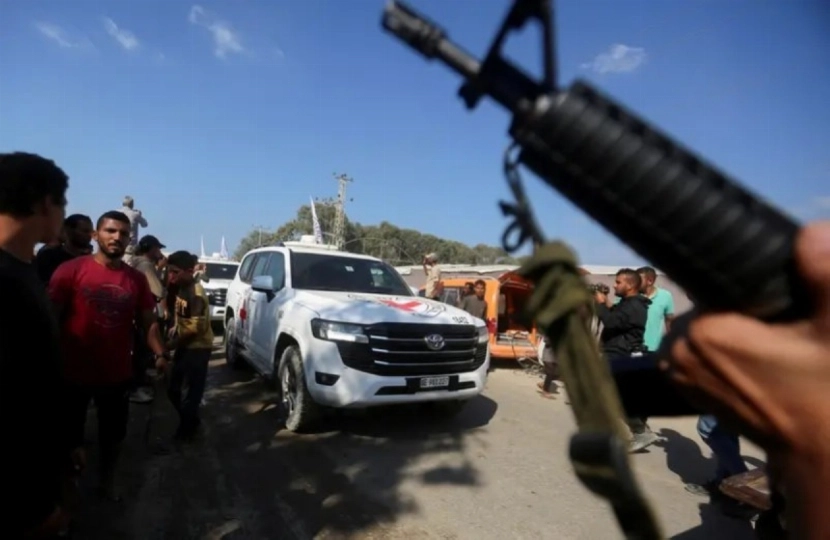
Two Israeli security sources suggested that occupation forces may agree to allow members of the Al-Qassam Brigades, the military wing of Hamas, to exit from certain areas where they are trapped and under army control into areas within the Yellow Line. Israeli Channel 12 quoted the sources as saying this could happen on condition that the fighters cross without their weapons.
Negotiations through mediators
Meanwhile, far-right Israeli Finance Minister Bezalel Smotrich criticized this possibility. In a post on his X account on Monday, he said, “Sir, this is complete madness,” demanding the prime minister stop this immediately.
Hamas sources revealed ongoing negotiations through mediators to extract fighters trapped behind the Yellow Line, inside tunnels in Rafah and Khan Younis in the southern Gaza Strip. They stated that the number of these individuals is estimated at dozens of Al-Qassam Brigades members.
Israeli Prime Minister Benjamin Netanyahu reported on Sunday that there are Hamas pockets in parts of Gaza controlled by Israeli forces, especially in Rafah and Khan Younis, vowing to “eliminate them,” as he put it.
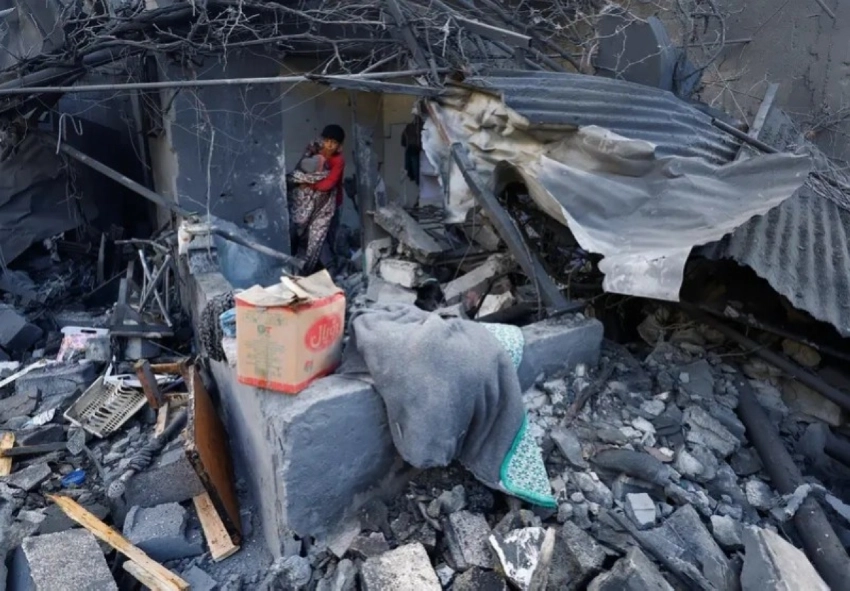
Destruction in the Gaza Strip
Escalation of field operations
Meanwhile, occupation forces continue heavy artillery shelling and tank fire from positions east of Khan Younis in the southern Strip, amid an escalation in field operations despite the ceasefire agreement.
Palestinian sources reported that Israeli warplanes launched a series of intense airstrikes targeting areas east of the city in the early morning hours, concurrent with operations to demolish and blow up residential homes east of the city.
Israeli artillery continued to shell the eastern areas of Deir al-Balah in the central Strip, with intensive drone flights in the region’s skies.
Israeli aircraft bombed several homes east of Gaza City, while the Israeli army’s engineering unit continued to booby-trap and detonate homes.
These operations were concentrated within what is known as the “Red Zone” controlled by the Israeli army, targeting empty buildings from time to time, with no casualties reported so far.
Israel kills those crossing the Yellow Line
The Israeli army announced it killed a number of individuals who crossed the “Yellow Line” separating areas of its troop withdrawal and approached soldiers in the southern Gaza Strip. It claimed these individuals “posed a direct threat” to troops stationed in the area, adding that “immediately after spotting them, the Israeli air force targeted and killed them to remove the threat.” The occupation army confirmed it remains deployed inside the Gaza Strip, “in accordance with the ceasefire agreement, and will continue to move to deal with any direct threat,” as reported by the Times of Israel website. Israeli Channel 12 reported the closure of the Philadelphi Corridor to search for the remains of Israeli hostages.
The Gaza agreement stipulated a ceasefire, prisoner exchange, entry of aid at a rate of 600 trucks daily, disarmament of the devastated Palestinian territory, and formation of an international stability force including Arab and international partners to work with Egypt and Jordan to secure Gaza’s borders and ensure adherence to the truce.
Yellow Line
The Yellow Line is a rapid transit line of the Washington Metro system, connecting Washington, D.C., with suburbs in Virginia and Maryland. It opened in 1983 and is notable for crossing the Potomac River on the 14th Street Bridge, with its route evolving over time due to service changes and infrastructure projects. The line serves key landmarks like the Pentagon, Reagan National Airport, and the National Mall, making it a vital commuter and tourist link.
Rafah
Rafah is a city in the southern Gaza Strip, located on the border between Gaza and Egypt. Historically, it served as a key trade and migration route for centuries and was mentioned in ancient Egyptian texts. In modern times, it has become known for the Rafah Border Crossing, a major passage point for people and goods, and has been heavily affected by the Israeli-Palestinian conflict.
Khan Younis
Khan Younis is a city in the southern Gaza Strip, known for its historical significance and as a major urban center. It was established in the 14th century by Emir Younis al-Nawruzi, a Mamluk official, and later served as an important caravan stop along trade routes. Today, it is one of the largest cities in Gaza and has been a key site in the Israeli-Palestinian conflict, often hosting refugee camps and experiencing significant military operations.
Deir al-Balah
Deir al-Balah is a Palestinian city located in the central Gaza Strip, known for its rich history and cultural significance. Its name means “Monastery of the Date Palm” in Arabic, reflecting its historical association with date cultivation and a Byzantine monastery. The area has been inhabited since ancient times and was a key stop for caravans, later becoming known for its role in the 20th-century Palestinian refugee experience, hosting one of the largest refugee camps in Gaza.
Gaza City
Gaza City is one of the world’s oldest continuously inhabited cities, with a history spanning over 4,000 years. It has been a vital trade and cultural crossroads, ruled by ancient Egyptians, Philistines, Romans, Byzantines, and various Islamic empires. In modern times, it became the administrative center of the Gaza Strip and remains a focal point of the Israeli-Palestinian conflict.
Philadelphi Corridor
The Philadelphi Corridor is a narrow strip of land, approximately 14 kilometers long, along the border between the Gaza Strip and Egypt. It was established as a buffer zone under the 1979 Egypt-Israel peace treaty, with Israel controlling it until its withdrawal from Gaza in 2005. The corridor has been a focal point of security concerns due to its use for smuggling tunnels and has been a subject of ongoing political and military negotiations.
Gaza Strip
The Gaza Strip is a small Palestinian territory on the eastern coast of the Mediterranean Sea, bordered by Israel and Egypt. Historically part of the region of Canaan and later ruled by various empires, it came under Israeli occupation after the 1967 Six-Day War. Since 2007, it has been governed by Hamas, experiencing repeated conflicts and a severe humanitarian crisis due to an ongoing blockade.
Al-Qassam Brigades
The Al-Qassam Brigades are the military wing of Hamas, a Palestinian Islamist political organization. Formed in the early 1990s, the group is named after Izz ad-Din al-Qassam, a prominent Syrian-born Islamic preacher who led resistance against British and Zionist forces in the 1930s. The brigades have been involved in numerous conflicts with Israel and are designated as a terrorist organization by several countries.