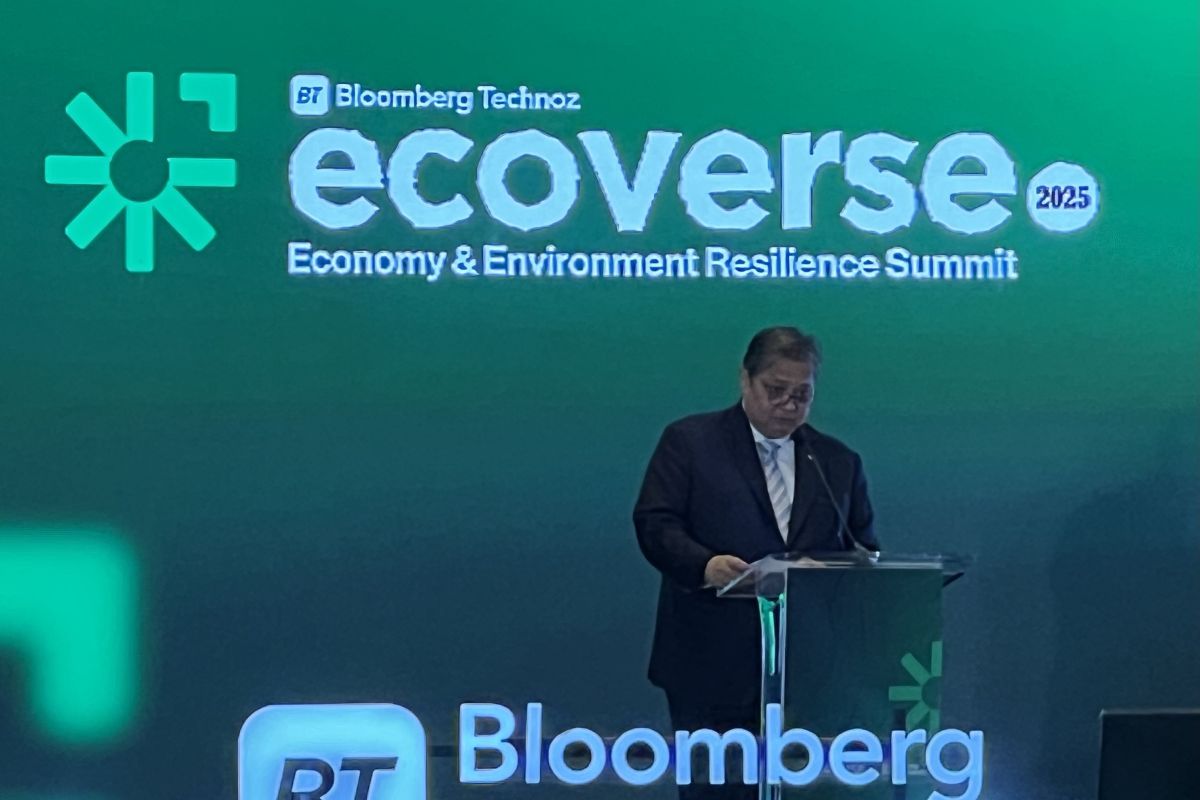
Jakarta – Coordinating Minister for Economic Affairs Airlangga Hartarto announced that construction of seven waste-to-energy power plants will begin in 2026, as the first step toward achieving 33 such plants by 2029.
“Through Danantara (Indonesia’s sovereign wealth fund), the government has committed to building waste-to-energy power plants, with construction of seven projects starting next year,” he said on Thursday.
He added that these waste-to-energy plants are also important for boosting Indonesia’s tourism sector, as a waste-free city will help improve the tourism ecosystem.
Previously, President Prabowo Subianto had set a target to build 33 waste-to-energy plants by 2029, spread across various Indonesian provinces, especially in areas with waste problems.
This directive is outlined in Presidential Regulation Number 109/2025 concerning Urban Waste Management Through Processing Waste into Renewable Energy Based on Environmentally Friendly Technology.
The regulation aims to resolve issues such as the complex tipping fees (waste processing fees) that local governments must cover.
Separately, during a hearing with Commission VI, the President Director of PT PLN, Darmawan Prasodjo, detailed that the total capacity of the seven waste-to-energy power plants is approximately 197.4 megawatts.
“For the first phase, with a total capacity in seven cities of 197.4 megawatts, it will handle almost 12,000 tons of waste per day,” he explained.
On another occasion, Environment Minister Hanif Faisol Nurofiq stated that the seven potential locations for waste-to-energy power plants are: Greater Yogyakarta, covering Yogyakarta City, Sleman District, and Bantul District; Greater Denpasar, covering Denpasar City and Badung District; Greater Bogor, covering Bogor City, Bogor District, and Depok City; and the Greater Bekasi area, which includes Bekasi City and Bekasi District.
Followed by the Greater Tangerang area, which includes Tangerang District, South Tangerang City, and Tangerang City; the Greater Medan area covering Medan City and Deli Serdang District; and the Greater Semarang area covering Semarang City and Semarang District.
Meanwhile, two other areas, the Special Region of Jakarta and Greater Bandung, cannot yet be recommended because they do not meet key requirements, such as land availability and administrative readiness.
Greater Yogyakarta
Greater Yogyakarta is a culturally rich region in Java, Indonesia, centered around the city of Yogyakarta, known for its deep historical roots as the heart of the Mataram Kingdom and later a key center of Javanese art and education. The area includes the famous Borobudur and Prambanan temples, reflecting its ancient Buddhist and Hindu heritage, and served as Indonesia’s revolutionary capital during the struggle for independence. Today, it remains a vibrant hub for traditional culture, higher learning, and tourism.
Greater Denpasar
Greater Denpasar is the urban core of Bali’s capital, encompassing Denpasar city and surrounding areas like Sanur and Kuta. Historically, Denpasar grew from a royal Badung kingdom center into a bustling administrative and commercial hub after Dutch colonization. Today, it serves as Bali’s primary gateway, blending modern development with traditional Balinese culture and historic landmarks like the Bajra Sandhi Monument.
Greater Bogor
Greater Bogor refers to the metropolitan area surrounding the city of Bogor in West Java, Indonesia, historically known as Buitenzorg during the Dutch colonial era. It is renowned for the Bogor Botanical Gardens, established in 1817 by the Dutch, and served as a retreat for colonial officials due to its cooler climate and lush surroundings. Today, Greater Bogor is a rapidly growing urban region, balancing its rich botanical heritage with modern development.
Greater Bekasi
Greater Bekasi is a rapidly urbanizing region in West Java, Indonesia, encompassing the city of Bekasi and its surrounding regency. Historically, it was part of the ancient Tarumanagara kingdom and later became a key agricultural area under Dutch colonial rule, known for rice production. Today, it serves as a major industrial and residential hub for Jakarta’s metropolitan area, with a history of transformation from rural farmland to a densely populated urban center.
Greater Tangerang
Greater Tangerang is a rapidly urbanizing region in Indonesia’s Banten province, encompassing the city of Tangerang, South Tangerang, and Tangerang Regency. Historically, the area developed from a small settlement along the Cisadane River into a key colonial-era trading hub, and later became a major industrial and residential satellite of Jakarta. Today, it is known for its diverse cultural heritage, bustling commerce, and significant Chinese-Indonesian communities, reflecting centuries of migration and economic growth.
Greater Medan
Greater Medan refers to the metropolitan area surrounding the city of Medan in North Sumatra, Indonesia. Historically, it grew rapidly in the late 19th and early 20th centuries as a major center for the Dutch colonial tobacco, rubber, and palm oil industries, attracting a diverse population of ethnic groups. Today, it remains a bustling economic hub known for its multicultural heritage, colonial-era architecture, and proximity to natural attractions like Lake Toba.
Greater Semarang
Greater Semarang is a metropolitan area in Central Java, Indonesia, centered around the city of Semarang, a major port with roots dating back to the 9th century as the kingdom of Kalinyamat. It flourished under Dutch colonial rule in the 17th–19th centuries, becoming a key trading hub, as seen in its well-preserved Old Town (Kota Lama) and iconic blend of Javanese, Chinese, and European architecture. Today, the region encompasses Semarang City and surrounding regencies, serving as a dynamic economic and cultural gateway.
Jakarta
Jakarta, the capital of Indonesia, is a sprawling metropolis on the northwest coast of Java with a history dating back to the 4th century as the port of Sunda Kelapa. It was later renamed Batavia by Dutch colonists, who made it the center of their East Indies trade empire. After Indonesian independence, the city was renamed Jakarta and has since grown into a dynamic, crowded hub of culture, commerce, and political life.