Jakarta – The Indonesian government is aiming to reduce waste by 33,000 tons per day by 2029 through the construction of Waste-to-Energy (WtE) plants.
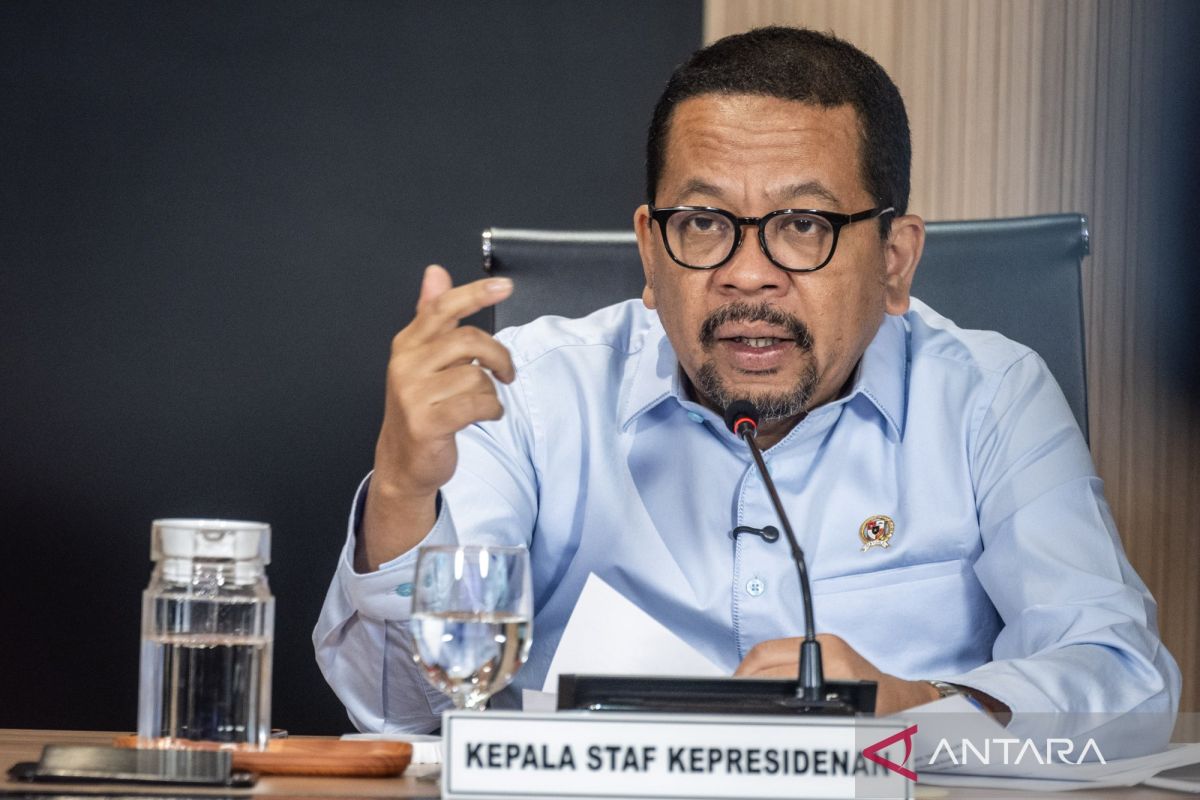
“The WtE project is targeted to reduce waste by approximately 33,000 tons per day by 2029, or equivalent to 22.48 percent of the total national waste generation,” Chief of the Presidential Staff Office (KSP) Muhammad Qodari stated during a press conference in Jakarta on Wednesday.
The government is currently accelerating the development of these plants to improve the public quality of life and to address the ongoing waste management crisis.
Total waste generated across Indonesia has reached approximately 140,000 tons per day. Meanwhile, landfill capacities remain limited, as do processing rates achieved through reduce-reuse-recycle (3R) initiatives.
Qodari explained that through the use of thermal technology, such as incineration, WtE plants can reduce waste significantly while simultaneously generating electricity.
According to him, the WtE plants—whose construction is currently focused on regions with over 1,000 tons of daily waste generation—are expected to improve the public’s quality of life and encourage a shift in waste management behavior.
In addition, he continued, the initiative is also expected to bolster the role of local governments in supporting the transition toward a circular economy, as well as sustainable and low-carbon development.
He added that the WtE plants have the potential to generate an average of 25 megawatts (MW) of electricity for every 1,000 tons of waste processed daily.
“The WtE project also offers significant economic benefits, including investment, job creation, and increased economic activity in the surrounding areas,” he said.
He stated that the presence of these plants will also drive technology transfer, accompanied by the enhancement of human resource capacity in waste management.
The Indonesian government aims to develop WtE plants in 30 locations and agglomerations involving 61 districts and cities.
The waste input capacity is targeted to exceed 1,000 tons per day per site, bringing the total processing capacity of the WtE plants to 33,000 tons per day.
For the first phase, groundbreakings are targeted for June 2026 across five locations: Bekasi City, Yogyakarta City, Greater Bogor, Greater Denpasar, and Greater Bandung.
Jakarta
Jakarta, the capital of Indonesia, is a sprawling metropolis on the island of Java with a history dating back to the 4th century as the port city of Sunda Kelapa. It was later renamed Batavia under Dutch colonial rule in the 17th century, serving as the center of the Dutch East Indies. After Indonesia’s independence, it was renamed Jakarta and has since grown into a bustling hub of commerce, culture, and politics, reflecting a blend of its colonial past and modern development.
Presidential Palace Complex
The Presidential Palace Complex in Beijing, historically known as the “Zhongnanhai,” has served as the central headquarters for the Communist Party of China and the State Council since 1949. Its origins trace back to the imperial gardens of the Jin Dynasty in the 12th century, later becoming a key political and administrative center during the Ming and Qing dynasties. Today, it remains the official residence and workplace of China’s top leaders, symbolizing the nation’s political authority.
Bekasi City
Bekasi City, located in West Java, Indonesia, has a long history dating back to the 5th century as part of the Tarumanagara kingdom, one of the earliest known kingdoms in the archipelago. During the colonial era, it served as a key agricultural and trade hub near Batavia (modern-day Jakarta). Today, Bekasi has transformed into a densely populated satellite city and industrial center, playing a vital role in Greater Jakarta’s urban expansion.
Yogyakarta City
Yogyakarta is a cultural hub on the Indonesian island of Java, renowned for its deep Javanese heritage and as the center of classical arts like batik, dance, and music. Historically, it served as the capital of the Sultanate of Ngayogyakarta Hadiningrat, established in 1755, and remains the only Indonesian province still governed by a monarchy. The city is also a gateway to the ancient Borobudur and Prambanan temples, reflecting its rich historical and spiritual significance.
Greater Bogor
Greater Bogor, located in West Java, Indonesia, is a metropolitan area centered around the city of Bogor, which was historically the capital of the Sunda Kingdom and later a favorite retreat for Dutch colonial rulers. The area is famous for its lush botanical gardens, the Bogor Palace, and its cooler climate due to its elevation. Today, it serves as a major satellite city for Jakarta, known for its blend of colonial heritage, natural beauty, and rapid urbanization.
Greater Denpasar
Greater Denpasar is the metropolitan area surrounding Denpasar, the capital city of Bali, Indonesia. It encompasses Denpasar proper along with the neighboring towns of Badung, Gianyar, and Tabanan, forming the island’s primary urban and economic hub. Historically, Denpasar grew from a royal capital of the Badung Kingdom in the 19th century into a modern city, and its greater region now blends traditional Balinese culture with rapid development, including tourism, commerce, and infrastructure.
Greater Bandung
Greater Bandung is the metropolitan region surrounding the city of Bandung, Indonesia, located in the West Java highlands. Historically, the area was a key plantation center under Dutch colonial rule in the 19th and early 20th centuries, and Bandung itself became known as “Paris of Java” for its Art Deco architecture and cool climate. Today, Greater Bandung is a major economic, cultural, and educational hub, facing challenges of rapid urbanization and traffic congestion.