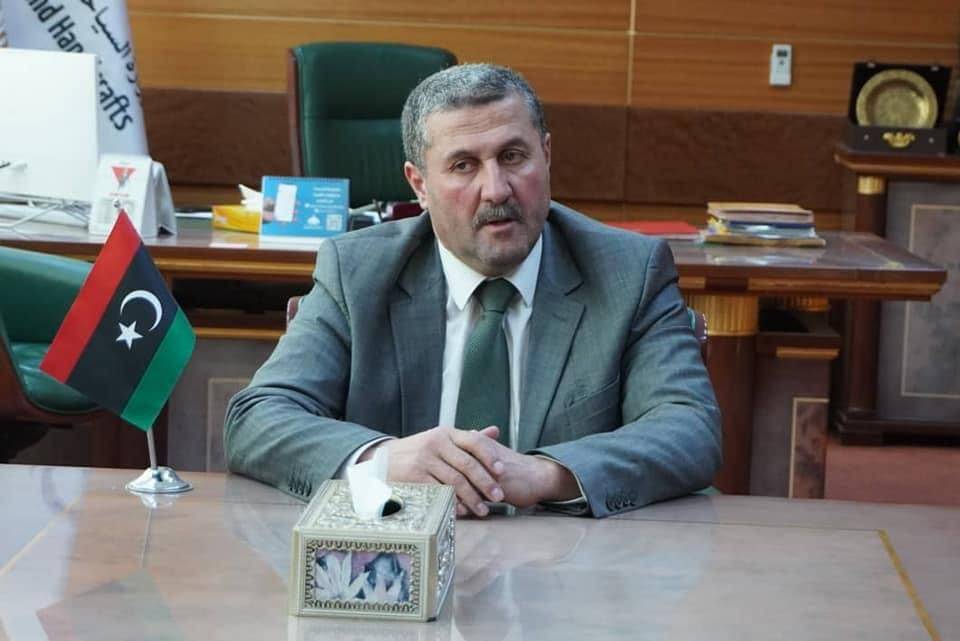
In a statement before the Security Council, Libya’s permanent representative to the United Nations affirmed that ending the political division is the fundamental and radical solution to addressing the various challenges in Libya. He warned that continued political deadlock and loss of hope could lead to a return of conflict, fighting, and proxy wars, calling for unifying international efforts to support a path leading to general elections as soon as possible.
He explained that Libyans are still awaiting practical, effective, and urgent solutions to emerge from the crisis, noting that past years have revealed a sharp division in international engagement, which prevented a real breakthrough to end the political impasse and contributed to fragile transitional phases without addressing the root causes of the crisis.
He clarified that the essence of the crisis lies not in the absence of solutions, but in conflicting international approaches, multiple uncoordinated tracks, marginalization of national solutions, and international interventions that weakened chances for a real and sustainable settlement, plunging the situation into a cycle of unproductive repetition.
He stressed the need not to repeat past mistakes and to conduct an objective review of previous approaches to avoid perpetuating a pattern of crisis management instead of resolution, which led to a vicious circle and deepened the trust gap between Libyan parties, creating a crisis of confidence with the international community. He noted that the Libyan file is now being discussed without achieving real progress.
He pointed out that this reality has reinforced a general feeling that the crisis has become hostage to international rivalries that do not reflect national priorities, making Libya often a victim of external conflicts.
He called for presenting practical solutions within dialogue tracks, including implementable mechanisms based on the involvement of all active parties, to enhance chances of success and sustainability. He affirmed that the aspirations of Libyans are to reach a consensual constitutional basis leading to general elections that end transitional phases and renew the legitimacy of institutions through the ballot box.
He emphasized the need to direct international initiatives toward this goal within a specific timeline, building on what has been achieved, respecting national ownership of the solution, coordinating with the United Nations, and adhering to relevant Security Council resolutions.
On the economic front, he welcomed the budget and unified development program agreement between the House of Representatives and the High State Council under the auspices of the Central Bank of Libya, considering it a pivotal step toward unifying public spending, enhancing transparency, and reducing parallel spending. He stressed that its implementation represents a real test of the seriousness of supporting stability and improving living conditions, with the need for fair distribution across all regions of the country.
He also emphasized the importance of protecting Libya’s frozen assets and funds abroad, not allowing them to be tampered with. He called for preventing oil smuggling, pursuing those involved locally and internationally, imposing sanctions on them, and treating this issue with the same severity as arms smuggling.
He affirmed that any international or regional support for Libya must be coordinated with official institutions and contribute to the country’s stability and preservation of its wealth, noting that Libya can play a positive role in the energy sector amid current global crises.
In conclusion, he pointed out that extending sanctions on Libya is not an achievement but evidence of the ongoing crisis. He called for unifying international positions to end it and support the will of the Libyan people, lifting the country from Chapter VII measures, affirming that the goal is to reach elections that end transitional phases and establish a civil state based on institutions and law.