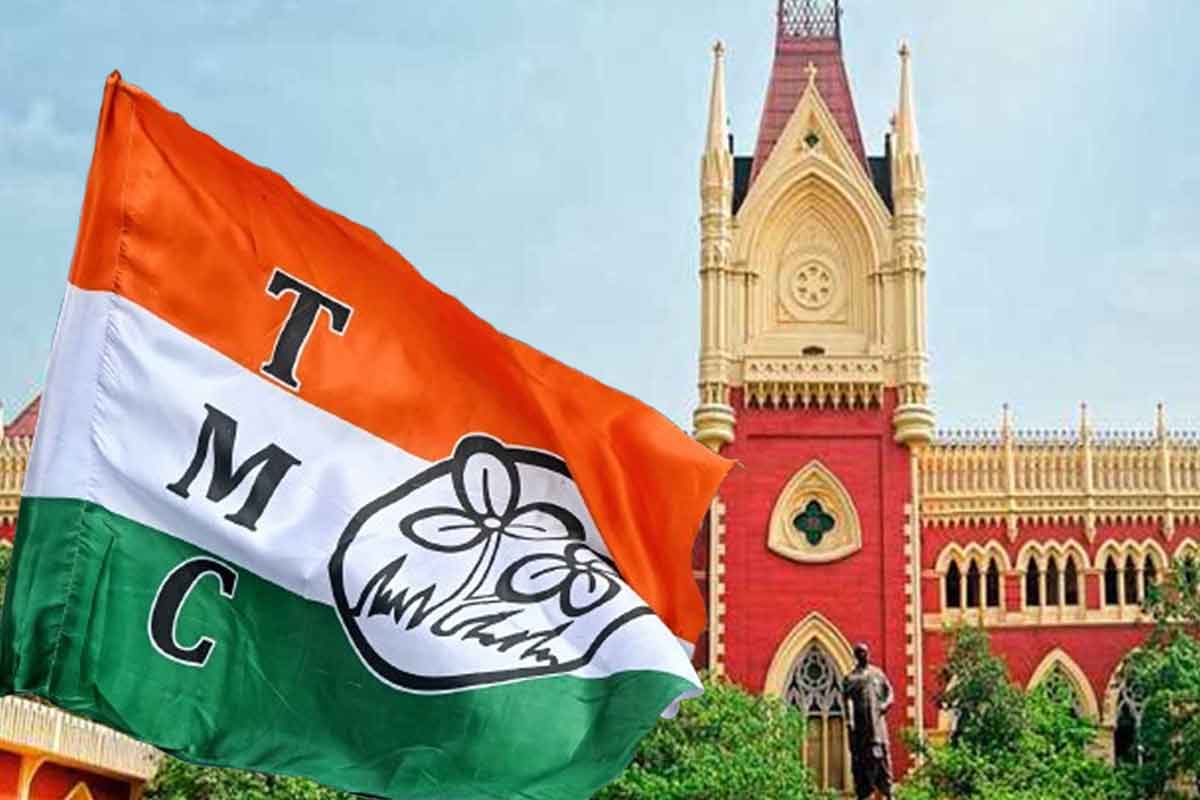
A petition filed by the Trinamool Congress in the Calcutta High Court, expressing fear of arrest of 800 workers, has dealt a blow to the Election Commission. The case was heard on Wednesday before the bench of Chief Justice Sujoy Pal and Justice Parthasarathi Sen. According to the court’s decision, mass arrests cannot be made merely on suspicion of unrest. The judges clearly stated that if the Commission takes such a decision, a stay order will be issued on it.
Those who were identified and listed as ‘troublemakers’ were monitored for multiple allegations, including influencing voters and intimidation, and orders were given for arrest if necessary. However, in the current election atmosphere, no strict measures like preventive arrests can be taken against these Trinamool workers. The Calcutta High Court made this clear on Wednesday in a public interest lawsuit filed on this matter.
Not only that, the division bench of Chief Justice Sujoy Pal and Justice Parthasarathi Sen also issued an interim stay on that published list by the Commission. The court stated that under the guise of precautionary measures, Trinamool workers cannot be arrested until June 31. However, the Chief Justice’s bench also made it clear that if anyone commits a criminal act, legal action can be taken against them, but preventive arrests cannot be made. This is effectively a major victory for the Trinamool Congress ahead of the first phase of voting in Bengal. Mamata Banerjee herself had raised this issue. Speaking at an election rally that day, the Trinamool supremo said, “The biggest criminal and traitor of BJP is Rakesh Singh, why won’t they arrest them? There are many allegations against them. You are only targeting Trinamool!”
Alleging the arrest of party workers without cause, the Trinamool Congress warned the Election Commission-appointed officials on the same day. On Wednesday, Trinamool MP and former state police DG Rajiv Kumar, after meeting the Chief Electoral Officer on behalf of the party, said, “It is not that we will forget everything once the elections are over. Every officer involved in illegal arrests will be brought under the law. No matter which state or department they come from.”
He added, “At the time of legal action, no excuses from the concerned officers will be heard.” The names of several Trinamool MPs, MLAs, municipal and panchayat representatives were published, identifying them as potential troublemakers or those who could create unrest. Fearing arrest based on the list, Trinamool approached the High Court. Their concern was that the Election Commission might arrest 800 of their workers as a preventive measure. During the hearing of this case on Wednesday, Trinamool MP and lawyer Kalyan Banerjee argued strongly in court. He claimed that the Commission had officially published a list of troublemakers and spoke about taking precautionary measures.
He said, “They are all Trinamool Congress workers. The list also includes the names of councilors from Uttarpara.” Kalyan further stated, “If someone breaks the law, take action according to the law. We have no objection. The Commission and the police have powers. The Commission cannot arrest anyone; that power lies with the police. But an overall directive cannot be issued like this.” He claimed that the Election Commission is abusing its power. “This list is baseless and has been prepared without showing any reason,” he said.
This statement was supported by Advocate General Kishore Dutta. He said, “The Commission cannot label someone as a potential source of unrest. Maintaining law and order is the state’s responsibility.” He added, “The Election Commission must explain under what authority they issued this directive.” Justice Parthasarathi Sen asked whether the state or police had taken any action suo moto based on this directive. The state responded, “As far as we know, nothing has been done yet.”
In response, the national Election Commission’s lawyer, DS Naidu, said, “The Commission never said go and arrest anyone you want. The Commission said all steps must be taken according to law to ensure a fair election. Our objective is to conduct elections in a peaceful environment.” He claimed, “We have had very bad experiences. Judicial officers have been attacked and surrounded. Due to security breaches, we have faced the wrath of the Supreme Court. The Supreme Court had to invoke Article 142 of the Constitution.”
The Commission stated, “If someone is arrested for a criminal act, they have