Mangrove forests play an important role as coastal protection from abrasion, carbon absorption, biodiversity habitat, water quality maintenance, fisheries support, and a source of livelihood for coastal communities. However, the existence of mangroves in Indonesia continues to degrade due to land conversion and unsustainable human activities.
In commemoration of Earth Day, observed every April 22, BRI through its Corporate Social Responsibility (CSR) program BRI Peduli reaffirmed its commitment to environmental sustainability through BRI Menanam-Grow & Green, which involved planting 500 mangrove trees in the coastal area of Muara Gembong, Bekasi Regency, West Java.
In this activity, BRI Peduli collaborated with the Sumber Makmur Forest Farmer Group (KTH) and planted mangroves over an area of 500 square meters.
The mangrove planting activity in Muara Gembong is a tangible form of BRI’s commitment to saving coastal ecosystems that currently face high vulnerability to abrasion, seawater intrusion, and ecosystem degradation. Mangrove planting was chosen because of its strategic role in protecting coastlines, improving environmental quality, and providing habitat for various coastal biota.
“The Earth Day momentum symbolizes care for the environment and encourages active community participation in maintaining the sustainability of coastal environmental preservation. It is hoped to have a long-term impact, improve environmental quality, and increase carbon absorption and storage,” said a BRI representative.
In implementing the BRI Menanam – Grow & Green program, BRI collaborates with various parties, including non-profit organizations and local communities, for a specific period. This demonstrates a tangible form of sustainable initiatives that are continuously monitored and evaluated for their success.
“We also empower local farmer groups. Hopefully, this program becomes a platform to realize sustainable development practices with the goals of preserving the environment, absorbing carbon, empowering communities, and improving the economy,” added the representative.
Since its launch in 2023, BRI Menanam – Grow & Green has planted 75,000 mangrove trees with a potential carbon absorption of 29.56 tons per year. This program is carried out in stages, starting from program design, seedling provision, planting, maintenance, data collection on tree development conditions, and measurement of carbon stock and absorption potential.
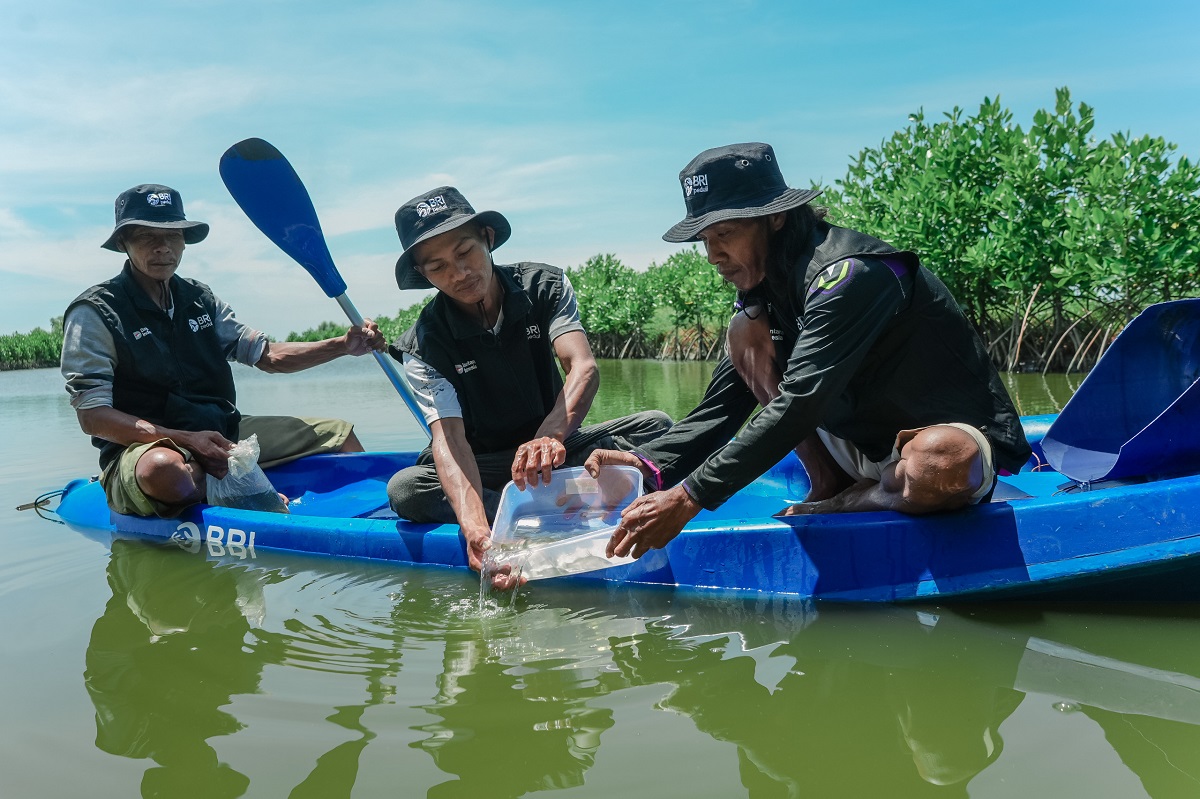
In addition to mangrove planting activities, BRI Peduli also carried out the release of fish and crabs as an effort to maintain the stability of the food chain in the coastal ecosystem and support the sustainability of fishery resources.
In this area, BRI Peduli has previously provided assistance for the construction of supporting infrastructure for fishing groups and residents. This assistance includes the construction of bridges, multipurpose rooms, prayer rooms, toilets, fishing piers, culinary stalls for MSMEs, greenhouses/hatcheries, and educational tourism boats.
On a separate occasion, a representative of the Sumber Makmur KTH management expressed that the threat of environmental damage and the widespread depletion of natural resources have caused anxiety among the community in their area. The collaboration with BRI through the BRI Menanam – Grow & Green program is one of the hopes for saving the area from damage caused by abrasion.
“Hopefully, synergy and activities like this can continue sustainably at the Muara Gembong Mangrove Ecotourism site. Hopefully, in the future, this program can reach more residents and provide increasingly broad positive impacts for the welfare and economic independence of our community,” he said.
Overall, BRI through the BRI Menanam – Grow & Green program has planted and maintained 153,100 seedlings, 5,448 coral fragments, and restored 3,000 seagrass stands, involving 31 community groups.
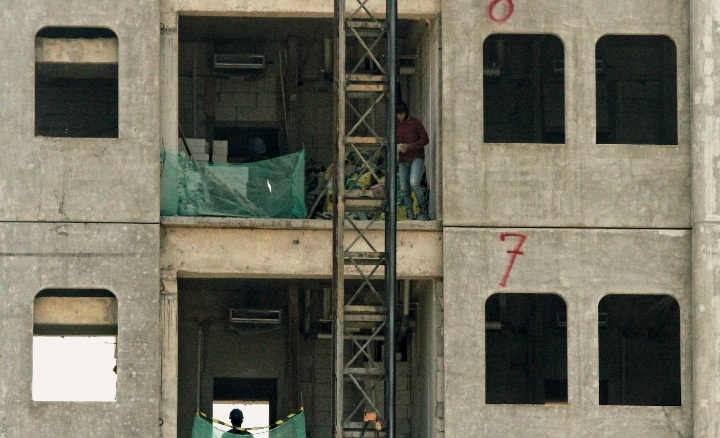
The Bandung City Department of Public Works, Construction, and Spatial Planning recorded that more than 2,000 Building Construction Permits (PBG) were issued throughout 2025. However, behind this number, public compliance is concerning; only a handful of building owners reported construction stages, raising concerns about weak urban spatial planning supervision.
Data revealed that the reporting rate for