There are cracks in everything, that’s how the light gets in. He follows the light in the cracks and becomes the light.
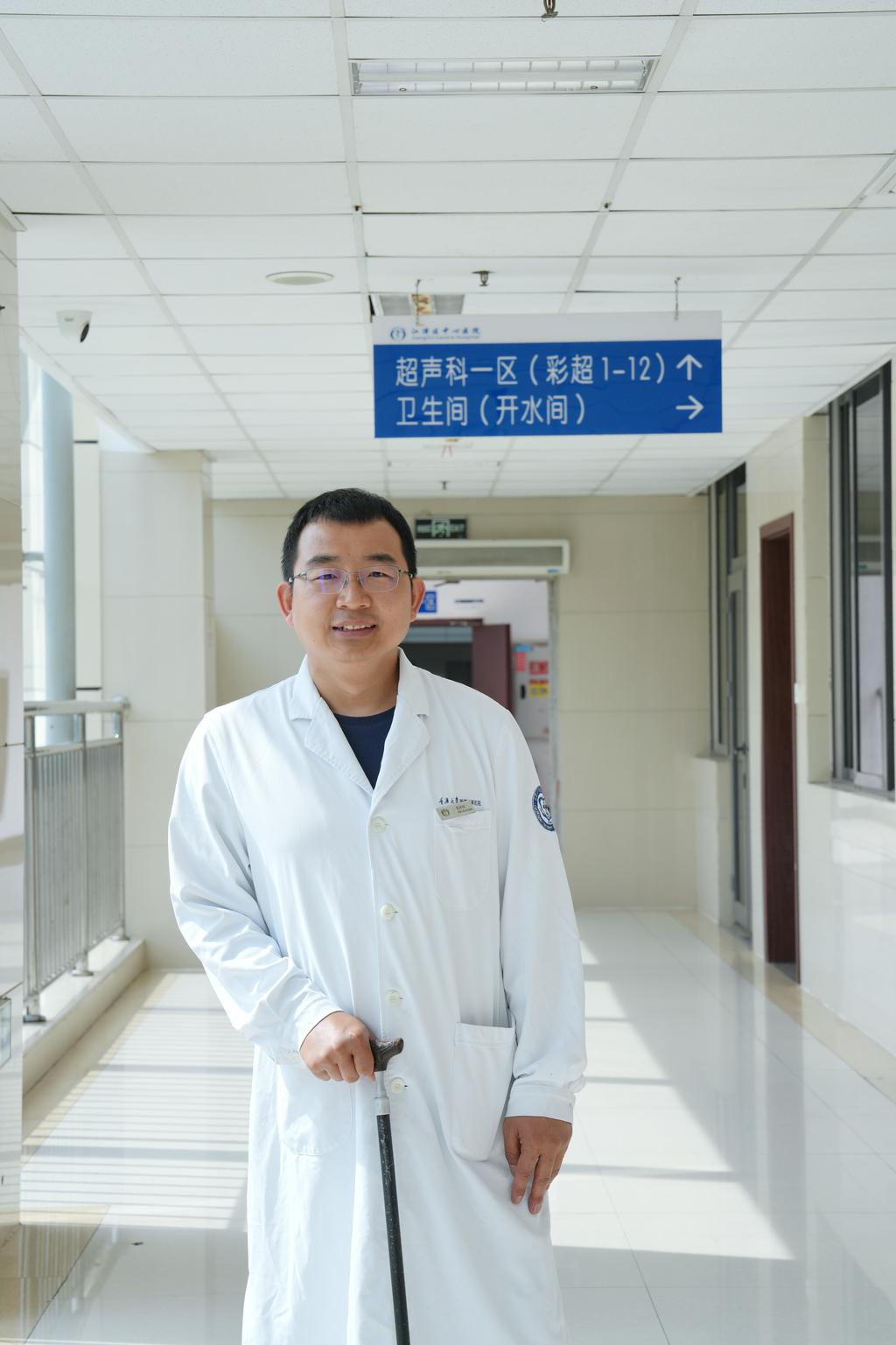
Just past seven in the morning, the underground parking lot of Jiangjin Hospital (Jiangjin District Central Hospital), affiliated with Chongqing Medical University, was still quiet. In front of a gate that normally only allows exit, Liu Xingzhao slid through on his electric wheelchair. The hospital had specially opened it for him. He cheerfully greeted the security guard without stopping his wheelchair.
Arriving at the door of the ultrasound department on the third floor, he stood up using his crutch, changed into his white coat, all in one smooth motion.
Liu Xingzhao is a deputy chief physician in ultrasound, specializing in cardiovascular conditions. He is also the only doctor in the hospital who works with a crutch.
When seated, no one can tell he is disabled — he has broad shoulders and strong, powerful arms. He can do nearly twenty pull-ups and won the Shandong provincial weightlifting championship for the disabled in college. “My legs don’t work, so my hands have to,” Liu says with a smile, his eyes crinkling.
This “crutch doctor,” who came to Chongqing from Dezhou, Shandong, pioneered new techniques like right heart contrast echocardiography in Jiangjin. Over 13 years, he has provided heart-related peace of mind to 130,000 patients. At 38, he also enrolled in a doctoral program: “Medicine keeps advancing; if I don’t study, I’ll fall behind!”
At age three, Liu Xingzhao contracted polio, leading to paralysis in his lower limbs. In the years that followed, his parents took him for acupuncture every day on a cart. Needles lined up on his legs, and he cried from the pain. He doesn’t actually remember this period; his parents told him about it later. “Sometimes forgetting is good — painful things get filtered out on their own.”
By the time he had memories, his legs were already as they are now — he can only drag his right leg a few steps. The winds in Shandong were strong, and in winter, he had to hold onto classmates to walk steadily. Luckily, his cheerful and playful nature earned him many “human crutches” throughout his childhood.
Why did he want to become a doctor? At first, it was just to avoid injections in the buttocks. Due to his mobility issues, Liu would catch a cold whenever he sweated, and injections became a childhood nightmare. “If I became a doctor, I could treat myself — I’d take medicine and never get injections!”
Later, he realized that doctors represent hope — whenever he heard about a doctor who could treat his legs, his parents’ eyes would light up.
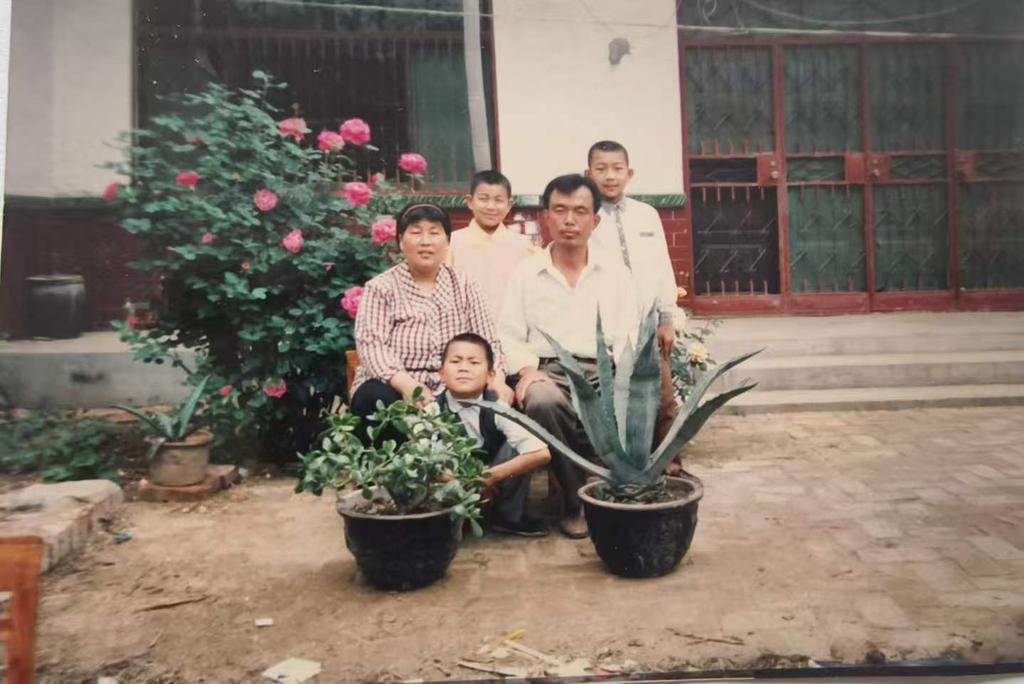
The desire to become a doctor took root from then on, and his parents fully supported him: since he couldn’t do physical labor, he would have to rely on his studies for a way out. Although the family wasn’t wealthy, his parents were willing to buy medical books