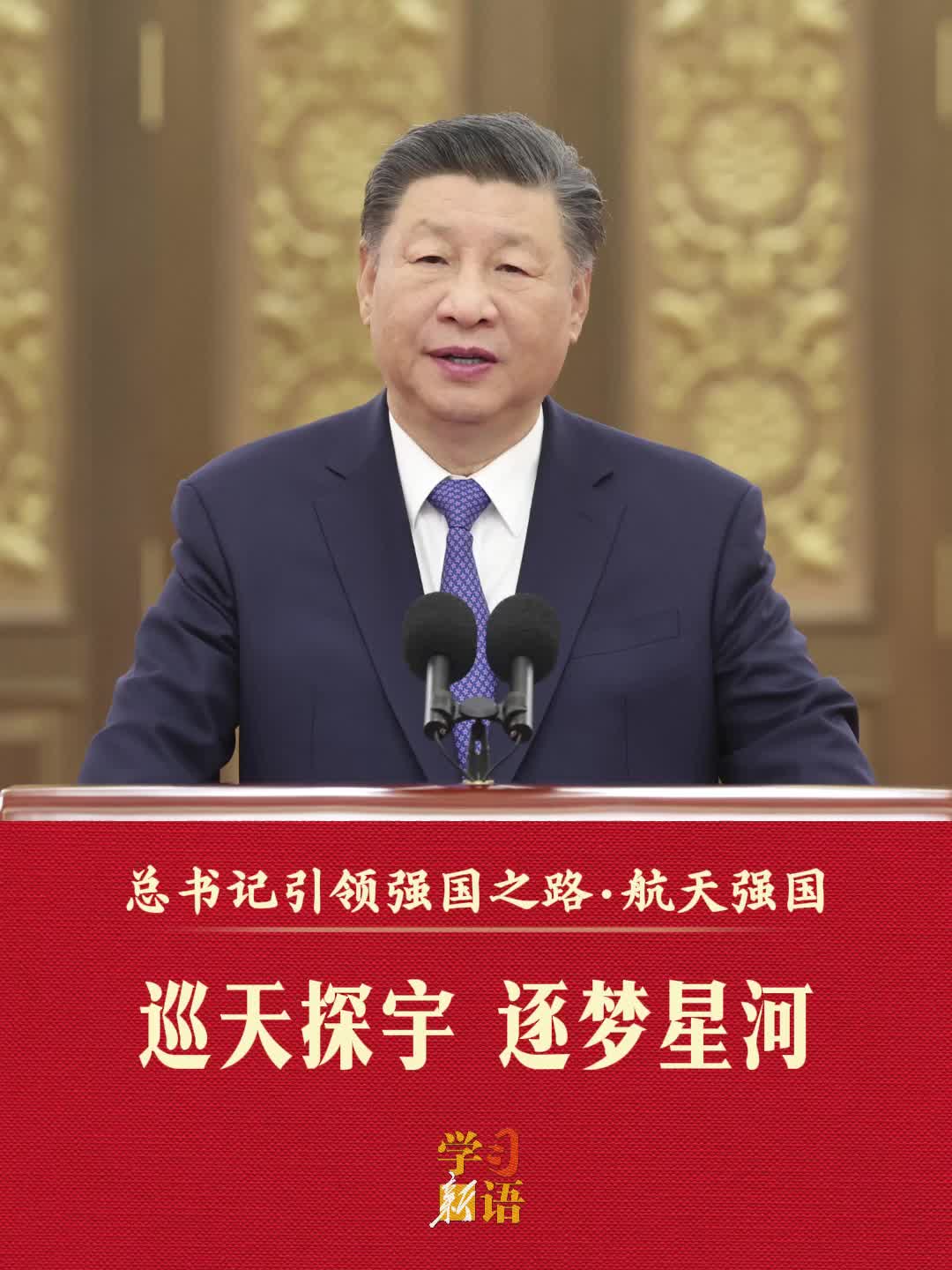
The BeiDou network, the Chang’e lunar missions, the Tiangong space station, the Zhurong Mars rover, and the Xihe solar probe… China’s space industry is striding forward into the boundless starry sky, leaving China’s mark in the vast heavens time and again.
The 15th Five-Year Plan outline proposes 16 “power” construction goals, with space power being included for the first time in a national five-year plan.
The starry river stretches for thousands of miles, and the journey is as magnificent as a rainbow. As the 15th Five-Year Plan begins a new chapter, the pace of Chinese people’s exploration of space will surely become even greater and farther.
BeiDou network
The BeiDou network is China’s independent satellite navigation system, named after the Chinese term for the Big Dipper constellation. Its development began in the 1990s as a strategic project to reduce reliance on foreign systems like GPS, with the first satellite launched in 2000 and full global coverage achieved in 2020. Today, BeiDou provides positioning, navigation, and timing services worldwide, supporting applications from transportation to disaster relief.
Chang’e lunar missions
The Chang’e lunar missions are a series of robotic exploration missions conducted by the China National Space Administration, named after the Chinese moon goddess Chang’e. Beginning with Chang’e 1 in 2007, which orbited the Moon and mapped its surface, the program achieved historic milestones such as Chang’e 3’s soft landing with the Yutu rover in 2013 and Chang’e 4’s first-ever landing on the Moon’s far side in 2019. Most recently, Chang’e 5 in 2020 successfully returned lunar samples to Earth, marking the first such retrieval in over 40 years.
Tiangong space station
The Tiangong space station is China’s modular space station, currently under construction in low Earth orbit. Its first core module, Tianhe, was launched in April 2021, marking a major milestone in China’s human spaceflight program. The station is designed to host crews and conduct scientific experiments, representing a long-term national effort to develop independent space exploration capabilities.
Zhurong Mars rover
The Zhurong Mars rover is a robotic explorer deployed by China’s Tianwen-1 mission, which successfully landed on Mars in May 2021. Named after the ancient Chinese god of fire, Zhurong explored the Utopia Planitia region, studying the planet’s geology and atmosphere. Its mission marked China as the second country to operate a rover on Mars, contributing valuable data about the Red Planet’s history and potential for past life.
Xihe solar probe
The Xihe solar probe, named after the Chinese sun goddess, is a groundbreaking space mission launched by China to study the Sun. It is designed to observe solar activity and magnetic fields from a unique orbit close to the Sun, providing valuable data for understanding space weather. This mission marks a significant step in China’s space exploration efforts and contributes to global solar research.