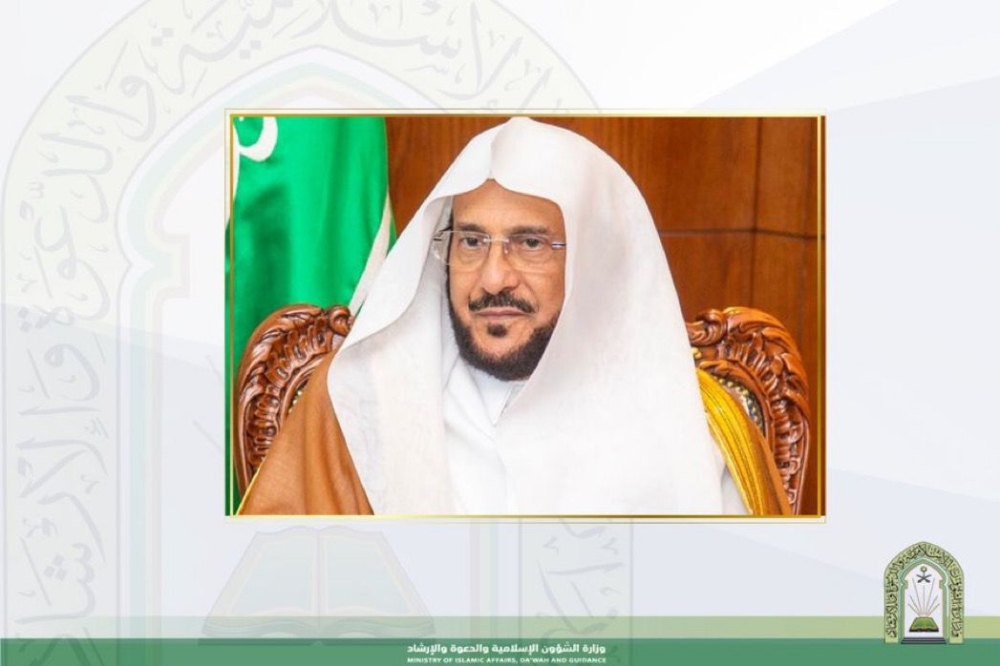
The Ministry of Islamic Affairs, Dawah and Guidance, represented by the Religious Attaché at the Kingdom’s Embassy in Bosnia and Herzegovina, in cooperation with the Islamic Community of the Republic of Kosovo, is organizing the first local Holy Quran competition for boys and girls. The competition involves 100 male and female contestants from various cities in Kosovo and is scheduled to take place as part of its efforts to serve the Holy Book of God and enhance its presence among youth groups.

The competition targets young men and women aged 12 to 30, including students from Quran memorization centers, students of Sharia institutes, and students of public schools. This aims to discover Quranic talents and develop their abilities in memorization and recitation.

Saudi Leadership in Serving the Holy Quran

The competition aims to highlight the Islamic and pioneering role in serving the Holy Quran, caring for it, and promoting it among Muslims. It also encourages the children of Muslims in the Republic of Kosovo to master and recite the Book of God, fosters a spirit of honorable competition among participants in the field of the Holy Quran, and strengthens the bonds of cooperation between the Religious Attaché at the Kingdom’s Embassy and Islamic institutions in Kosovo.

The competition includes three main categories: memorization of ten parts for boys and girls, memorization of five parts for boys and girls, and memorization of two parts for boys and girls, providing an opportunity for different levels to participate and compete.

The final qualifiers and closing ceremony will be held in the capital, Pristina, with official and community attendance reflecting the importance of this Quranic event.

This competition is part of the ongoing efforts to serve the Holy Quran and promote it globally, enhance the presence of Quranic programs in various countries of the world, contribute to the consolidation of tolerant Islamic values, connect generations with the Book of God Almighty, and affirm the pioneering role in caring for the Holy Quran and encouraging its memorizers.

Holy Quran

The Holy Quran is the central religious text of Islam, believed by Muslims to be the verbatim word of God (Allah) as revealed to the Prophet Muhammad through the angel Gabriel over approximately 23 years. It serves as the ultimate source of doctrine, law, and spiritual guidance for over a billion Muslims worldwide, and its compilation into a single book was completed shortly after the Prophet’s death.

Kosovo

Kosovo is a landlocked country in the Balkans, historically significant

Holy Quran

The Holy Quran is the central religious text of Islam, believed by Muslims to be the verbatim word of God (Allah) as revealed to the Prophet Muhammad through the angel Gabriel over approximately 23 years, beginning in 610 CE. It serves as the ultimate source of doctrine, law, and spiritual guidance for over a billion Muslims worldwide, and its compilation into a single, standardized book was completed under the third caliph, Uthman ibn Affan, around 650 CE.

Kosovo

Kosovo is a landlocked region in the Balkans with a rich and complex history, having been part of the Roman, Byzantine, Serbian, and Ottoman empires. It is the site of the 1389 Battle of Kosovo, a pivotal event in Serbian national identity, and declared its independence from Serbia in 2008, though this remains disputed. Culturally, it is known for its historic Serbian Orthodox monasteries, such as those in Dečani and Gračanica (UNESCO sites), and a majority-Albanian population with its own distinct traditions.

Pristina

Pristina is the capital and largest city of Kosovo, with a history dating back to the Neolithic era. It served as a significant center during the medieval Serbian Kingdom and later under the Ottoman Empire for centuries. Today, it is a vibrant, youthful city known for landmarks like the Newborn Monument and the Ottoman-era Imperial Mosque.

Bosnia and Herzegovina

Bosnia and Herzegovina is a country in Southeastern Europe on the Balkan Peninsula, known for its rich history of cultural and religious diversity shaped by medieval kingdoms, the Ottoman Empire, and Austro-Hungarian rule. It is home to significant historical sites, including the iconic Stari Most (Old Bridge) in Mostar—a 16th-century Ottoman bridge rebuilt after the 1990s war—and the ancient stećci medieval tombstones scattered across the region. The country’s complex past is marked by its position as a crossroads of civilizations, leading to a unique blend of Eastern and Western influences in its architecture, traditions, and society.

Islamic Community of the Republic of Kosovo

The Islamic Community of the Republic of Kosovo (BIK) is the main organization managing the religious affairs of Kosovo’s Muslim majority. Its history is deeply tied to the centuries-long Ottoman period, which established Islam in the region, and it played a crucial role in preserving religious and cultural identity during the Yugoslav era and the 1998-99 conflict. Today, it oversees hundreds of mosques, Islamic schools, and charitable activities, serving as a central pillar of Kosovo’s society.

Sharia institutes

“Sharia institutes” are educational institutions dedicated to the study and teaching of Sharia, or Islamic law, which is derived from the Quran and the teachings of Prophet Muhammad. Historically, they evolved from informal scholarly circles in early Islam into formalized schools and universities, such as Al-Azhar in Cairo (founded in 970 CE), which became central to preserving and interpreting Islamic jurisprudence. Today, they exist worldwide, ranging from traditional madrasas to university faculties, training scholars, judges, and imams in Islamic legal principles and their application.

Quran memorization centers

Quran memorization centers, known as *hifz schools* or *madrasas*, are Islamic educational institutions dedicated to teaching students to memorize the entire Quran. Their tradition dates back to the early days of Islam, preserving the oral transmission of the sacred text. Today, they exist worldwide, serving as vital centers for religious education and spiritual discipline.

Kingdom’s Embassy

“Kingdom’s Embassy” is not a widely recognized specific historical or cultural site. The name most commonly refers to a modern entertainment complex in Riyadh, Saudi Arabia, designed to resemble a traditional Najdi fortress. It was established in the 21st century as a dining and leisure destination, celebrating Saudi heritage through its architecture and atmosphere rather than having a long historical narrative of its own.