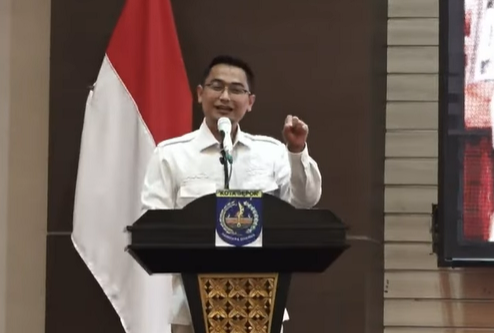
The Depok City Government held the Development Planning Deliberation (Musrenbang) for the 2027 Regional Government Work Plan (RKPD) in the Multipurpose Hall on the 10th floor of the Dibaleka II Building. In a keynote speech, the Chairman of the Depok City Regional House of Representatives (DPRD) emphasized the importance of synergy between technocratic data, community aspirations, and political policies to achieve targeted development.
The event was attended by the Mayor of Depok, the Deputy Mayor, as well as representatives from Statistics Indonesia (BPS) and West Java BPS. The presence of these statistical authorities was appreciated as a step to ensure development in Depok is based on accurate data.
Four Pillars of DPRD Depok’s Priority Affairs
The Chairman outlined the main points of the DPRD’s thoughts, formulated through four main commissions as the foundation for development in 2027:
1. Governance and Public Services (Commission A) The DPRD encourages the strengthening of Good Governance through transparency and accountability of Regional Apparatus Organization (OPD) performance. Another main focus is the implementation of a merit system in Civil State Apparatus (ASN) management to prioritize professionalism over political interests. “We appreciate the city government’s quick response to resident complaints on social media, but the integration of digital services and official complaints through the Laporgo.id channel must continue to be optimized,” he stated.
2. Economy and Revenue (Commission B) Focus on food security through urban farming and price stability. The DPRD encourages strengthening the integrated Municipal-Owned Enterprises (BUMD) Market with the food sector as an inflation control instrument and a source of Regional Original Revenue (PAD) through the digitalization of taxes and levies.
3. Infrastructure and Environment (Commission C) Critical issues raised include accelerating assistance for Uninhabitable Houses (RTLH) for disaster victims and integrated waste management at the Cipayung Landfill through private sector cooperation. The Chairman also highlighted the importance of revitalizing Green Open Spaces (RTH) that serve a dual function as water catchment areas for flood mitigation.
4. Human Resources and Social Protection (Commission D) The DPRD affirmed its commitment to the sustainability of free health services through the Universal Health Coverage (UHC) scheme and updating poverty data so social assistance distribution is on target. Furthermore, the construction of a Vocational Training Center (BLK) is a priority to improve the quality of the local workforce.
Commitment to Uphold Trust and Campaign Promises
Concluding his remarks, the Chairman emphasized that although there are various political interests among the 50 DPRD members, the ultimate goal is the happiness of Depok’s residents. He affirmed the DPRD’s role in controlling the course of government as a form of upholding trust.
“We support the Mayor and Deputy Mayor in realizing their development promises. We carry out our control function to ensure all those promises lead to community welfare,” he asserted.
He ended his speech with a pantun (traditional poem) inviting all stakeholders to work systematically for the city’s progress:
“Awaiting dusk at Taman Secawan, accompanied by coffee and banana cheese. Congratulations on working to carry out development, work neatly for Depok to advance.”
Depok City Government
Multipurpose Hall, 10th Floor, Dibaleka II Building
<