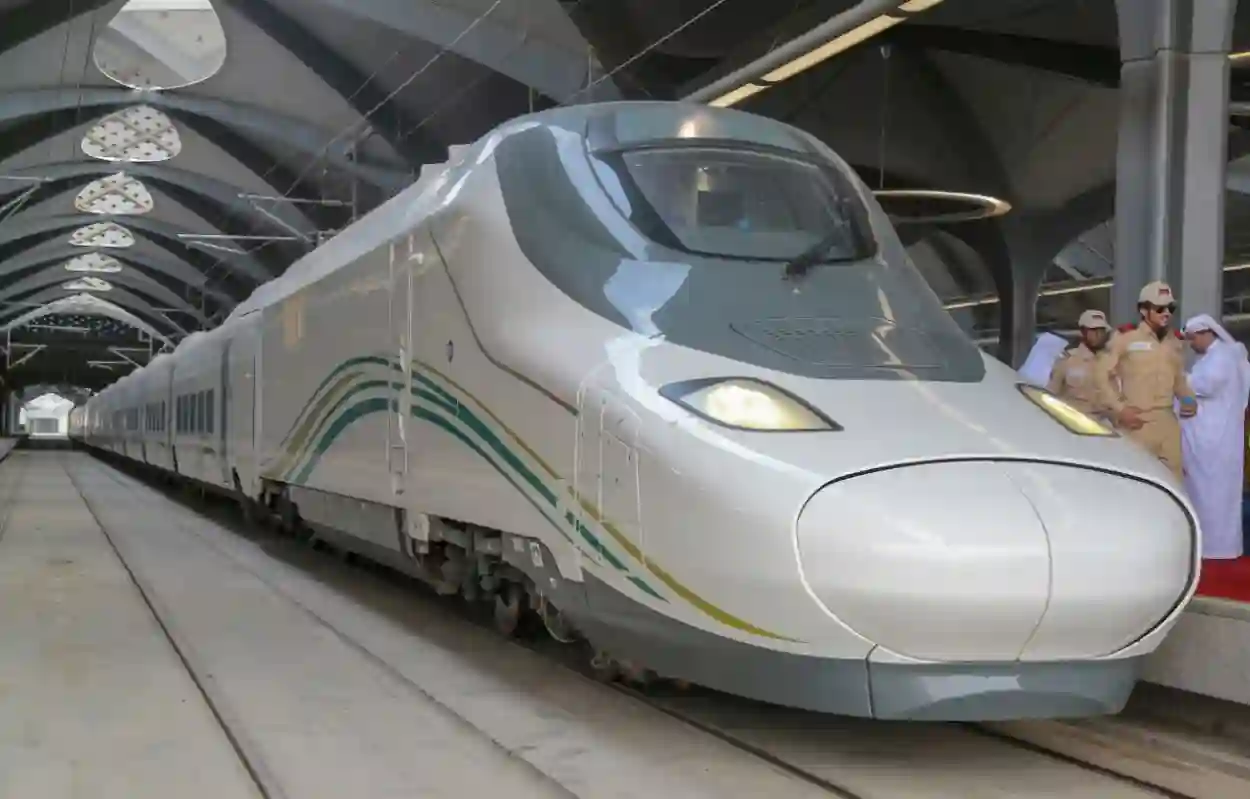
1.7 million seats enhance the operational superiority of the Haramain High-Speed Rail this year.
Saudi Railways enters an exceptional operational phase with the approach of Ramadan 1447 AH, having announced the completion of its preparations to enhance the readiness of the Haramain High-Speed Railway through an integrated plan aimed at boosting capacity and increasing the number of daily trips between Makkah and Madinah. This step reflects the scale of early preparations to meet the rising demand during the holy month and facilitate the smooth and seamless movement of pilgrims.
Operational Readiness with Record Numbers
The operational plan revealed is based on operating more than 3,662 trips throughout the season, providing over 1.7 million seats for passengers. The number of daily trips will rise to more than 100, a figure that reflects the flexibility of schedule management and the operational teams’ ability to adapt to prayer times and the movement of pilgrims and visitors. This ensures reduced waiting times and achieves the highest levels of punctuality during the peak Ramadan traffic.
One of the World’s Fastest Trains Serving the Two Holy Mosques
The Haramain High-Speed Railway continues to solidify its position as one of the world’s fastest passenger trains, with an operational speed of 300 kilometers per hour. It connects Makkah and Madinah, passing through Jeddah Governorate and King Abdullah Economic City via a 453-kilometer railway line. This enhances the integration of the Kingdom’s transportation system and elevates the travel experience in terms of speed, comfort, and reliability, offering passengers a safe and efficient option for travel between the most important religious destinations in the Islamic world.
Strategic Expansion to Enhance Future Capacity
Efforts have not been limited to seasonal preparations but have extended to long-term strategic steps, with a recent announcement of a contract to purchase 20 new trains. This move aims to support operational expansion and increase future capacity, enabling the accommodation of larger numbers of passengers during high-density seasons such as Ramadan and Hajj. This reflects a clear vision to enhance operational sustainability and keep pace with the growing number of travelers.
Alignment with Vision 2030 and Serving Pilgrims
The operational plan for Ramadan aligns with the objectives of the Kingdom’s Vision 2030 and the National Transport and Logistics Strategy, focusing on raising operational efficiency and improving the quality of services provided. This supports the comprehensive development journey witnessed by the Kingdom across various sectors. These efforts also fall within the framework of the great care dedicated to serving the Two Holy Mosques and their visitors, harnessing all capabilities to facilitate the performance of rituals and enhance the experience of pilgrims in an integrated spiritual and organizational atmosphere.
Haramain High-Speed Railway
The Haramain High-Speed Railway is a 453-kilometer electric railway in Saudi Arabia, connecting the holy cities of Mecca and Medina via Jeddah and King Abdullah Economic City. Opened in 2018, it was built to modernize pilgrimage (Hajj and Umrah) travel, significantly reducing journey times between the sacred sites to under three hours while easing road congestion. It stands as one of the world’s largest railway projects built for religious tourism.
Makkah
Makkah (Mecca) is the holiest city in Islam, located in present-day Saudi Arabia. It is the birthplace of the Prophet Muhammad and the site of the Kaaba, the most sacred shrine in Islam, which Muslims believe was originally built by the Prophet Abraham and his son Ishmael. Every year, millions of Muslims perform the Hajj pilgrimage to Makkah, a mandatory religious duty that traces its rites back to these ancient origins.
Madinah
Madinah, officially known as Al-Madinah Al-Munawwarah (the Enlightened City), is a holy city in Saudi Arabia of profound significance in Islam. It is the site of the Prophet’s Mosque, which contains the tomb of the Prophet Muhammad, and served as the capital of the first Muslim community (Ummah) after the Prophet’s migration (Hijrah) from Makkah in 622 CE. This event marks the beginning of the Islamic calendar, establishing Madinah as the spiritual and political heart of the early Islamic state.
Jeddah Governorate
Jeddah Governorate is a major urban center on Saudi Arabia’s Red Sea coast, historically serving as the primary gateway for pilgrims traveling to the Islamic holy cities of Mecca and Medina. Its historic core, Al-Balad, is a UNESCO World Heritage site featuring centuries-old merchant houses built from coral stone. Today, Jeddah is a modern commercial hub, blending its ancient trading port heritage with contemporary economic and cultural significance.
King Abdullah Economic City
King Abdullah Economic City (KAEC) is a large-scale, privately-funded megaproject on Saudi Arabia’s Red Sea coast, launched in 2005 by the late King Abdullah bin Abdulaziz. It was conceived as a new global investment and industrial hub to diversify the Saudi economy beyond oil, featuring major ports, industrial zones, and residential districts. Today, it stands as a key component of the Kingdom’s Vision 2030, aiming to boost logistics, manufacturing, and tourism.
Two Holy Mosques
The Two Holy Mosques refer to **Al-Masjid al-Haram** in Mecca and **Al-Masjid an-Nabawi** in Medina, the two holiest sites in Islam. Al-Masjid al-Haram, which houses the Kaaba, has been a central pilgrimage site since the time of Prophet Ibrahim (Abraham), while Al-Masjid an-Nabawi was established by the Prophet Muhammad in 622 CE after his migration to Medina. Both mosques have been continuously expanded over centuries to accommodate millions of pilgrims, particularly during the annual Hajj and Umrah seasons.
Ramadan
“Ramadan” is not a physical place or cultural site, but the ninth month of the Islamic lunar calendar, observed by Muslims worldwide as a holy period of fasting, prayer, reflection, and community. Its history dates to 624 CE when, according to Islamic belief, the first verses of the Quran were revealed to the Prophet Muhammad during this month. The fast commemorates this revelation and is one of the Five Pillars of Islam.
Hajj
The Hajj is the annual Islamic pilgrimage to the holy city of Mecca in Saudi Arabia, a religious duty that every able-bodied Muslim must perform at least once in their lifetime. Its rituals trace back to the prophets Abraham (Ibrahim) and Ishmael (Ismail), and it commemorates their acts of faith, culminating in the gathering of millions of Muslims from around the world during the last month of the Islamic calendar.