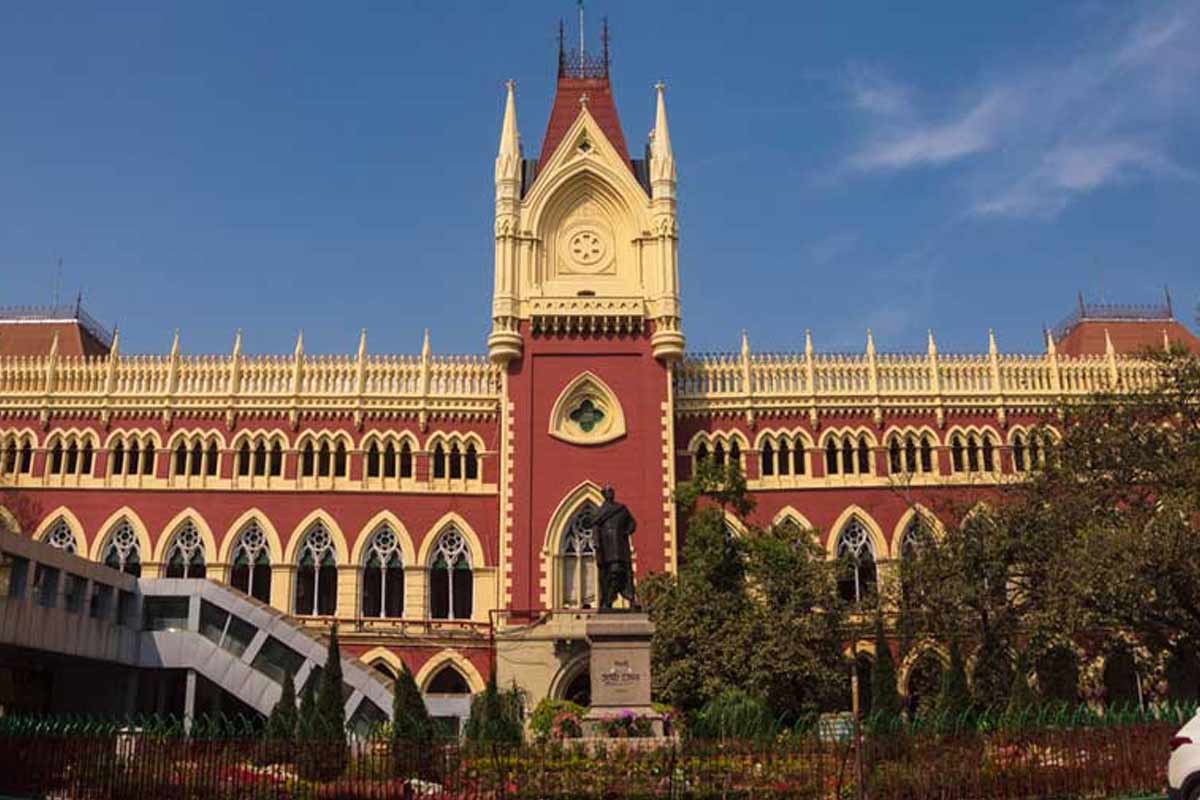
A major decision to resolve uncertainty in students’ school commutes. The Calcutta High Court has canceled the seizure of eight buses from a private school in Kolkata for election work. The seizure of the buses was not done through a lawful process, Justice Krishna Rao stated in court.
More on this topic
The second phase of voting in West Bengal is on April 29. Campaigning is in full swing across districts including Kolkata, Howrah, Hooghly, and the two 24 Parganas. Amidst this, the shortage of buses is causing concern. Uncertainty could also arise regarding the commute of school students. Several schools are already considering switching to online classes ahead of the elections. In this context, a case regarding the seizure of a private school’s buses in Kolkata was filed in the Calcutta High Court on Thursday.
In court, the lawyer for the applicant school society stated, ‘According to the Election Commission’s notification of February 8, 2023, vehicles of educational institutions specifically used for transporting students to and from their homes can only be seized for election work under unavoidable circumstances and as a last resort.’ The lawyer alleged in court, ‘There was no such unavoidable circumstance in seizing the concerned school buses.’ However, the state government’s lawyer could not present evidence or arguments to counter this allegation. In this case, Justice Krishna Rao stated that the seizure of the buses was arbitrary. The eight buses were seized without following the lawful process. On these grounds, the Calcutta High Court canceled the seizure of the buses. However, the Commission’s argument in court was that under Section 107, it has the right to seize transport for election work.
During elections, police and forces are primarily transported to polling stations by bus. Buses are also used to transport EVMs and other materials. Buses are needed to transport Presiding Officers and Polling Officers from distribution centers to booths and back after voting. It is known that from April 27, various transport systems will come under the control of the Election Commission. Consequently, the number of public transport vehicles on city roads could decrease significantly.
More on this topic
Calcutta High Court
The Calcutta High Court, established in 1862, is the oldest High Court in India. It was founded under the **High Courts Act of 1861** and its grand Gothic building, inspired by the Cloth Hall of Ypres, was completed in 1872. As a key institution from the British colonial era, it continues to serve as the highest judicial authority for the state of West Bengal and the Union Territory of the Andaman and Nicobar Islands.
Kolkata
Kolkata, formerly known as Calcutta, is the capital of India’s West Bengal state and was the capital of British India until 1911. Founded as a trading post by the British East India Company in 1690, it grew into a major colonial port and a historic center for Indian art, literature, and nationalist thought. Today, it is a bustling metropolis renowned for its colonial architecture, vibrant cultural festivals like Durga Puja, and intellectual legacy.
West Bengal
West Bengal is a state in eastern India, historically renowned as a cultural and intellectual hub of the subcontinent. Its capital, Kolkata, was the capital of British India until 1911 and a center for the Bengal Renaissance, a 19th-century social reform movement. The region is celebrated for its contributions to literature, art, cinema, and festivals like Durga Puja.
Howrah
Howrah is a major city in West Bengal, India, located on the western bank of the Hooghly River, directly opposite Kolkata. It is historically and culturally significant as a vital transportation hub, most famously for the **Howrah Bridge** (now Rabindra Setu), a cantilever bridge completed in 1943 that became an iconic symbol and a lifeline connecting the two cities. The area’s history is deeply intertwined with the colonial-era growth of Kolkata as a trading port and the subsequent industrial development of the region.
Hooghly
The Hooghly is a major distributary of the Ganges River in West Bengal, India, historically forming the western border of the Bengal Sultanate. It became a crucial artery for European colonial trade from the 16th century onward, with settlements like Portuguese Hooghly, Dutch Chinsurah, and British Calcutta (now Kolkata) established along its banks. Today, it remains a vital waterway for Kolkata and is lined with historic colonial and religious sites.
24 Parganas
24 Parganas is a historic district in the Indian state of West Bengal, encompassing the southern suburbs of Kolkata and the vast Sundarbans mangrove forest. Its name, meaning “24 subdivisions,” originates from its administrative creation during the Mughal period, later consolidated under British colonial rule. The region is significant for its ecological diversity, rich cultural heritage, and role in Bengal’s maritime and agricultural history.
Election Commission
The Election Commission is an independent governmental body responsible for organizing and overseeing elections to ensure they are free and fair. Its history is tied to the development of modern democracies, with many countries establishing permanent commissions in the 19th and 20th centuries to manage the complex electoral process and uphold public trust in democratic institutions.
EVMs
“EVMs” refers to Electronic Voting Machines, which are electronic devices used for casting and counting votes in elections. They were first introduced in India on a trial basis in 1982 and have since become the standard method for conducting elections across the country, replacing paper ballots to increase speed, accuracy, and reduce electoral fraud.