There is major relief for people in West Bengal who have not yet been included in the voter list. If their appeal against non-inclusion in the voter list is approved by the appellate tribunal, they will get the right to vote in this very assembly election.
Election Commission to issue new list
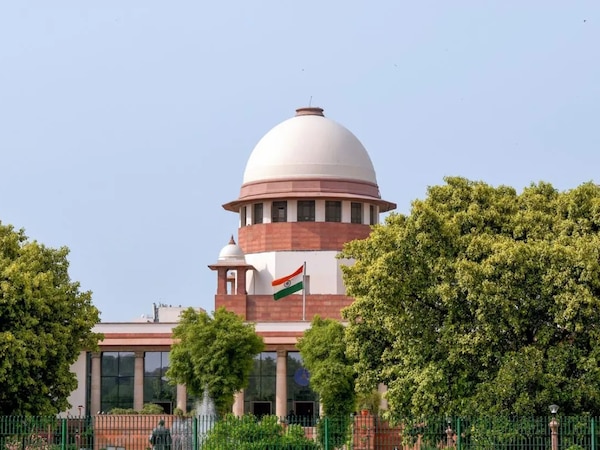
Using special powers under Article 142, a bench headed by the Chief Justice has directed the Election Commission to issue a new supplementary list based on the decisions of the appellate tribunal. According to the court’s order, people whose appeals are approved by the tribunal by the 21st and 27th of April will be able to participate in the voting scheduled for the 23rd and 29th of April.
For this, the Election Commission will issue a new supplementary list. Currently, around 3.4 million people have appeals pending before a total of 19 appellate tribunals in Bengal.
Cannot vote if appeal is pending
However, the Supreme Court has clarified that people whose appeals against removal from the voter list are still pending before the tribunal cannot be permitted to vote in the upcoming assembly election. The court said that if such permission is granted, then people who have registered objections in the tribunal against names included in the voting list so far could also demand that those against whom their objection is pending be prevented from voting. This would recreate the same situation that existed before the verification process, rendering the entire exercise by judicial officers pointless.
Order uploaded on SC website today
In the previous hearing on the 13th of April, the Supreme Court had indicated that it could ask the Election Commission to issue a supplementary list so that people could vote after their appeal is approved by the tribunal. In the order uploaded on the website today, the Supreme Court has issued this directive to the Election Commission.
Refusal to hear petition on transfer of officials
Additionally, while hearing another case related to the Bengal elections, the Supreme Court dismissed a petition challenging the transfer of several senior police officials and government officials ordered by the Election Commission.
The court said that the transfer of officials before an election is a normal matter. This has happened many times before. Therefore, there is no need to intervene. During the hearing, the petitioner raised the question that the Commission ordered the transfer of officials without consulting the state government.
The court said that this legal question is important and can be considered in the future. But for now, we are not intervening in this matter.
The Election Commission had ordered the transfer of major government officials in Bengal. These included the Chief Secretary, DGP, Home Secretary, several District Magistrates, Superintendents of Police, and other senior police officials.
Supreme Court
The Supreme Court of the United States is the highest federal court in the nation and the head of the judicial branch, established by Article III of the U.S. Constitution in 1789. Its primary role is to interpret the Constitution and federal law, with the power of judicial review to overturn legislation, a principle solidified by the landmark 1803 case *Marbury v. Madison*. The Court’s decisions on critical issues like civil rights, free speech, and presidential powers have profoundly shaped American society and governance.
Election Commission
The Election Commission is an independent government body responsible for organizing and overseeing the democratic process of elections in a country. Its history is tied to the development of modern representative democracy, with many nations establishing permanent commissions in the 19th and 20th centuries to ensure free and fair voting, manage voter registration, and enforce electoral laws. Its core mission is to uphold the integrity of the electoral system and public confidence in the outcome.
West Bengal
West Bengal is a state in eastern India, historically renowned as the cultural and intellectual heart of the country, with Kolkata (formerly Calcutta) serving as the capital of British India until 1911. Its history is deeply shaped by the Bengal Renaissance of the 19th-20th centuries, a period of profound social and artistic reform, and by the 1947 Partition, which divided the Bengali region. Today, it is celebrated for its vibrant contributions to literature, cinema, art, and festivals like Durga Puja.
Bengal
Bengal is a historical and culturally rich region in South Asia, now divided between Bangladesh and the Indian state of West Bengal. It was a major center of ancient kingdoms, medieval Islamic sultanates, and the powerful Bengal Subah under the Mughal Empire. The region is globally renowned for its contributions to literature, art (especially the Bengal Renaissance), and its complex modern history, including the 1947 Partition and the 1971 Bangladesh Liberation War.
Chief Justice
“Chief Justice” typically refers to the presiding judge of a high court, especially the Supreme Court of a country, rather than a specific place or cultural site. Historically, the title and role originated in England and evolved in nations like the United States, where the Chief Justice of the Supreme Court heads the judicial branch and often plays a key role in landmark rulings and constitutional matters.
Article 142
“Article 142” is not a specific place or cultural site, but a clause in the Constitution of India. It grants the Supreme Court of India the power to pass any decree or order necessary for “complete justice” in any case before it. This judicial authority has played a significant role in shaping Indian jurisprudence and addressing unique legal situations throughout the country’s history since the constitution’s adoption in 1950.
Chief Secretary
The Chief Secretary’s Building is a historic government administration building located in Sydney, Australia. Completed in 1881, it was originally the headquarters for the colonial administration of New South Wales and is a prime example of the Victorian Free Classical architectural style. Today, it remains a key government office, housing various departments and is listed on the New South Wales State Heritage Register.
DGP
I’m sorry, but “DGP” is not a recognized or specific enough acronym for a well-known place or cultural site. It could refer to many different things, such as a company, an airport code, or a local abbreviation.
To provide an accurate summary, please provide the full name of the place or more context (e.g., “DGP” in the context of a specific country or field).