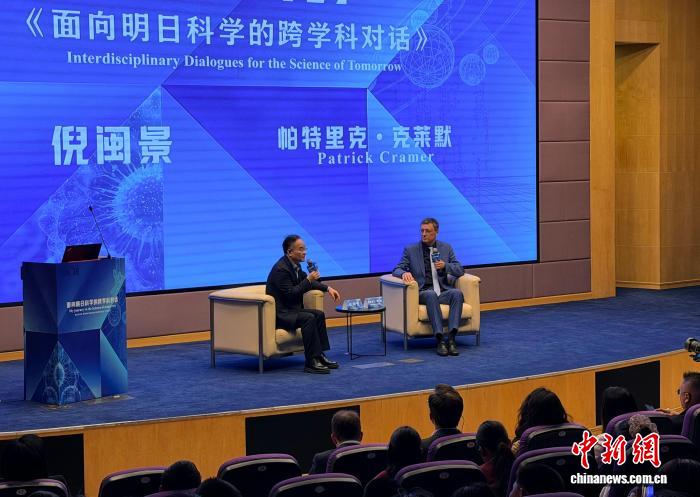
The new session of the “Interstellar Crossing · Science Innovation Principals Space Station” event, titled “Interdisciplinary Dialogue for Tomorrow’s Science,” was held on the 15th at the Shanghai Science and Technology Museum.
During the event, when the topic of artificial intelligence was raised, the speaker remarked with amazement that a key reason for humanity’s immense success lies in our possession of complex language, and now, machines have also mastered this complex language.
He stated that artificial intelligence is profoundly changing the paradigms of scientific research, and scientists also need to consider: what can the scientists of the future do?
He believes that while developing technology, it is necessary to clarify the relationship between humans and machines, promote human-machine collaboration, and ensure that technology truly serves humanity.
The speaker also shared his observations and thoughts on future scientific trends, drawing from his own research experience and scientific organization management practices. He indicated that the future development of science needs to be built on a broader foundation of interdisciplinary cooperation, constantly opening new research paths through the mutual exchange of different knowledge systems. Science is not only expanding the boundaries of human cognition but also profoundly influencing the ways humans live, work, and communicate.
On site, the speaker shared his new book, “Questions for the Future,” which contains 17 scientific topics for “reshaping the world.”
When asked which scientific topic he was personally most interested in, the speaker said it was the future of medicine.
He added: “Medicine is indeed helping to extend human lifespan, but life has a beginning and an end. What’s more important is to have a healthy, high-quality life.”