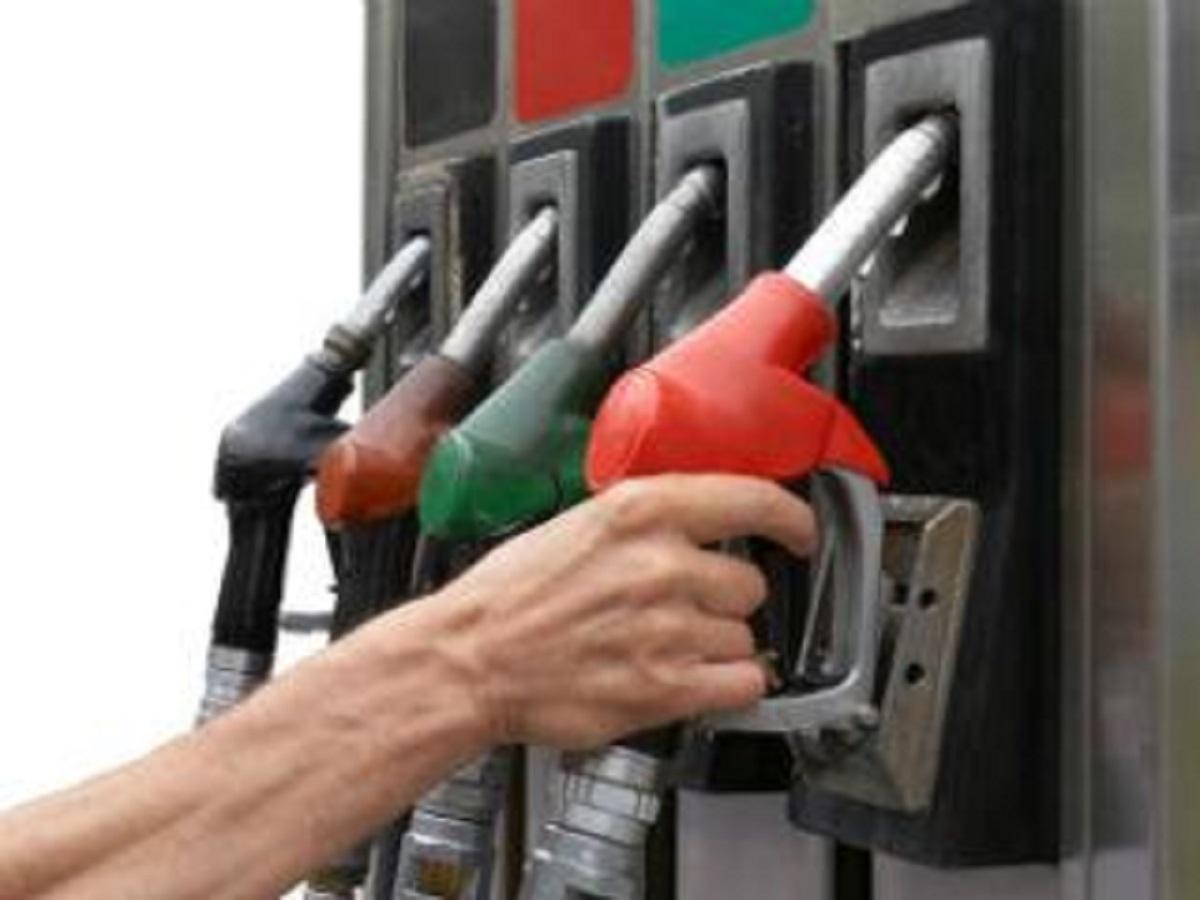
Global oil price movements point to a possible rollback in pump prices next week, the Energy Secretary said Thursday.
In a radio interview, the Secretary said current market signals suggest a downward trend in oil prices, although firm projections were not made.
“There appears to be hope for an oil price rollback,” she said, noting that recent trading days showed favorable movement.
“The three trading days look good, but I don’t want to predict yet; the trend seems to be staying low or even going lower,” she added.
Supply
The official also assured the public that the country has sufficient oil reserves, with around 50 days worth of supply available, and continuous weekly deliveries expected.
“We currently have about 50 days of oil stock, and new supply continues to arrive every week,” she said.
For liquefied petroleum gas (LPG), she said inventory levels are slightly lower.
“LPG has the lowest inventory at 36 days,” she noted.
The Energy chief added that the government is prioritizing fuel allocation for power generation to ensure energy stability.
“First and foremost, the priority will be power plants, as they are the top priority in terms of fuel,” she said.
She also said the government is closely monitoring fuel-related policies, including potential adjustments to excise taxes on petroleum products, which are still under evaluation by the budget committee.
“They are still evaluating what to do with diesel, gasoline, or other excise taxes,” she said.
Fuel stocks
Meanwhile, the Secretary clarified that the government is not yet selling fuel stocks acquired through the national oil company, emphasizing the need to maintain a buffer supply.
“We don’t want anyone making money out of the oil purchased by the national oil company,” she said.
She also pointed out infrastructure limitations in expanding reserves beyond current levels.
“We cannot force more than 60 days of supply because there is no space or depot capacity; that is currently the country’s limit,” she added.
The Department of Energy continues to monitor global oil markets and domestic supply conditions as it balances affordability, energy security, and infrastructure constraints.
Global oil price movements
“Global oil price movements” is not a physical place or cultural site, but a key economic phenomenon. Its history is shaped by geopolitical events, supply decisions from producers like OPEC, and global demand, with pivotal moments including the 1973 oil embargo and the 2020 price crash. These fluctuations profoundly impact the economies of both producing and consuming nations worldwide.
pump prices
“Pump prices” is not a specific place or cultural site, but a common term for the posted cost of fuel at a gas station. The history of these prices is tied to global oil markets, geopolitics, and local taxes, with significant fluctuations often reflecting events like the 1970s oil crises or modern supply disruptions. The signage displaying these prices has become an everyday economic indicator watched by consumers and governments worldwide.
oil reserves
“Oil reserves” refer to underground deposits of crude oil that are economically recoverable with current technology. Their history is tied to the 19th-century Industrial Revolution, when the first commercial oil well was drilled in Pennsylvania, USA, in 1859, launching the modern petroleum industry. The discovery and control of major reserves, particularly in regions like the Middle East, have profoundly shaped global geopolitics and economics throughout the 20th and 21st centuries.
liquefied petroleum gas (LPG)
“Liquefied petroleum gas (LPG)” is not a place or cultural site; it is a flammable hydrocarbon fuel mixture, primarily propane and butane, used for heating, cooking, and in vehicles. Its history is tied to the early 20th-century petroleum industry, where it was first produced as a byproduct during oil refining and natural gas processing before being commercialized as a portable energy source.
power plants
Power plants are industrial facilities designed to generate electricity, typically by converting various energy sources like fossil fuels, nuclear reactions, or renewables (wind, solar, hydro) into electrical power. Their history began in the late 19th century with the first public coal-fired plants, such as Thomas Edison’s Pearl Street Station in New York (1882), which pioneered centralized electrical distribution. Over time, technological advancements have dramatically increased their scale and efficiency while shifting focus toward sustainable energy to reduce environmental impact.
excise taxes
“Excise taxes” are not a physical place or cultural site, but rather a type of tax imposed on specific goods, services, or activities, such as tobacco, alcohol, fuel, or gambling. Historically, they have been used by governments for centuries, not only to raise revenue but also to discourage consumption of certain products or to fund related public initiatives. For example, the first excise taxes in England date back to the 17th century, often levied during times of war to finance military expenditures.
national oil company
A national oil company (NOC) is a state-owned enterprise that manages a country’s petroleum resources. They were typically founded in the 20th century, often after the nationalization of foreign-owned assets, to assert sovereign control over a vital economic sector. Today, NOCs like Saudi Aramco, PDVSA, and PetroChina are central to the economies and energy security of their respective nations.
Department of Energy
The United States Department of Energy (DOE) is a federal agency established in 1977, primarily in response to the 1970s energy crisis, to consolidate energy policy and nuclear weapons programs. Its mission is to ensure America’s security and prosperity by addressing energy, environmental, and nuclear challenges through transformative science and technology. Today, it oversees the nation’s nuclear arsenal, funds scientific research, and manages environmental cleanup of the nuclear weapons complex.