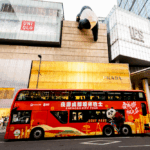
From the Land of Abundance to the heart of Chu, the “Gathering Talents in Tianfu · Building Dreams in Chengdu” — “Rongpiao Talent Gathering” City Tour Talent Recruitment Series (Wuhan Station) was successfully held from April 10th to 11th.
“The sun shines over the brocade city, gazing afar at the vast Chu sky.” Both Chengdu and Wuhan are famous historical and cultural cities located along the Yangtze River Economic Belt, each pulsating with vibrant innovative energy.
Wuhan is a heroic city, a pivotal hub connecting nine provinces, and an innovation-driven city thriving on science and education. It carries the millennia-old cultural heritage of Chu, renowned for “the grandeur of the river nurturing its three towns and the city’s strategic advantage connecting all regions.”
“Yi (an ancient name for Chengdu) was a great metropolis of antiquity, boasting majestic landscapes and a flourishing culture.” Chengdu is a renowned historical and cultural city, serving as a hub for Sino-foreign exchanges since ancient times and a pearl on the Southwest Silk Road. Today, Chengdu stands as one of China’s most dynamic and happiest cities.
What is Chengdu’s intent in recruiting talent in the River City?
Over the two-day event, one could genuinely feel Chengdu’s sincere respect and love for talent, its innovative approaches to attracting talent, and the deeper significance of Chengdu channeling Wuhan’s “intellectual vitality” into its fertile development ground, allowing the “innovative momentum” of the middle Yangtze region to resonate with the “strategic opportunities” of the Chengdu-Chongqing area.
Sincere Respect and Love for Talent
For talents choosing a city to settle in, they need both career platforms that match their expertise and a livable, comfortable cultural and lifestyle environment.
A postgraduate student from Wuhan University of Technology shared that her anticipation for developing her career in Chengdu after graduation stems from “the presence of enterprises and industries that align with my design major, as well as the city’s rich urban vitality and profound cultural heritage.” For a technical expert from a Wuhan-based electronics company,完善的的产业配套 and a high-quality business environment are the core concerns for enterprises.
Precisely addressing the concerns of talent and closely aligning with corporate needs, taking “what talent wants” and “what enterprises need” as the primary criteria for talent attraction—the sincerity of the Wuhan station event was embedded in every detail.
A week before the event launch, the student received a personalized recruitment email prominently featuring information on companies highly relevant to her major. Furthermore, Chengdu tailored the event by setting up specialized recruitment sessions for the electronic information and biomedicine industry chains, closely matching Wuhan’s academic strengths and industrial characteristics, facilitating precise connections between Chengdu enterprises and Wuhan students. Simultaneously, zones for求职服务 (job search services) and live-streamed job introductions were established, providing “one-stop” full-process employment services for talent.
During the city promotion segment, Chenghua District, Shuangliu District, and Pujiang County conducted specialized talent attraction presentations围绕活力成华 (Vibrant Chenghua),空港双流 (Airport Shuangliu), and生态蒲江 (Ecological Pujiang), comprehensively showcasing their respective特色产业机遇 (characteristic industry opportunities) and人才政策 (talent policies), allowing talents from the Chu region to直观感受 (directly experience) the developmental vitality and sincerity of Chengdu’s various districts.
Innovative Approaches to Talent Attraction
How to efficiently help various talents understand Chengdu’s image, grasp its opportunities, learn about its enterprises, and experience its products and services within just two days? Chengdu put considerable thought into this.
“Home to 315 Fortune Global 500 companies,” “103 international (regional) regular direct flights connecting five continents,” “Over 30 snow-capped mountains framing the city skyline, with 1,500 parks scattered like stars”… Concise promotional phrases clearly conveyed the city’s core advantages.
The event重磅发布 (grandly released) the “Chengdu City Talent Courtesy List,” covering four major sections: Innovation and Entrepreneurship Scene Opportunity List, Talent Demand List, Talent Service List, and Youth Talent Internship and Practice List,绘制清晰 (drawing a clear) “opportunity map” and “service guide” for talent coming to Chengdu. Among these, the首次发布 (first-time release) of the Youth Talent Internship and