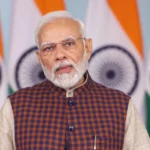
New Delhi, April 12. The India-UK Free Trade Agreement (FTA) is expected to come into effect from the second week of May. This agreement was signed last July.
India and the UK signed the Comprehensive Economic and Trade Agreement (CETA) on July 24, 2025, under which 99 percent of Indian exports will enter the UK market at zero duty. Meanwhile, India will reduce duty rates on British products such as cars and alcohol. “We expect this agreement to come into effect from the second week of May.”
The two countries have also signed a Double Contribution Convention (DCC) agreement. This will prevent temporary workers from both countries from paying social security contributions twice. The official stated that both agreements are likely to be implemented together. CETA aims to double trade between the two economies to $56 billion by 2030.
Under the agreement, India has opened its market for several consumer products, including chocolate, biscuits, and cosmetics. In return, it will gain greater market access in the UK for sectors such as textiles, footwear, gems and jewellery, sports goods, and toys.
Under this agreement, the duty on Scotch whisky will be immediately reduced from 150 percent to 75 percent, and will be further reduced to 40 percent by 2035. On vehicles, India will gradually, under a liberal quota system, reduce the import duty to 10 percent over five years, from the current level of up to 110 percent. In exchange, Indian manufacturers will gain access to the UK market for electric and hybrid vehicles.
New Delhi
New Delhi is the capital of India, officially inaugurated in 1931 as the new seat of the British Raj government, replacing Calcutta. It was designed by British architects Edwin Lutyens and Herbert Baker, featuring wide boulevards and grand colonial-era buildings like the Rashtrapati Bhavan and India Gate. Today, it serves as the political and administrative heart of the country, adjacent to the historic city of Old Delhi.
India
India is a vast South Asian nation with one of the world’s oldest continuous civilizations, dating back over 5,000 years to the Indus Valley. Its rich history is marked by influential empires, diverse kingdoms, and the profound development of major religions like Hinduism, Buddhism, Jainism, and Sikhism. Today, it is a vibrant, pluralistic republic renowned for its immense cultural, linguistic, and architectural heritage.
UK
The United Kingdom is a sovereign nation comprising England, Scotland, Wales, and Northern Ireland, with a rich history spanning millennia from ancient Celtic tribes and Roman occupation to the rise and decline of the vast British Empire. Culturally, it is a global hub known for its influential contributions to literature, music, science, and democratic governance, with iconic sites ranging from prehistoric Stonehenge and medieval castles to institutions like the British Museum and Westminster Abbey.
India-UK Free Trade Agreement
The India-UK Free Trade Agreement (FTA) is a proposed bilateral trade deal currently under negotiation, aimed at significantly boosting economic ties by reducing tariffs and trade barriers between the two nations. Its history stems from a mutual commitment following the UK’s exit from the European Union, with formal negotiations launched in January 2022 to create a modern pact covering goods, services, and digital trade.
Comprehensive Economic and Trade Agreement
The Comprehensive Economic and Trade Agreement (CETA) is a modern trade treaty between Canada and the European Union, provisionally applied since 2017. It aims to boost trade and investment by removing most tariffs and reducing regulatory barriers. Its history stems from negotiations launched in 2009, culminating in its signing in 2016 after overcoming significant public debate, particularly regarding investment protection provisions.
Double Contribution Convention
The “Double Contribution Convention” is not a widely recognized historical place or cultural site. It appears to be a mistranslation or a reference to a specific local event, possibly related to a conference or agreement. Without more specific context, it is not possible to provide a historical summary.
Scotch whisky
Scotch whisky is a renowned spirit distilled and matured in Scotland, with a history dating back to at least the 15th century. Its production is legally defined by region, process, and aging, with key styles including single malt and blended whisky. Today, it is a globally celebrated symbol of Scottish heritage and craftsmanship.
UK market
The term “UK market” broadly refers to the United Kingdom’s commercial and financial trading environment, which has evolved over centuries. Its modern structure was significantly shaped by the Industrial Revolution, which established London as a global financial hub, and later by the country’s membership in the European Union and subsequent exit. Today, it represents one of the world’s largest and most influential economies, encompassing the London Stock Exchange and a vast network of domestic and international trade.