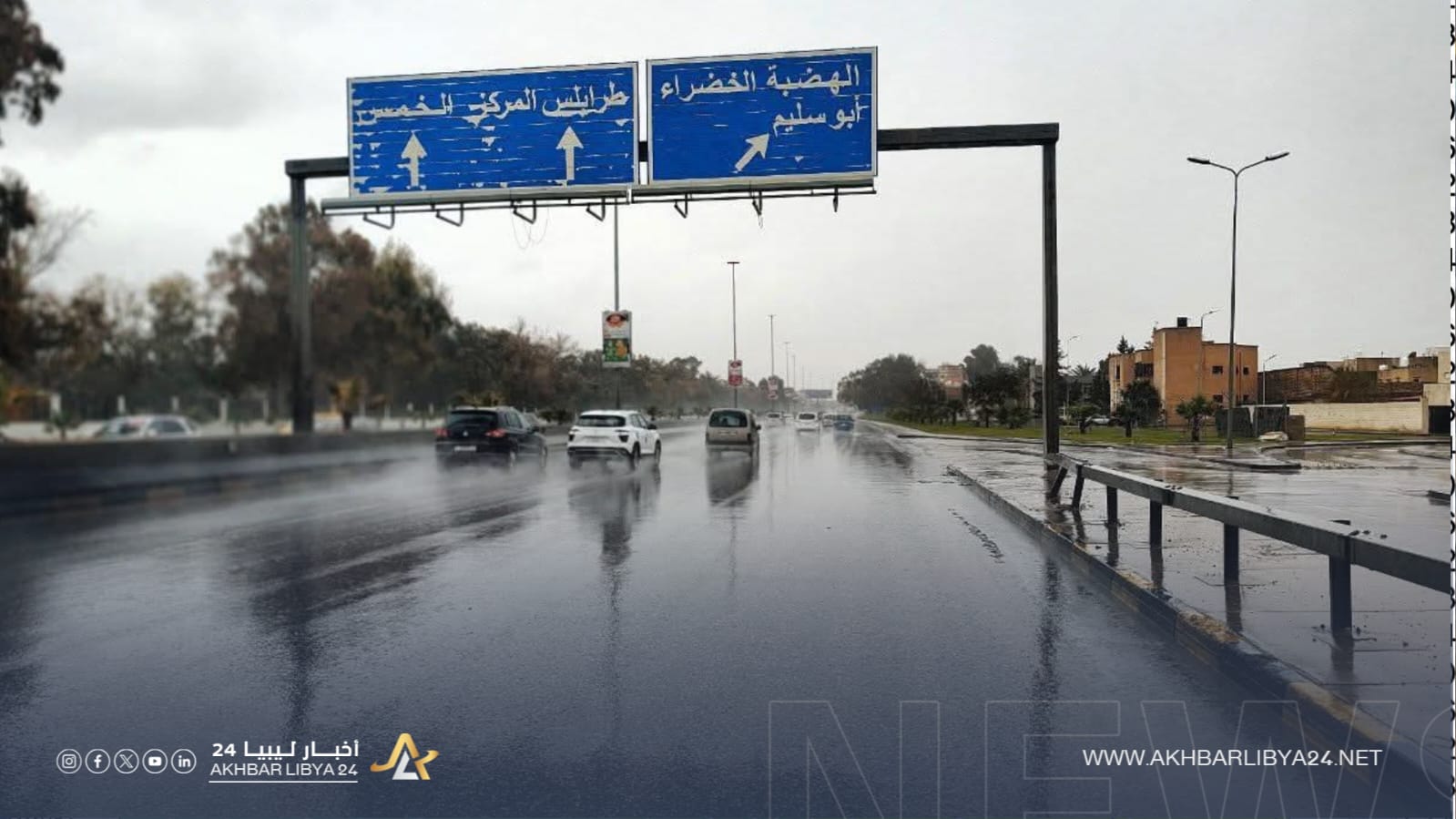
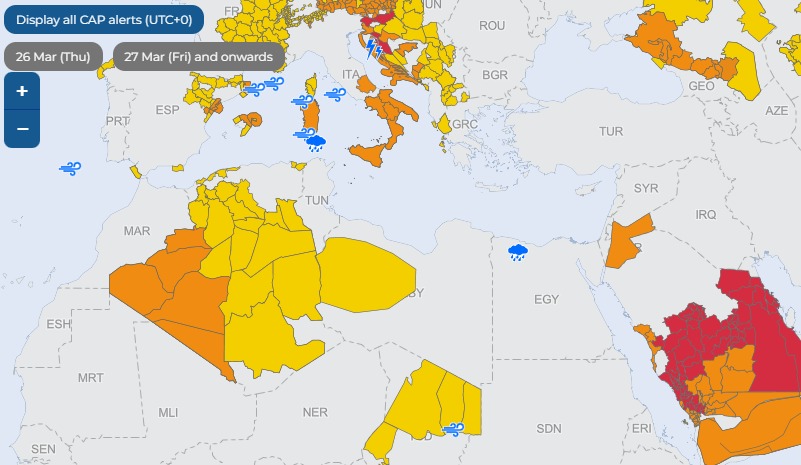
Warnings of heavy rain, thunderstorms, and valley flooding in the western regions.
The National Center renewed its warnings that a number of areas in western Libya will be exposed to unstable weather conditions, with these areas expected to witness heavy rainfall in the coming period, which may sometimes be accompanied by strong thunderstorm cells.
The Center clarified that the effects will particularly include areas south of the Nafusa Mountain, in addition to Ghadames, Al-Hamada, and Al-Jufra regions, where clouds are expected to multiply significantly, with thunderstorm activity that may increase the intensity of the rain.
Affected areas include south of Nafusa Mountain, Ghadames, Al-Hamada, and Al-Jufra regions
It indicated that these weather conditions may lead to water accumulation in low-lying areas, especially within cities, which could disrupt traffic and make movement difficult, in addition to the possibility of some local valleys flowing due to the heavy rain, posing a danger to residents living near flood channels.
Flow of some local valleys due to heavy rainfall
The Center urged citizens to take necessary precautions, stressing the importance of caution while driving, due to the potential for reduced visibility and roads becoming slippery from the rain. It also warned of the necessity to stay away from valleys and not risk crossing them during periods of water flow.
Meteorology: Necessity to stay away from valleys and not risk crossing them
It confirmed that these warnings come as part of its efforts to enhance awareness of potential weather risks and mitigate their effects on citizens and property.
Nafusa Mountain
The Nafusa Mountains are a rugged range in northwestern Libya, historically serving as a traditional homeland for the indigenous Amazigh (Berber) people. For centuries, its fortified hilltop villages, known as *ghurfas*, provided defense and preserved a distinct cultural and linguistic identity. The mountains also played a strategic role during the 2011 Libyan Civil War as a key rebel stronghold.
Ghadames
Ghadames is an ancient oasis town in western Libya, often called the “Pearl of the Desert.” Its history dates back over two millennia, with its distinctive multi-story mud-brick architecture and covered alleyways designed to provide shelter from the harsh desert climate. Recognized as a UNESCO World Heritage Site, the old town exemplifies a traditional pre-Saharan settlement and was a crucial caravan hub for trans-Saharan trade.
Al-Hamada
“Al-Hamada” (also known as Hamada al-Hamra) is a vast, rocky desert plateau in western Libya, notable for its distinctive red-colored landscape. Historically, it has served as a formidable natural barrier and a challenging route for ancient trans-Saharan caravans. The region is also significant for meteorite hunters, as the arid conditions have preserved numerous meteorite finds on its surface.
Al-Jufra
Al-Jufra is a district in central Libya, historically significant as a key oasis and trade route in the Fezzan region. It is best known for containing the modern city of Hun and the ancient fortified granary of Qasr al-Hajj, which dates back to the 12th century and served as a communal storage facility for local tribes. In recent history, the area gained strategic military importance during the 2011 Libyan Civil War and subsequent conflicts.