On the afternoon of January 14, the Hanoi People’s Court sentenced Ms. Tran Viet Nga (former Director of the Food Safety Department) to 15 years in prison, holding her responsible for the total bribe money her subordinates received, amounting to over 12 billion VND.
In the verdict announced this afternoon, the trial panel also sentenced the husband of the former female Director, Mr. Le Hoang (former Deputy Director of the Department of Preventive Medicine, Ministry of Health), to 5 years in prison.
Upon hearing the 15-year prison sentence, the former Director, Tran Viet Nga, standing in the defendant’s row, collapsed to her knees, covering her face and crying.
According to the verdict, out of the total 12 billion VND in bribes received by staff, former Director Tran Viet Nga personally benefited from a share of 8 billion VND. Her husband was accused of personally benefiting nearly 1 billion VND.
Ms. Nga received the second-highest sentence among the 55 people brought to trial. The person receiving the highest sentence of 20 years in prison is Mr. Nguyen Thanh Phong, former Director of the Food Safety Department.
Ms. Nga was accused of committing the crime as the mastermind and ringleader, bearing criminal responsibility for the total sum of 12.7 billion VND received by the specialists. Mr. Phong was accused of being the mastermind and ringleader, responsible for the bribe money his subordinates received, amounting to nearly 95 billion VND.
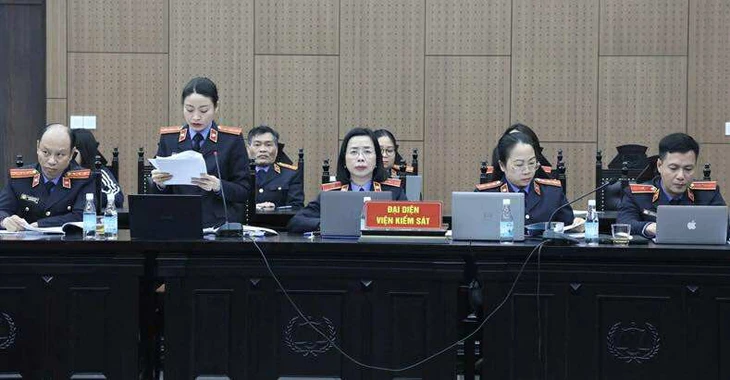
The first-instance court’s sentence for the former Director Tran Viet Nga and her husband was higher than the sentence previously proposed by the procuracy. During the prosecution, the procuracy had proposed a sentence of 12-13 years in prison for Ms. Nga and 2-3 years for Mr. Hoang.
Announcing the verdict, the trial panel assessed the criminal acts of the group of former leaders and specialists as particularly serious, necessitating strict punishment to ensure deterrence.
The Former Director’s “Greasing the Wheels” Mechanism
According to the indictment, while serving as Deputy Director and then Director of the Food Safety Department, Ms. Nga frequently “harassed” businesses, thereby creating a mechanism that forced them to pay “grease money” during the process of reviewing and issuing content confirmation certificates for health-protection food advertisements.
Initially, Ms. Nga still signed confirmation documents on time. However, later she often let dossiers exceed deadlines without approval, or returned them with unclear, unconvincing reasons not in accordance with advertising regulations.
Therefore, some individuals and company directors called or went directly to the Food Safety Department to meet with the reviewing specialists to inquire about the delays and ask for guidance on amendments and supplements, as the required content was unclear.
The department’s specialists “whispered” to businesses that if they wanted favorable conditions, they had to follow “Ms. Nga’s mechanism,” paying 4-8 million VND per dossier. For each approved dossier, the specialist had to transfer 2 million to the female Director.
During questioning, at the witness stand, Ms. Nga explained that when in charge of the advertisement dossier review field, she had “heard from colleagues in the department about receiving money, and this was also the general situation in other divisions.”
Subsequently, the former female Director said she noticed that specialists were receiving money from businesses, 4-8 million VND per dossier depending on the difficulty level.
The procuracy reminded that this was the actual amount of money the specialists had received from businesses after the female Director established such a collection mechanism. Based on that, the specialists then transferred money to the Director.
Responding later, specialist Tran Thi Thu Lieu said