Thousands of civilians flee Akobo.. Will South Sudan return to war?
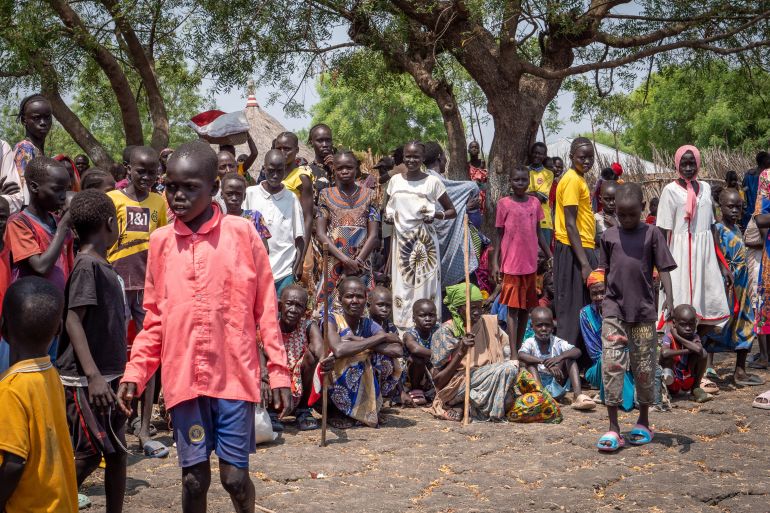
The town of Akobo in Jonglei state near the Ethiopian border in eastern South Sudan has witnessed mass displacement after the army ordered civilians, humanitarian bodies, and forces to evacuate the area in preparation for a large-scale military offensive against opposition forces. This is a new sign of the fragility of the 2018 peace agreement, amid warnings that the country could slide back into full-scale civil war.
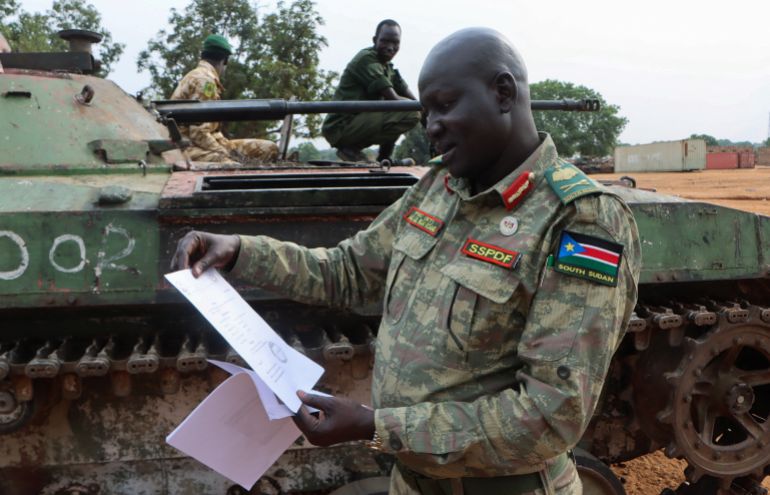
The ultimatum issued by the South Sudanese army expires this Monday afternoon. It is part of a military operation launched by the government last January under the name “Permanent Peace,” which has led to the displacement of more than 280,000 people in Jonglei state since last December, after opposition forces seized government positions.
A United Nations commission in South Sudan had warned that the country could see a “return to full-scale war” if the leadership does not seriously address the current challenges, noting that preventing the collapse of institutions and protecting the transition requires urgent national, regional, and international re-engagement.
A Disintegrating Agreement and a Controversial Trial
These developments come amid a gradual collapse of the peace agreement signed between President Salva Kiir and his former deputy Riek Machar, who has been under house arrest since March 2025 on charges his supporters describe as political. His arrest coincided with an escalation in armed opposition activity, while a UN investigation concluded that the authorities are “systematically dismantling” the terms of the agreement.
It is viewed that the current crisis reveals the fragility of Salva Kiir’s grip on power, pointing out that “the state is effectively crumbling,” and that the outcome of Machar’s trial will largely determine the country’s future.
As military operations continue and violence spreads, South Sudan faces an existential test: either revive the peace process through urgent regional and international intervention, or slide into a new civil war that could sweep away what remains of state institutions and multiply the humanitarian tragedy.
Akobo
Akobo is a town in South Sudan near the Ethiopian border, historically significant as part of the Greater Upper Nile region. It has been a center for the Nuer people and was heavily affected by the Sudanese civil wars, serving as a strategic location during conflicts. In recent decades, it has faced severe humanitarian challenges due to ongoing instability and flooding.
Jonglei state
Jonglei is a state in South Sudan, historically known for its vast wetlands and the seasonal migration paths of the White Nile. It was a significant region during the Sudanese civil wars, often contested due to its strategic location. The state has also been the site of the ambitious, yet incomplete and controversial, Jonglei Canal project aimed at water diversion.
Ethiopian border
The Ethiopian border, shaped by colonial-era treaties and conflicts, is a historically contested region, most notably with Eritrea following a decades-long struggle for independence and a subsequent 1998-2000 border war. Today, it remains a sensitive geopolitical area, with ongoing internal ethnic tensions and disputes influencing border security and administration. Key demarcation issues, particularly concerning the town of Badme, continue to symbolize the complex legacy of these conflicts.
South Sudan
South Sudan is the world’s youngest country, having gained independence from Sudan in 2011 after decades of civil war. Its cultural heritage is deeply rooted in the traditions of its numerous ethnic groups, such as the Dinka and Nuer, though its modern history has been marked by significant conflict and a struggle to build national institutions.
2018 peace agreement
The 2018 peace agreement refers to the **Agreement on Peace and Reconciliation in Mali**, signed in Bamako between the Malian government, pro-government militias, and two coalitions of northern armed groups. It aimed to end the conflict that began in 2012 by decentralizing power, integrating fighters, and fostering development in the north. However, implementation has been slow and fragile, with ongoing violence and instability continuing to challenge the peace process.
United Nations Mission in South Sudan (UNMISS)
The United Nations Mission in South Sudan (UNMISS) is a UN peacekeeping operation established in July 2011, following South Sudan’s independence. Its primary mandate is to consolidate peace and security, protect civilians, and support the implementation of a ceasefire and peace agreement in a country that has experienced significant internal conflict.
Juba
Juba is the capital and largest city of South Sudan, located on the White Nile. Historically a trading post, it became the administrative center of the region under Anglo-Egyptian rule and later served as the provisional capital of Southern Sudan during the peace process, before officially becoming the national capital upon South Sudan’s independence in 2011.
Salva Kiir
“Salva Kiir” is not a place or cultural site, but a person—the current President of South Sudan. He rose to prominence as a commander in the Sudan People’s Liberation Army (SPLA) during the Second Sudanese Civil War and became the first President of the newly independent Republic of South Sudan in 2011.