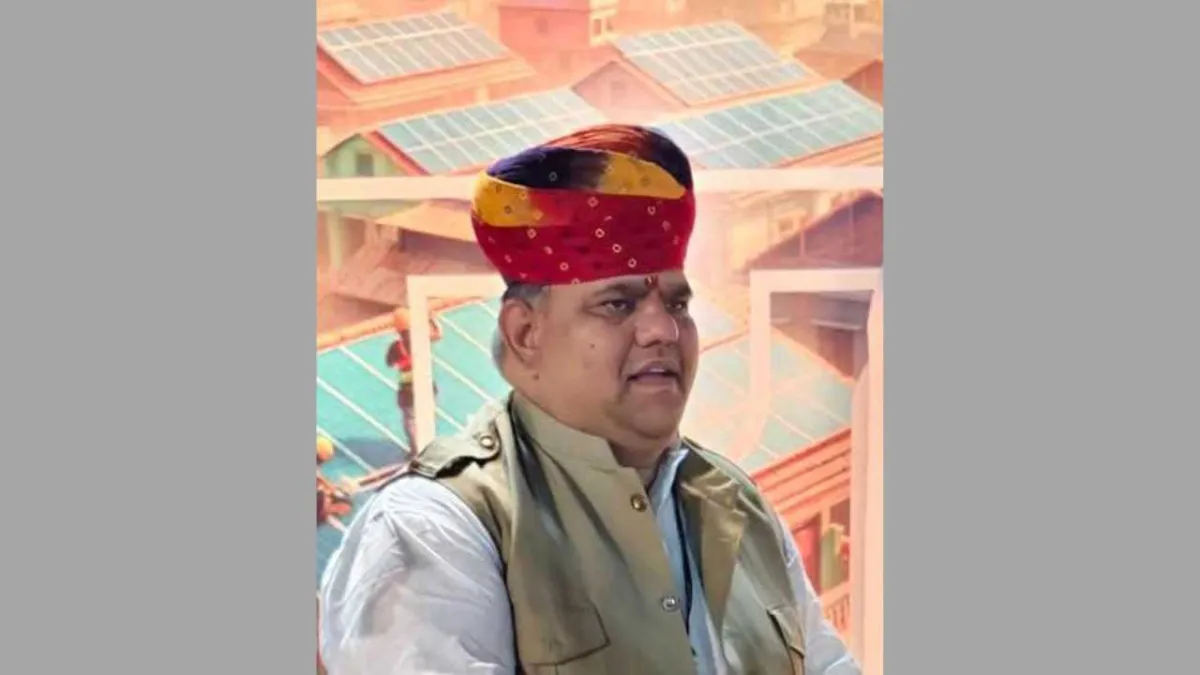
The president of the Rajasthan Youth Association, a leading social organization for the city’s migrant Rajasthanis, and a prominent community leader, Vikramsingh Shekhawat, passed away suddenly due to a heart attack on Tuesday afternoon, March 3. Upon hearing the news of his demise, a crowd of well-wishers and community members gathered at the hospital.
His mortal remains were brought to the New Civil Hospital for final viewing, where thousands of people, including numerous figures from the political and social spheres, paid their respects. Afterwards, the body was taken to Surat Airport, from where it was sent by air to his ancestral village in Rajasthan.
It is noteworthy that under Shekhawat’s leadership, the traditional three-day Phagotsav festival, organized on the occasion of Holi, had concluded just on Monday night. He was actively playing a role in several social organizations, including as the president of the Laghu Udyog Bharati Surat district unit. He made significant contributions to various activities of the Rajasthan community.
His passing has cast a deep pall of grief over the community. His efforts towards social unity, a spirit of service, and organizing the youth will be remembered for a long time. His life was an inspiring example of social service, dedication, and duty.
Rajasthan Youth Association
The Rajasthan Youth Association is a social and cultural organization, not a physical place or historical site. It is typically a community group formed by people from the Rajasthani diaspora or within Rajasthan itself, aimed at preserving cultural heritage, organizing events, and engaging the youth. Its history is generally tied to the migration and community-building efforts of Rajasthani people, often established in the 20th or 21st century in various cities around the world.
New Civil Hospital
The New Civil Hospital in Surat, India, is a major public healthcare institution established in 1964 to serve the city’s growing population. It was notably at the center of a 1994 pneumonic plague outbreak, which led to significant reforms in India’s public health surveillance and response systems. Today, it remains a critical tertiary care facility for the region.
Surat Airport
Surat Airport, also known as Surat International Airport, is a major domestic and international airport serving the city of Surat in Gujarat, India. Its modern integrated terminal opened in 2018, marking a significant upgrade from its earlier status as a smaller domestic facility. The airport’s development reflects Surat’s rapid growth as a global diamond and textile trading hub.
Phagotsav festival
Phagotsav is a vibrant spring festival celebrated in the Indian state of Manipur, primarily by the Meitei community. It is a cultural and religious event dedicated to Lord Krishna, marking the arrival of spring with traditional music, dance (like the famous Ras Lila), and community feasts. Historically, it is believed to have been introduced and popularized in the 18th century by the great ruler and scholar, King Bhagyachandra.
Holi
Holi is a vibrant Hindu festival celebrated primarily in India and Nepal, marking the arrival of spring and the victory of good over evil. Its history is rooted in ancient legends, most notably the story of Prahlad and his devotion to Lord Vishnu, which led to the defeat of the demoness Holika. The event is famous for its joyous atmosphere where people throw colored powders and water at each other, symbolizing unity and the blossoming of new life.
Laghu Udyog Bharati Surat district unit
“Laghu Udyog Bharati Surat district unit” is a local branch of Laghu Udyog Bharati, a nationwide Indian organization that advocates for and supports small-scale industries. Based in the industrially significant Surat district of Gujarat, this unit works to address the specific challenges and promote the interests of local small businesses and entrepreneurs, continuing the parent organization’s history of representing the micro, small, and medium enterprise (MSME) sector since its founding in 1994.
Rajasthan community
The Rajasthan community refers to the people of Rajasthan, a state in northwestern India renowned for its vibrant culture, historic forts, and desert landscapes. Historically, it was shaped by Rajput kingdoms known for their valor and patronage of arts, resulting in a rich heritage of music, dance, textiles, and architecture. Today, the community maintains its distinct traditions while being an integral part of modern India.
ancestral village in Rajasthan
An ancestral village in Rajasthan typically refers to a rural settlement where families have lived for generations, often centered around a fortified manor house or *haveli*. These villages reflect the region’s feudal history, with many established centuries ago by Rajput clans who controlled the surrounding agricultural lands. Today, they preserve traditional architecture, customs, and a strong sense of lineage and community.