Workers being charged 500–700 rupees per kg for 2.5 kg cylinders; memorandum submitted to administration
Surat. A demand has been raised for strict action against the black marketing of cooking gas cylinders in the Sachin GIDC and surrounding areas. Officials of the Sachin Industrial Co. Op. Housing Society submitted a memorandum to the administration on this issue, appealing for immediate action.
In the memorandum submitted to the Surat District Collector, District Supply Officer, and Surat City Police Commissioner, it was stated that approximately three lakh workers employed in the Sachin Industrial Estate reside in nearby societies like Rameshwar, Shivnagar, Siddhivinayak, and Lakshmivila. In addition, people from villages such as Sachin, Kanakpur, Kansad, Paligam, Talangapur, Uber, and Gabheni also depend on this area.
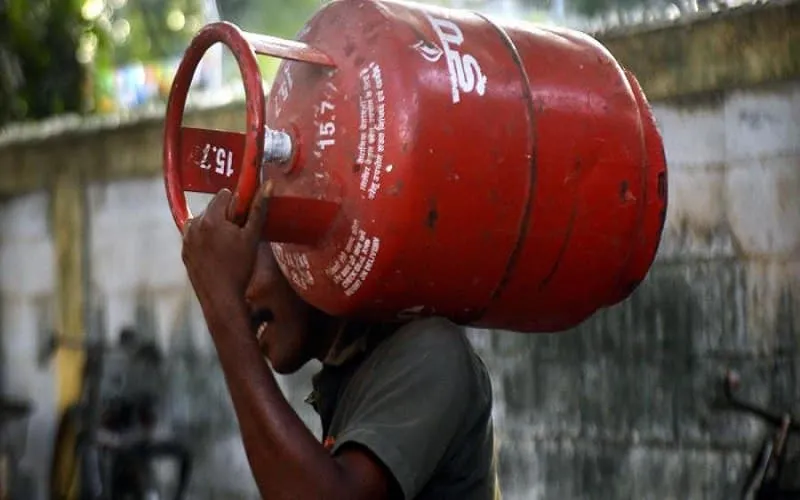
The memorandum stated that recently, amid fears of LPG cooking gas supply being affected due to the war-like situation between Iran, America, and Israel, some shopkeepers and general store operators are taking advantage by illegally refilling gas cylinders and engaging in black marketing.
It was reported that previously, shopkeepers used to charge 70 to 80 rupees per kg to refill a small 2.5 kg gas cylinder, but now they are allegedly charging 500 to 700 rupees per kg. This is causing severe financial hardship for poor workers and people from the surrounding villages.
The society officials warned that if workers do not get relief soon, many laborers may return to their villages, which could also impact the operations of industries.
In this regard, they have demanded that the Food and Civil Supply Department conduct raids and take strict action against those involved in black marketing. An appeal has also been made to the Police Department to investigate general stores and suspicious locations and take strong steps against those involved in illegal activities.
Sachin GIDC
“Sachin GIDC” refers to the Sachin Industrial Estate (GIDC stands for Gujarat Industrial Development Corporation), located near Surat in Gujarat, India. Established as part of Gujarat’s industrial growth initiatives, it is a major hub for textile manufacturing, diamond polishing, and other industries. While not a historical or cultural site in the traditional sense, its history is tied to the region’s economic development since the late 20th century, transforming the area into a significant industrial zone.
Surat District Collector
The Surat District Collector’s Office is the administrative headquarters for the district of Surat in Gujarat, India. Historically, the role of the District Collector was established under British colonial rule as the chief revenue and administrative officer, a system that continues in modern India. Today, this office is central to local governance, overseeing law and order, revenue collection, and public welfare in one of the country’s most economically vibrant districts.
District Supply Officer
“District Supply Officer” is not a specific place or cultural site, but a job title or administrative role, typically within a government or military logistics system. Historically, such officers have been responsible for managing the procurement, storage, and distribution of essential goods and materials for a defined geographic district, especially during times of centralized planning or conflict. Therefore, it does not refer to a physical location with a cultural history to summarize.
Surat City Police Commissioner
The Surat City Police Commissioner is the administrative head of the police force in Surat, Gujarat, India. The office was established as part of the modern Indian police system, with the current commissioner model being implemented to enhance urban security and law enforcement efficiency in the rapidly growing industrial city.
Sachin Industrial Estate
The Sachin Industrial Estate is a major industrial zone located in the Surat district of Gujarat, India. Established in the late 20th century as part of regional development efforts, it has grown into a significant hub for textile manufacturing, diamond polishing, and other industries, contributing substantially to Gujarat’s economy.
Rameshwar
Rameshwar, more commonly known as Rameswaram, is a sacred island town in Tamil Nadu, India, revered as one of Hinduism’s holiest Char Dham pilgrimage sites. According to Hindu epic tradition, it is where Lord Rama built a bridge to Lanka and later worshipped Lord Shiva to atone for killing the demon king Ravana. Its centerpiece is the Ramanathaswamy Temple, renowned for its magnificent corridors and 22 sacred water bodies (theerthams) for ritual bathing.
Shivnagar
Shivnagar is a common place name in India and Nepal, often referring to towns or neighborhoods dedicated to the Hindu deity Shiva. Without a specific, well-documented location, a detailed history is unavailable, but such places typically feature temples and have grown around religious and cultural significance linked to Shaivism.
Siddhivinayak
The Shree Siddhivinayak Temple is a renowned Hindu temple located in Mumbai, India, dedicated to Lord Ganesha. It was originally built in 1801 by a local contractor named Laxman Vithu Patil, and its current structure was significantly expanded in the 1990s. Today, it is one of the wealthiest and most visited temples in India, attracting millions of devotees seeking the deity’s blessings for prosperity and success.