-
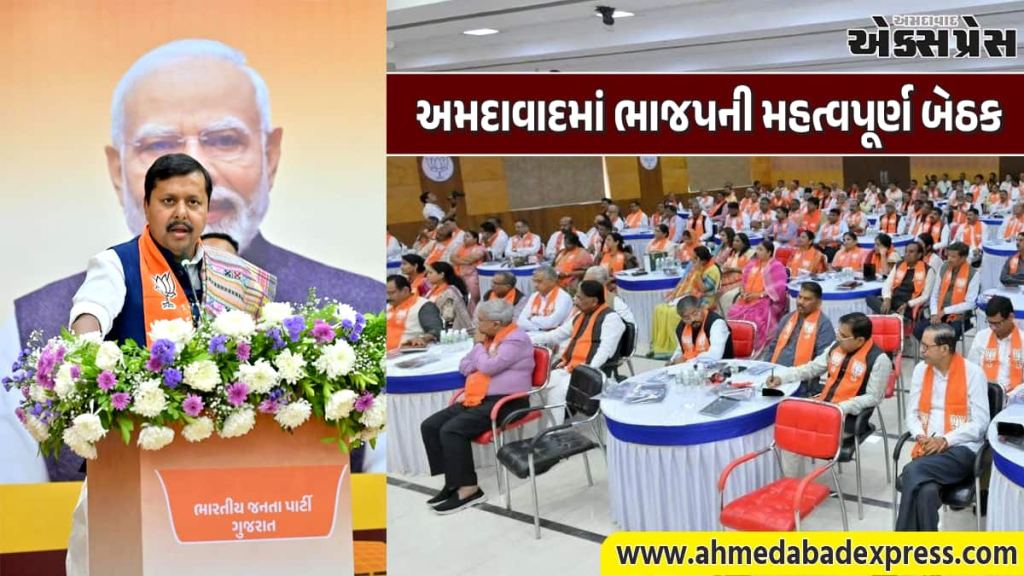
Bharatiya Janata Party’s Parliamentary-Legislative Meeting Held in Ahmedabad
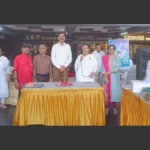
The Bharatiya Janata Party’s parliamentary-legislative meeting was held in Ahmedabad. In the presence of the National President, Chief Minister Bhupendra Patel, Harsh Sanghvi, and Jagdish Vishwakarma emphasized public outreach, social media, and development. Gujarat was described as the country’s “growth engine,” and its work culture was praised – see details.
Bharatiya Janata Party’s Parliamentary-Legislative Meeting Held in Ahmedabad
In his address, the National President stated that the Gujarat BJP’s working methodology has been systematic, timely, and exemplary for the country for years. He said the work culture developed under Narendra Modi has strengthened India as a global economic power. He added that due to strong leadership, clear policy, and development-centric politics, the public continues to express trust in the BJP.
He guided MPs and MLAs to make public outreach more active, ensure planned performance through micro-management, and effectively use social media to increase the reach of central and state government schemes.
Chief Minister Bhupendrabhai Patel stated that under the leadership of Prime Minister Narendra Modi, Gujarat is becoming the country’s “growth engine.” By implementing schemes with the poor and middle class at the center, the state is progressing on the path of holistic development. Prioritizing fiscal discipline and transparency, the state government is accelerating the development journey.
The State President described the National President’s first visit to Gujarat as a confluence of Bihar’s intellectual depth and Gujarat’s progressive vision. He stated that for the BJP, it is not power but service, commitment, and values that come first—citing development, transparency, and national interest as the party’s main priorities.
The Deputy Chief Minister, addressing Nitin Naveen as the “Millennial President,” said he has witnessed India’s transformation from radio to AI and is an inspiration for young workers.