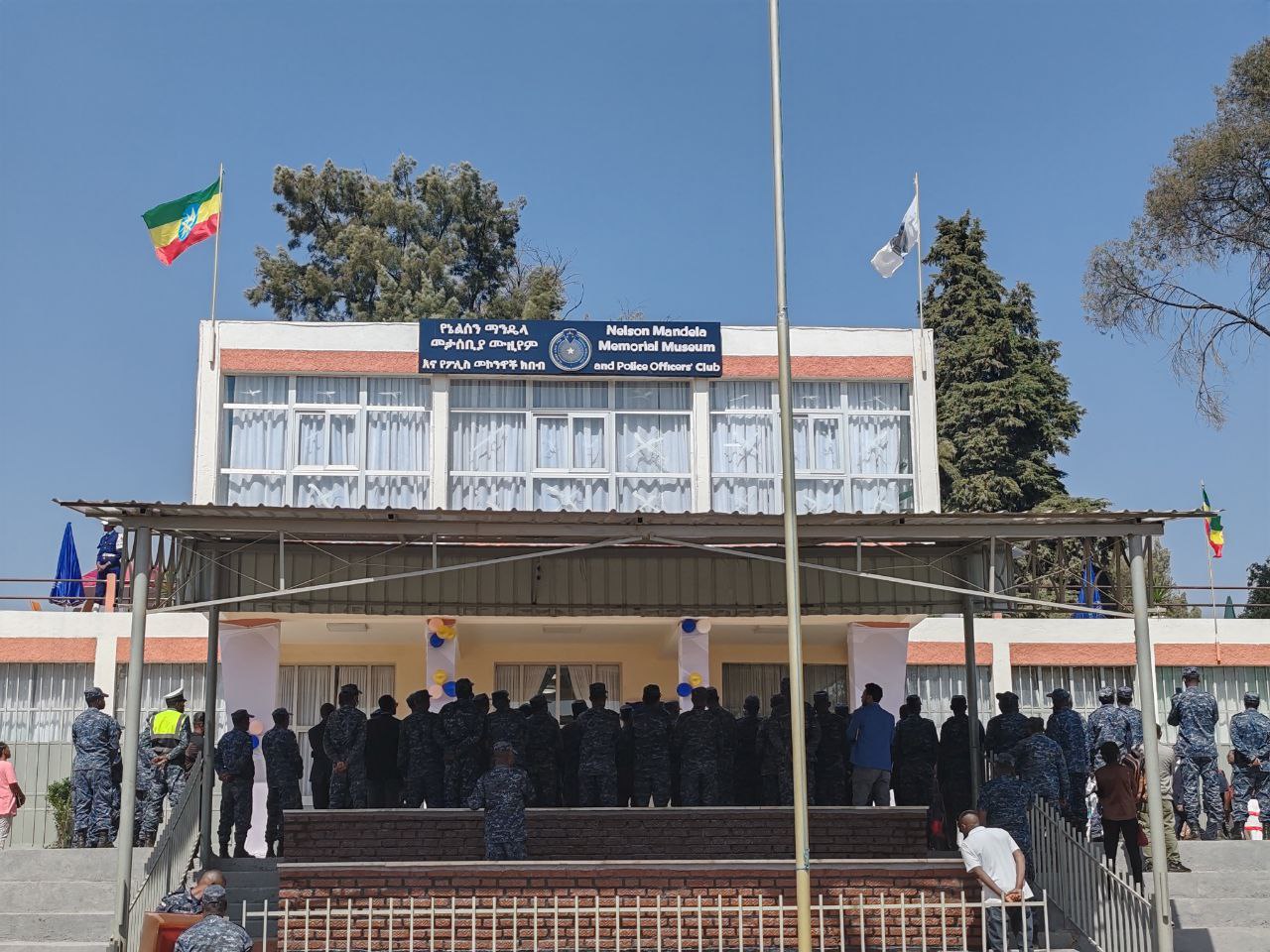
The museum highlights the historical relationship between Mandela and Ethiopia, showcasing the period during which he received military and political training in the country, as part of broader efforts to dismantle the apartheid system in South Africa.
The museum also reflects the historic solidarity between the Ethiopian and South African peoples in their shared pursuit of freedom, justice, and human dignity.
Officials stated during the opening ceremony that the museum’s role will not be limited to being a historical archive, but will also highlight the role Ethiopia played in Africa’s independence.
They added that the museum will be a center for education and inspiration for future generations committed to African unity and the principles of equality and self-determination.
Ethiopia played a steadfast role in supporting African liberation movements. As one of the few African nations that resisted colonial rule and maintained its sovereignty, it provided moral and political support, and in some cases material support, to various liberation fronts across the continent.
Mandela
“Mandela” most commonly refers to Nelson Mandela, the anti-apartheid revolutionary and former President of South Africa. While not a physical site, his legacy is enshrined in places like the Nelson Mandela Capture Site in Howick (marking his 1962 arrest) and the Robben Island prison where he was incarcerated for 18 years. These locations are pivotal to understanding South Africa’s struggle for democracy and Mandela’s journey from prisoner to president.
Ethiopia
Ethiopia is a historically rich nation in the Horn of Africa, widely considered one of the oldest sites of human habitation and home to the ancient Aksumite Kingdom. It is unique in Africa for largely avoiding European colonization, maintaining its sovereignty, and is famed for its rock-hewn churches of Lalibela and as the origin of the coffee bean.
South Africa
South Africa is a country located at the southern tip of the African continent, renowned for its diverse landscapes, wildlife, and multicultural society often described as the “Rainbow Nation.” Its modern history is profoundly shaped by colonialism and the apartheid era, a system of institutionalized racial segregation that ended in 1994 with the election of Nelson Mandela, ushering in a new democratic era. Key cultural and historical sites include Robben Island, the Cradle of Humankind (a UNESCO World Heritage Site for its fossil evidence of early human ancestors), and the vibrant cities of Cape Town and Johannesburg.
apartheid system
The apartheid system was a state-enforced policy of racial segregation and discrimination that existed in South Africa from 1948 to the early 1990s. Instituted by the white-minority National Party government, it systematically denied basic rights and freedoms to the country’s non-white majority. The system was dismantled through internal resistance and international pressure, culminating in the country’s first democratic elections in 1994.
African independence
“African independence” broadly refers to the mid-20th century period when nations across Africa achieved sovereignty from European colonial rule, a movement often called the “Scramble for Independence.” This transformative era, largely concentrated between the 1950s and 1970s, was driven by nationalist movements, pan-Africanism, and changing global politics following World War II. It reshaped the continent’s political map, establishing over 50 new nations and initiating ongoing journeys of nation-building, development, and cultural reclamation.
African liberation movements
African liberation movements were 20th-century political and armed struggles across the continent to end European colonial rule and white minority regimes. These diverse movements, such as those in Algeria, Kenya, Ghana, and South Africa, were driven by ideologies like Pan-Africanism and socialism, ultimately leading to independence for most nations by the 1970s. Their legacy is a foundational part of modern African identity, sovereignty, and ongoing debates about post-colonial development.
colonial rule
“Colonial rule” refers not to a single place, but to a historical system where one nation establishes political and economic control over another territory and its people. This practice, prominent from the 16th to the 20th centuries, was often driven by motives of resource extraction, strategic advantage, and cultural imposition. Its legacy includes profound and often painful impacts on global borders, economies, and social structures, with effects still felt in former colonies today.
African unity
“African Unity” refers to the political and cultural movement promoting solidarity and cooperation among African nations, most notably embodied by the Organization of African Unity (OAU). Founded in 1963 in Addis Ababa, Ethiopia, the OAU’s primary goals were to eradicate colonialism and promote unity on the continent. It was succeeded in 2002 by the African Union (AU), which continues to work towards greater political and economic integration, peace, and development across Africa.