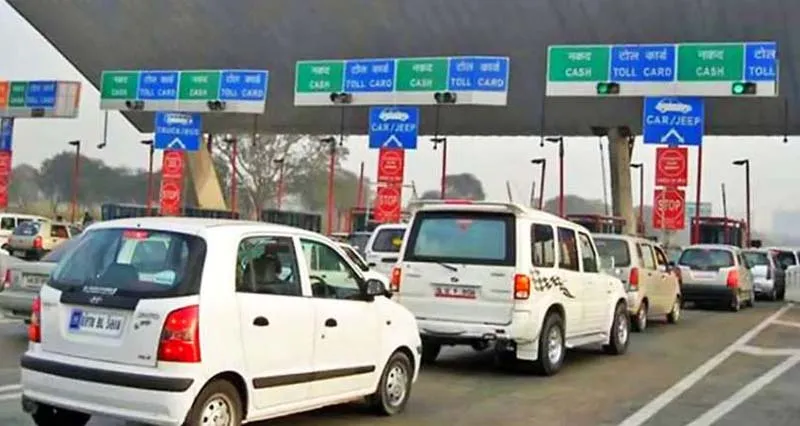
The government said on Friday that the National Highways Authority of India (NHAI) is considering completely stopping cash transactions at National Highway toll plazas across the country from April 1, 2026. This step will develop a fully digital tolling system on the National Highways.
Once the plan is implemented, all toll payments will be made only through digital means, which will include the use of FASTag or Unified Payments Interface (UPI).
According to the Ministry of Road Transport and Highways, the aim of this proposal is to strengthen the achievements gained from electronic toll collection and to enhance the efficiency and reliability of toll plaza operations.
According to the official statement, this change will improve ‘ease of commuting’ for National Highway users. It will increase lane capacity, reduce congestion at toll plazas, and bring transparency to toll transactions.
FASTag penetration in the country has already exceeded 98 percent, leading to a major transformation in the toll collection system.
Most toll transactions are now being conducted electronically through RFID-based FASTag, allowing vehicle movement at toll plazas to be seamless and contactless.
According to NHAI, UPI payment facilities have also been introduced at National Highway toll plazas, providing travelers with instant and easy digital payment options.
Currently, if a vehicle enters a toll plaza without a valid and active FASTag and makes a cash payment, it is charged double the applicable fee.
Meanwhile, users who make payments via UPI are charged 1.25 times the fee according to their vehicle category.
The government says that adopting an only-digital payment system will increase operational efficiency, improve traffic management, reduce delays, and enhance the experience for travelers at over 1,150 toll plazas across the country.
In the meantime, the number of users of the FASTag annual pass has exceeded 5 million. More than 2.655 billion transactions have been recorded within six months of its launch.
This annual pass is valid for one year or for 200 toll crossings on a one-time payment of ₹3,000, eliminating the need for frequent recharges.
National Highways Authority of India (NHAI)
The National Highways Authority of India (NHAI) is a government agency established in 1995 to manage, develop, and maintain India’s extensive network of national highways. It plays a central role in implementing major infrastructure projects like the Bharatmala Pariyojana, aiming to enhance connectivity and economic growth across the country.
National Highway toll plazas
National Highway toll plazas are collection points along major roads where users pay fees to help fund the construction, maintenance, and operation of the highway infrastructure. Their modern history is often tied to the late 20th-century expansion of controlled-access highway networks, with electronic toll collection systems (like E-ZPass or FASTag) increasingly replacing manual cash booths to improve traffic flow. While not historical landmarks, they represent a key administrative and economic feature of contemporary transportation systems.
Ministry of Road Transport and Highways
The Ministry of Road Transport and Highways (MoRTH) is the apex government body in India responsible for the development and regulation of the country’s vast network of national highways and road transport systems. It was established in 2009, succeeding the earlier Department of Surface Transport, to streamline and accelerate the expansion and modernization of India’s critical road infrastructure. Its work has been central to major national projects aimed at improving connectivity and economic growth across the nation.
FASTag
FASTag is an electronic toll collection system used in India, introduced to reduce congestion and enable cashless payments at national highway toll plazas. It employs Radio Frequency Identification (RFID) technology, allowing vehicles to pass through without stopping, with the toll fee automatically deducted from a linked prepaid or savings account. The system was mandated nationwide by the Indian government in 2021, building upon earlier pilot programs to modernize the country’s highway infrastructure.
Unified Payments Interface (UPI)
The Unified Payments Interface (UPI) is not a physical place but a digital payments system launched in India in 2016 by the National Payments Corporation of India (NPCI). It revolutionized banking by allowing instant, 24/7 fund transfers between bank accounts using a single mobile application, significantly reducing cash dependency and promoting financial inclusion.
National Highways
“National Highways” refers to the strategic road network in England, managed by the government-owned company National Highways (formerly Highways England). It is responsible for operating, maintaining, and improving major roads like motorways and key A-roads, a system that has evolved significantly since the first modern motorway, the Preston Bypass, opened in 1958. Its history is tied to post-war infrastructure development aimed at boosting economic connectivity and mobility across the country.
RFID-based FASTag
FASTag is an electronic toll collection system in India that uses Radio Frequency Identification (RFID) technology to enable cashless payments at toll plazas. It was officially launched nationwide in 2016 to reduce traffic congestion and streamline toll transactions. The system represents a significant modernization of India’s highway infrastructure, moving from manual toll collection to an automated, contactless process.
FASTag annual pass
“FASTag annual pass” is not a physical place or cultural site, but a digital payment tool for road travel in India. It is an electronic toll collection system where a prepaid RFID tag on a vehicle’s windshield allows for automatic toll payments at national highway plazas. The FASTag system was mandated nationwide to reduce congestion and streamline toll collection, with the annual pass being a specific subscription model for frequent users on certain stretches.