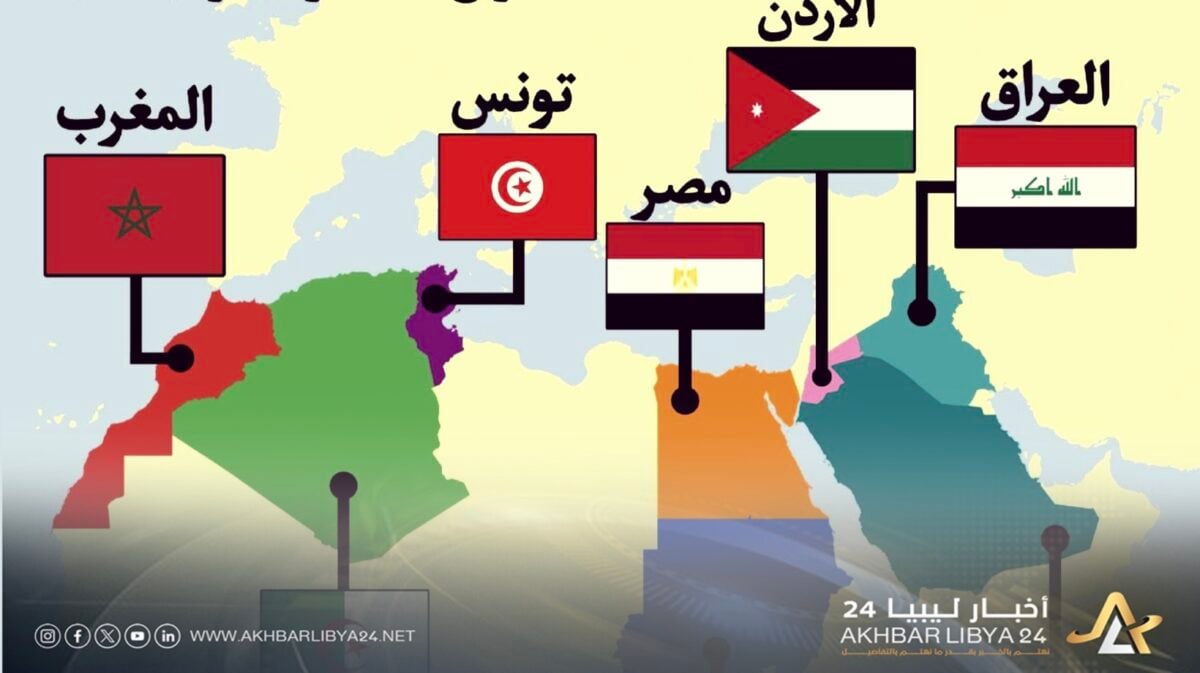
Rising Arab Debts: Record Numbers and Critical Challenges Facing Economies
The attention of economic analysts is turning towards the figures for the external debts of Arab countries, which reveal escalating financial burdens at a time when the region’s economies are facing pressures from multiple sources. The data shows the Arab Republic of Egypt leading the list of Arab countries in terms of total debt volume, opening a broad debate on borrowing policies and budget strategies.
The Arab Republic of Egypt carries the heaviest burden among Arab countries, with its external debt estimated at approximately $165 billion. Economic experts attribute this figure to massive infrastructure projects, a significant portion of which were financed through foreign loans, in addition to the challenges imposed by global economic conditions and fluctuations in the local currency exchange rate. Reports confirm that part of this debt is directed towards productive investments expected to yield benefits in the medium term.
Sudan and Algeria in Advanced Positions.. Varying Ratios to GDP
Sudan comes in second place with an external debt estimated at $60 billion, followed by Algeria with about $50 billion. Here, a crucial factor in debt analysis emerges: the debt-to-GDP ratio, which provides a clearer picture of the economy’s ability to bear these burdens. Some countries with relatively high debts possess strong economies or significant natural resources that enable them to manage the repayment of these obligations better than other countries with lower absolute debts but narrower economic capabilities.
The Impact of Debt on Development Programs and Social Policies
Experts say that the rise in external debt places constraints on the public finances of countries, as an increasing proportion of annual budgets is directed towards servicing this debt through installments and interest. This, in turn, may shrink the space available for spending on essential services such as health and education and limit governments’ ability to provide support to citizens during periods of high prices and living crises.
The Libyan Context and Learning from Regional Lessons
Although Libya does not appear on the list of the most indebted countries, the experiences of its neighbors carry important lessons for policymakers in Tripoli. These figures reveal the importance of developing financial strategies that balance the need for external financing for development projects with maintaining a sustainable debt ratio that does not burden future generations. They also confirm the need to enhance transparency in debt management and loan contracts to ensure that borrowed funds are directed towards projects with clear economic and social returns.
The Future of Arab Economic Cooperation and Mechanisms to Alleviate Burdens
Arab economic organizations call for activating mechanisms of financial solidarity among Arab countries and the possibility of providing concessional loans from countries with financial surpluses to those suffering from high debt burdens. They also point to the importance of developing integrated Arab financial markets that can provide alternative financing to borrowing from abroad under more flexible terms.