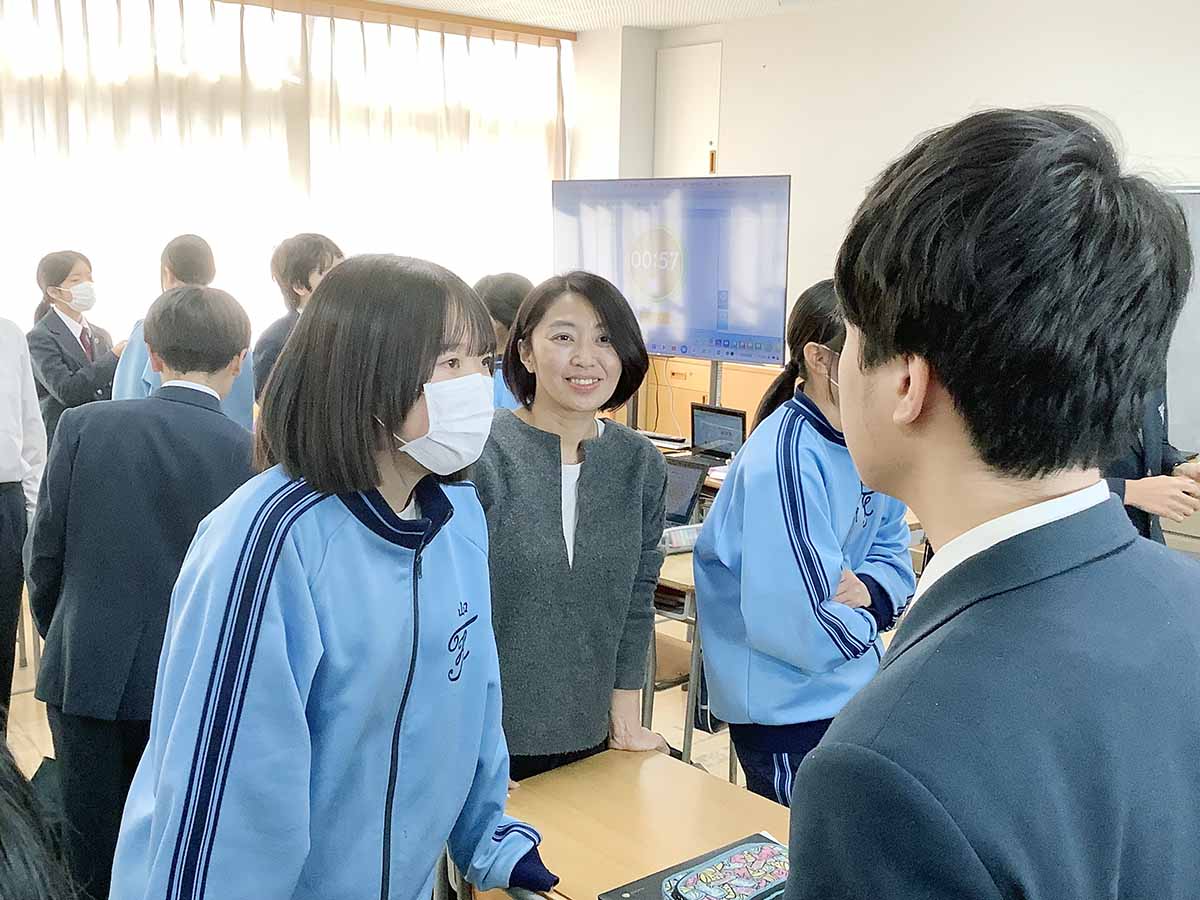
“Let’s start English class!”. The class begins with a student’s voice, and an exchange in English between students and the teacher starts. A student says, “I’m very sleepy.” The teacher, after checking what time the student went to sleep last night, responds cheerfully: “You could sleep well. So you can enjoy English class.”
This is an English class for second-year students at Higashi Tachibana Junior High School in Kawasaki City. Aiming to develop students who “notice for themselves,” “think,” and “take action,” the school has been creating opportunities for students to learn and act proactively in all activities across every subject.
“By tackling this as a whole school, we feel the students’ proactiveness is increasing. It particularly connects to them demonstrating leadership in school events like the sports festival. More students are becoming able to express their own opinions and thoughts while respecting others,” says the principal.
“Winter holidays come soon. Do you have any plans?”. A student answers the teacher’s question. “I’m going to go to Yokosuka.” The exchange continues. “Who are you going with?” “With my friends.” “Sounds nice.” After the teacher converses with several students, conversations between students begin. They start talking about how they will spend their winter holidays.
“It’s important to be able to answer questions, but beyond that, we want them to be able to think about what they themselves want to say.” This is the hope of the teacher in charge.
When the pair conversations finish, the students open their tablet devices and type in English what they talked about. The system allows the content to be shared with everyone.
“We think together about expressions they couldn’t say. We want them to broaden their range of expression that way.” The teachers’ wish is for students to become able to express their own feelings through English while respecting each other. The school’s efforts to nurture student proactiveness continue.