In 2026, the potential for import-export growth will stem from recovering demand in major markets, deeper exploitation of Free Trade Agreements (FTAs), and the global supply chain shift. However, pressures from trade defense measures, green standards, and increasingly stringent rules of origin remain significant barriers to import-export activities.
A New Scale Record
According to information from the Ministry of Industry and Trade, the total import-export turnover of goods in 2025 reached 930 billion USD, an increase of 18.2% compared to 2024; of which exports reached 475 billion USD, and imports reached 455 billion USD. The trade balance maintained a surplus of 20 billion USD, continuing to be an important pillar for macroeconomic stability.
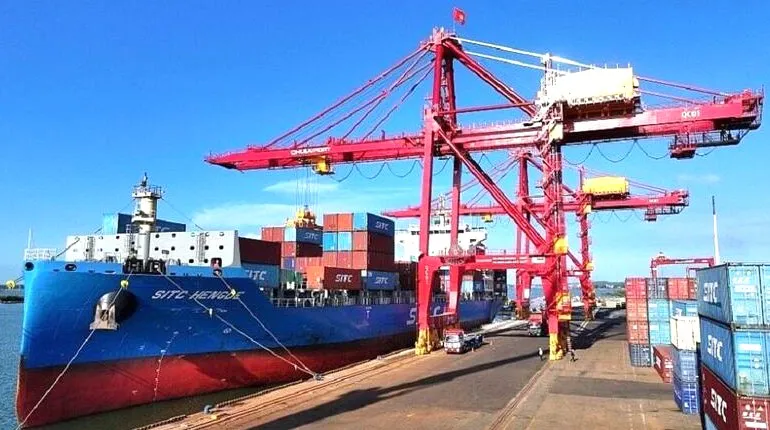
However, behind these impressive figures lie not a few bottlenecks. This is because, within the structure of exported goods, the foreign-invested sector (FDI) continues to play a dominant role, accounting for up to 77.3% of total export turnover, while the domestic economic sector reached only 107.95 billion USD, a decrease of 6.1% compared to 2024. The large export turnover of the FDI sector makes goods exports susceptible to impacts from policy fluctuations and global supply chains.
The structure of exports in 2025 also clearly reflects this characteristic. The processed industrial goods group reached 421.47 billion USD, accounting for 88.7% of total turnover, yet the majority still involves processing and assembly. Meanwhile, agricultural and forestry products reached 39.46 billion USD (8.3%) and seafood reached 11.29 billion USD (2.4%). These are areas where Vietnam has potential to increase value but has not been exploited proportionally.
On the import side, the annual turnover reached 455 billion USD, an increase of 19.4%. Notably, the group of production materials accounted for up to 93.6%, of which machinery, equipment, tools, and spare parts accounted for 52.7%. This shows that domestic production remains heavily dependent on imported inputs.
An assessment indicates: Vietnam is currently an export powerhouse with high turnover, but low added value. The main reason is that exported industrial products are primarily processed and assembled; while agricultural and seafood products are largely exported raw and lack established brands.
Furthermore, the model of high turnover but low added value exports results in disproportionate benefits gained, while risks are increasingly high. A constant threat is the risk of trade defense measures being applied due to high export growth rates in many product categories. Additionally, there are tariff and non-tariff barriers in the context of a weakening multilateral trading system.
The structure of import-export markets also poses long-term challenges. The US continues to be the largest export market with a turnover of 153.2 billion USD, while China is the largest import market with 186 billion USD. The large trade deficit with China and ASEAN clearly reflects dependence on regional supply chains, while simultaneously increasing risks when markets fluctuate.
Shifting from Quantity-Based Growth to Quality-Based Growth
The Ministry of Industry and Trade assesses that, with 17 signed FTAs alongside approximately 60 countries and territories, Vietnam is among the most deeply and broadly integrated groups in ASEAN. However, in reality, only about 30% of enterprises effectively utilize FTAs, while the remainder have not taken advantage of or have missed opportunities. This means the “integration passport” has not yet fully realized its value.

Moving into 2026, the import-export outlook is evaluated positively thanks to the large-scale foundation and extensive FTA network. However, the potential for sustainable growth will only truly open up when core bottlenecks are resolved.
According to a Deputy Director of the Import-Export Department, the focus for the coming period is shifting from quantity-based growth to quality-based growth. This requires strengthening the export of products with high added value, high technological content, high localization rates, based on the internal capacity of domestic enterprises. Simultaneously, it is necessary to improve quality, invest in deep processing, foster innovation, and build brands instead of merely simple processing.
To effectively