The East Java Transportation Service is on full alert to handle the surge in public mobility during the 2025 and 2026 year-end holiday season.
Various transportation operation schemes have been prepared, ranging from fleet readiness, personnel, to safety supervision at vulnerable points.
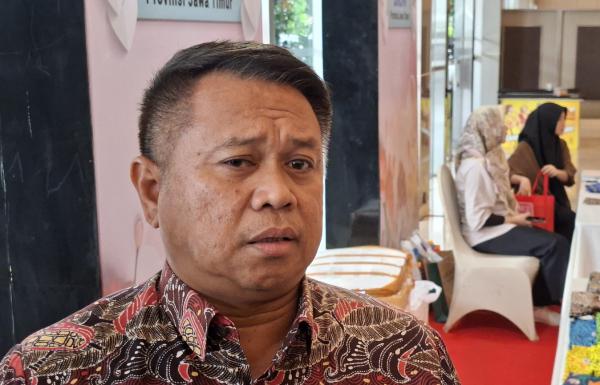
The Head of the East Java Transportation Service, Nyono, revealed that nationally, public movement during the holiday period is projected to increase by 2.71 percent. East Java is one of the provinces with the highest mobility, especially in terms of inbound flow.
“The movement out of East Java is around 14 million people, while the movement into East Java is around 16 million. This means the inbound flow to East Java is greater,” said Nyono.
In addition to general movement, the East Java Transportation Service also predicts a significant increase in public transportation users during the 18-day holiday period, approximately 17 percent compared to the normal period.
“This is specifically for public transportation users. Overall community movement certainly includes those using private vehicles, but for public transportation alone it increases by about 17 percent,” he said.
In terms of modes, trains remain a public favorite with a projected passenger count reaching 3.3 to 3.6 million people. Meanwhile, buses are estimated to serve over 3.2 million passengers. Other modes such as ferries, air transport, and sea transport are also predicted to experience an increase.
To support smooth services, the East Java Transportation Service has prepared around 6,300 bus units, nearly 100 train sets, 241 ferry trips, 55 sea vessels, and around 200 aircraft operating at seven airports in East Java.
Handling is carried out jointly with the police and related stakeholders through traffic engineering and the installation of portable signs. “We are also preparing traffic cones, water barriers, and the placement of additional officers at points of interest,” said Nyono.
Nyono urged the public to maintain their physical condition during travel for road safety. The East Java Transportation Service also provides 29 type B terminals throughout East Java that can be utilized as rest areas for travelers.
Some of these include Padangan Terminal, Temayang, Betek, Lamongan, Bunder, Larangan, Kertajaya, Anjuk Ladang, Caruban, Maospati, Magetan, Ngadirojo, Kesamben, Batu, Hamid Rusdi, Landungsari, Untung Suropati, Minak Koncar, Ambulu, Arjasa, Bondowoso, Situbondo, Brawijaya, Trunojoyo, Ronggosukowati, Bangkalan, Kepuhsari, Mojosari, and Pare.
Padangan Terminal
Padangan Terminal is a major bus terminal located in Bojonegoro Regency, East Java, Indonesia, serving as a crucial transportation hub for the region. Historically, it was developed to centralize and modernize public transport, facilitating travel and commerce for local communities and connecting them to larger cities across Java. Today, it remains a bustling center of daily activity and an important node in Indonesia’s intercity road network.
Temayang
I’m unable to find specific historical or cultural information on a place or site named “Temayang.” It is possible this refers to a very localized site, a spelling variation, or a less-documented location. To provide an accurate summary, could you please confirm the correct spelling or provide additional context, such as the country or region where it is located?
Betek
Based on available information, “Betek” does not appear to refer to a widely recognized major historical place or cultural site. It is most commonly known as a surname and the name of a modern industrial company in Turkey. Therefore, there is no significant history or cultural summary to provide for it as a destination.
Lamongan
Lamongan is a regency located on the north coast of East Java, Indonesia, historically known as an important port and trade center during the Mataram Kingdom era. Today, it is primarily recognized for its popular coastal tourism destinations, such as the white sand beaches of WBL (Wisata Bahari Lamongan) and the marine park of Lamongan Marine Tourism. The area also holds cultural significance with traditional ceremonies and local crafts reflecting its Javanese coastal heritage.
Bunder
“Bunder” typically refers to the historic port area of Mumbai, India, originally developed by the British in the 18th century as a key trading dock. Over time, it became a bustling commercial and administrative hub, central to the city’s maritime history and colonial economy. Today, the name is often associated with the iconic Sassoon Docks and the broader waterfront district that remains vital to Mumbai’s identity.
Larangan
“Larangan” is a general term in Indonesian and Malay meaning “forbidden” or “restricted area,” often used to refer to sacred or off-limits sites. Historically, it can describe a royal enclosure, a sacred forest, or a protected cultural area where access is traditionally prohibited to preserve its spiritual or historical significance. Without a specific location, it broadly represents the concept of a preserved sanctuary in Southeast Asian culture.
Kertajaya
“Kertajaya” most commonly refers to the **Kertajaya International Airport** in Banyuwangi, East Java, Indonesia. It opened in 2010 to replace the older Blimbingsari Airport, serving as a major gateway to destinations like Bali and the Ijen Crater. The name “Kertajaya” is derived from a historical Javanese honorific title, linking the modern infrastructure to the region’s cultural heritage.
Anjuk Ladang
Anjuk Ladang is a historical site located in Nganjuk, East Java, Indonesia, believed to be the location of the ancient settlement that preceded the Medang Kingdom. Its name is associated with the Anjuk Ladang inscription from 937 CE, which commemorates a victory and the granting of land to loyal subjects. Today, the area is recognized for its archaeological significance and its connection to the early development of Javanese Hindu-Buddhist civilization.