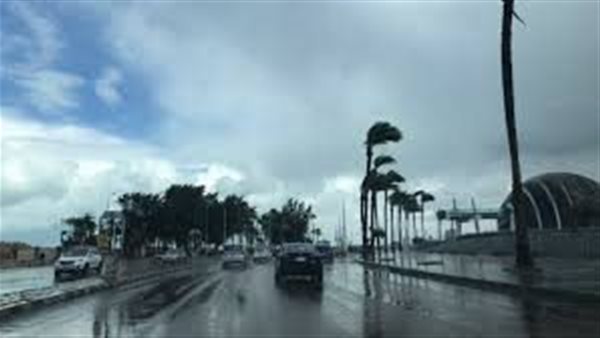
The General Meteorological Authority revealed details of the weather in Egypt until next week, confirming that the country is experiencing distinctly wintery conditions.
Weather Conditions Until Next Week
The authority stated that the country will witness very cold weather in the early morning, turning milder during the day, and becoming very cold again during the night hours.
The General Meteorological Authority indicated the formation of water mist from 9 PM to 3 AM on some roads leading to and from the north of the country up to Greater Cairo, central Sinai, and northern Upper Egypt, which may be dense at times on some roads.
Winds will be active from Friday until next Sunday in areas of the northern coasts, South Sinai, and northern Upper Egypt.
Expected Temperatures
The maximum temperature in Greater Cairo and the Nile Delta region will be between 20 to 21 degrees Celsius, and the minimum from 11 to 12 degrees.
The northern coasts will record a maximum temperature from 19 to 21 degrees and a minimum from 10 to 11 degrees.
As for northern Upper Egypt, the maximum temperature will be 21 degrees and the minimum from 6 to 8 degrees.
Southern Upper Egypt will record a maximum temperature from 23 to 28 degrees, and a minimum from 11 to 12 degrees.
Greater Cairo
Greater Cairo is a sprawling metropolitan area encompassing Egypt’s capital, Cairo, along with neighboring Giza and parts of the Qalyubia governorate. Its history is deeply layered, from the ancient pyramids of Giza and the old Islamic capital of Al-Fustat to its modern development as a 19th-century planned city under Khedive Ismail. Today, it stands as one of the world’s largest urban areas and the cultural, political, and economic heart of Egypt and the Arab world.
Nile Delta
The Nile Delta is a vast, fertile triangular region in northern Egypt where the Nile River fans out and empties into the Mediterranean Sea. Historically, it was the cradle of ancient Egyptian civilization, providing rich agricultural land that supported major cities and was crucial to the Pharaonic economy. Its wetlands and branches also held significant religious and strategic importance throughout antiquity.
northern coasts
The northern coasts of many countries, such as those of Scandinavia, Canada, and Russia, have long been shaped by indigenous peoples, Viking exploration, and maritime trade. These rugged shorelines are historically significant for their role in fishing, whaling, and as gateways for Arctic exploration. Today, they are often characterized by unique ecosystems, remote communities, and cultural heritage tied to the sea and harsh climate.
South Sinai
South Sinai is a mountainous region in Egypt, best known for its dramatic desert landscapes and as the home of Mount Sinai, a site sacred to Judaism, Christianity, and Islam. According to tradition, it is where Moses received the Ten Commandments, and it has been a destination for pilgrims for centuries. Today, the area is also famous for its Red Sea resorts, such as Sharm El-Sheikh, and its world-class diving and snorkeling sites.
northern Upper Egypt
Northern Upper Egypt refers to the southernmost region of Egypt, historically known for its ancient cities and cultural significance along the Nile River. Key sites include Abydos, an important religious center with temples and early royal tombs dating back to the Predynastic period, and Dendera, famed for its well-preserved Ptolemaic Temple of Hathor. This area served as a crucial link between Upper Egypt and the Nile Delta, playing a vital role in Pharaonic civilization and trade.
central Sinai
Central Sinai is a vast desert region in Egypt’s Sinai Peninsula, historically a crucial crossroads for trade and pilgrimage between Africa and Asia. It is most famous for containing Mount Sinai (Jabal Musa), a site of profound religious significance where, according to the Abrahamic traditions, Moses received the Ten Commandments. The area is also home to the ancient St. Catherine’s Monastery, a UNESCO World Heritage Site founded in the 6th century.
Upper Egypt
Upper Egypt refers to the southern region of Egypt, stretching along the Nile River from just south of modern-day Cairo to Aswan. Historically, it was the seat of one of the two main kingdoms that preceded ancient Egypt’s unification around 3100 BCE, with its capital often at Nekhen (Hierakonpolis) and later Thebes (modern Luxor). The area is famed for its wealth of ancient temples, tombs (including the Valley of the Kings), and monuments that chronicle millennia of Pharaonic civilization.
Southern Upper Egypt
Southern Upper Egypt, historically known as the Thebaid, is the region along the Nile River south of Luxor, encompassing ancient cities like Aswan and Abu Simbel. It was a crucial frontier and trade gateway to Nubia, famed for its monumental pharaonic temples and tombs from the New Kingdom era. Today, it remains a vital archaeological zone and a center for understanding ancient Egyptian civilization and its southern interactions.