Celebration of the 50th Anniversary of Laos’ National Day and the 105th Birthday of President Kaysone Phomvihane in Hanoi
The 50th anniversary of the National Day of the Lao People’s Democratic Republic and the 105th anniversary of President Kaysone Phomvihane’s birth reaffirmed the continuation and development of the great friendship, special solidarity, and comprehensive cooperation between Vietnam and Laos amidst a region of many fluctuations.
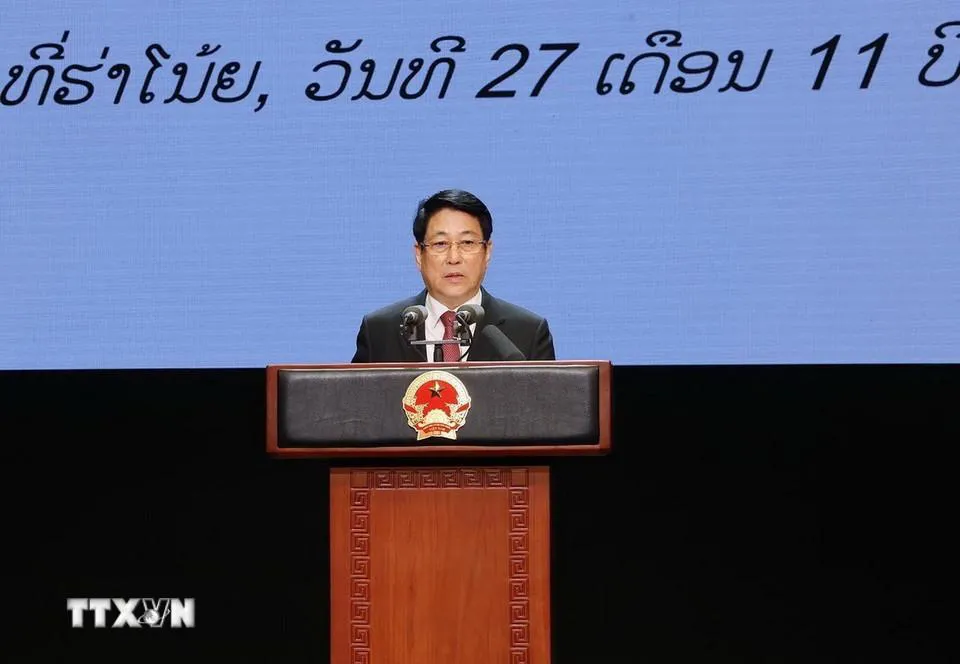
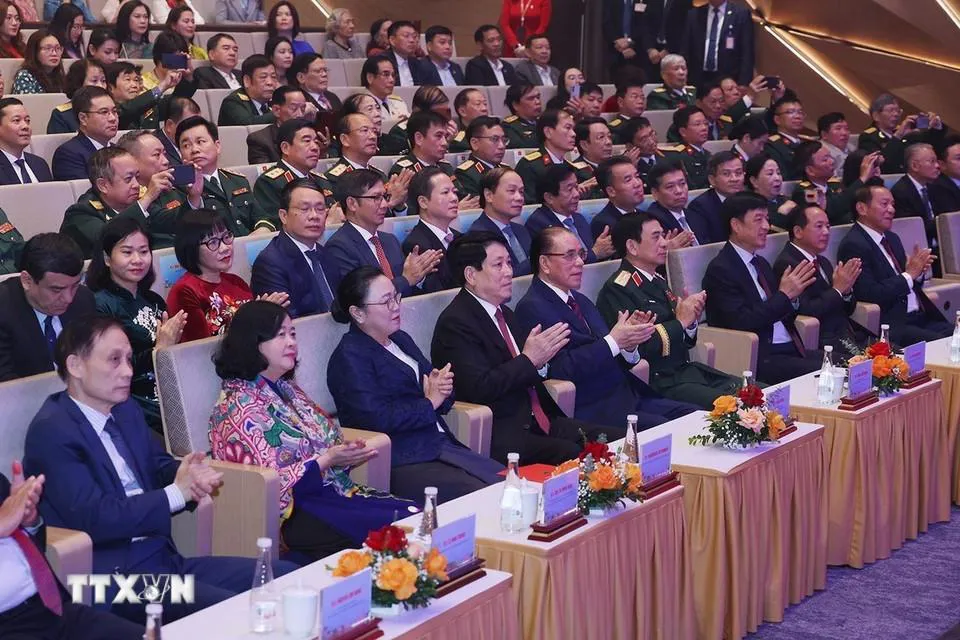
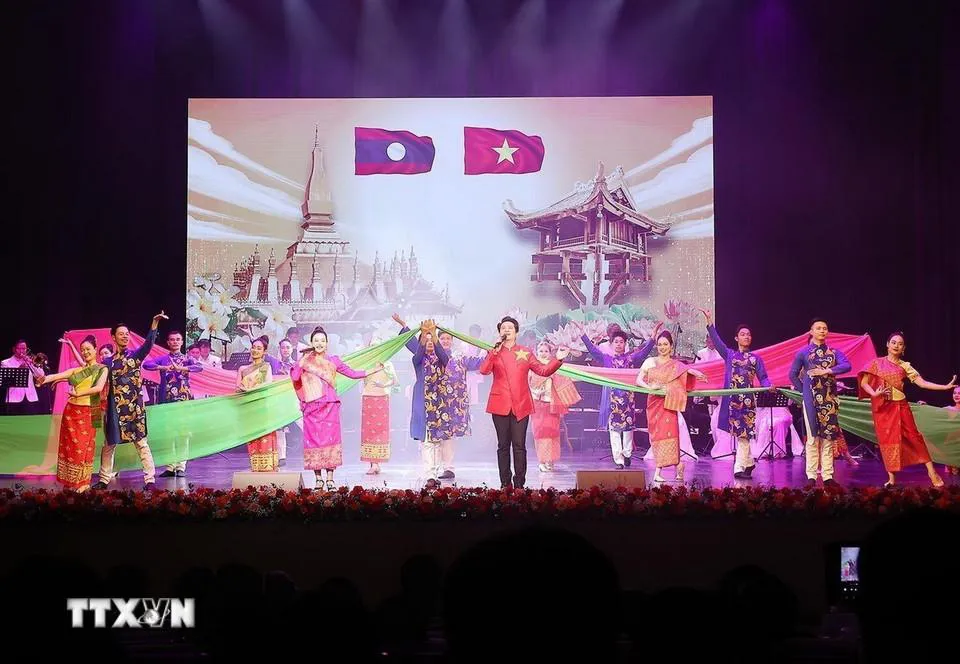
On the morning of November 27, 2025, the State President, along with other leaders and former leaders of the Party and State, attended the ceremony marking the 50th anniversary of the National Day of the Lao People’s Democratic Republic (December 2, 1975 – December 2, 2025) and the 105th anniversary of President Kaysone Phomvihane’s birth.
Attending the ceremony from the Vietnamese side were members of the Politburo: the State President of the Socialist Republic of Vietnam; the Chairwoman of the Central Committee of the Vietnam Fatherland Front; the Minister of National Defense; the Secretary of the Hanoi Party Committee; former General Secretary Nong Duc Manh; other Secretaries of the Party Central Committee: the Head of the Central Commission for Information and Education and Mass Mobilization; the Minister of Foreign Affairs; a member of the Party Central Committee, Deputy Prime Minister; along with delegates representing the Vietnam Union of Friendship Organizations; the Central Committee of the Vietnam Fatherland Front; the Central Vietnam – Laos Friendship Association; and the Liaison Committee for Vietnamese Volunteer Soldiers in Laos.
From Hanoi, there were also representatives of leaders from the City Party Committee, People’s Council, People’s Committee, the Vietnam Fatherland Front Committee of Hanoi City, and various departments and branches, representatives of the armed forces, war veterans, dignitaries, and intellectuals.
From the Lao PDR side were the Ambassador Extraordinary and Plenipotentiary of the Lao PDR to Vietnam; representatives of President Kaysone Phomvihane’s family; along with a large number of staff from the Lao Embassy, Lao citizens, and Lao students living, working, and studying in Vietnam.
Speaking at the ceremony, the State President, on behalf of the Party, State, and People of Vietnam, congratulated and shared the joy of the important, historically significant achievements that the fraternal Lao Party, State, and People have attained over the past 50 years of development.
Image 3
Recalling memorable milestones over the past 50 years, the State President affirmed that the establishment of the Lao Issara Government was a great event, ushering in an era of independence and freedom for the Lao people.
According to the State President, the Lao People’s Revolutionary Party became the ruling party, correctly and clearly identifying the path and setting out the goals, tasks, and development direction for Laos in the new period.
The State President stated clearly that under the leadership of the Lao People’s Revolutionary Party, Laos has transformed itself powerfully, unitedly, and resiliently, overcoming all difficulties and challenges, achieving many great and outstanding accomplishments in all fields; political and social stability is maintained; national defense and security are strengthened; the people’s living standards are increasingly improved, with per capita income increasing nearly 20 times
National Day of the Lao People’s Democratic Republic
The National Day of the Lao People’s Democratic Republic, celebrated on December 2nd, commemorates the 1975 victory of the Pathet Lao communist movement. This event marked the end of the monarchy and the establishment of the current Lao PDR government. It is the country’s most important national holiday, celebrated with parades and speeches in Vientiane and across the nation.
President Kaysone Phomvihane’s birth
President Kaysone Phomvihane, the revolutionary leader and first President of the Lao People’s Democratic Republic, was born on December 13, 1920, in the village of Na Seng, Khanthabouli District (now part of Savannakhet Province). His birthplace has since been developed into a memorial and museum complex dedicated to his life and legacy. The site serves as an important place of cultural and historical significance, honoring the man considered the “Father of the Nation” in Laos.
Vietnam
Vietnam is a Southeast Asian nation with a rich history shaped by millennia of Chinese influence, French colonial rule, and the Vietnam War. Its culture is a vibrant tapestry of indigenous traditions, Confucian principles, and Buddhist practices. Today, it is known for its bustling cities, stunning natural landscapes, and a resilient national identity.
Laos
Laos is a landlocked Southeast Asian nation known for its mountainous terrain, French colonial architecture, and numerous Buddhist monasteries. Its history is deeply marked by the Lan Xang Hom Khao kingdom of the 14th century and the secret US bombing campaign during the Vietnam War. A significant cultural site is the ancient city of Luang Prabang, a UNESCO World Heritage site famed for its well-preserved fusion of traditional Lao and European colonial influences.
Lao People’s Democratic Republic
The Lao People’s Democratic Republic, established in 1975, is a landlocked Southeast Asian nation with a history shaped by the Kingdom of Lan Xang and French colonial rule. Its culture is deeply influenced by Theravada Buddhism, which is evident in its numerous temples and daily life. A significant cultural site is the ancient city of Luang Prabang, a UNESCO World Heritage site known for its well-preserved architecture and traditional customs.
Socialist Republic of Vietnam
The Socialist Republic of Vietnam is a Southeast Asian nation with a long history of dynastic kingdoms and colonial rule, most notably by France. It gained independence after the First Indochina War and was reunified in 1976 following the Vietnam War, establishing its current socialist government. Today, it is known for its vibrant culture, bustling cities, and stunning natural landscapes like Ha Long Bay.
Vietnam Fatherland Front
The Vietnam Fatherland Front is a political coalition and mass organization established in 1955 to unite various groups in support of the Communist Party of Vietnam. It evolved from earlier united fronts, such as the Viet Minh, which were instrumental in the country’s struggle for independence. Today, it plays a key role in promoting national solidarity and mobilizing the population behind government policies.
Lao Embassy
The Embassy of Laos represents the Lao People’s Democratic Republic in a host country, facilitating diplomatic relations and providing consular services. Historically, its establishment followed Laos’s independence from France in 1953 and the subsequent global recognition of its sovereignty.