World News April 21: Trump demands bombing Iran again; Iran guarantees safe passage for Russian ships through Hormuz
U.S.-Iran Talks Stalled as Trump Refuses to Lift Blockade, Threatens to Resume Bombing
On April 21, updates on the U.S.-Iran negotiations: On April 20, Iran stated it has not yet decided whether to attend a new round of peace talks with the U.S., while the U.S. declared it will not ease the blockade and threatened to resume airstrikes.
The White House said Vice President JD Vance is ready to fly back to Pakistan, which is still preparing for the second round of talks aimed at ending the conflict in the Middle East.
However, the Iranian government has not made a firm statement on participation, accusing the U.S. of violating the soon-to-expire ceasefire agreement by blockading Iranian ports and seizing a cargo ship.
“We have no plans for the next round of talks, and no decision has been made on this matter. The U.S. is engaging in behavior that shows no seriousness in pursuing the diplomatic process,” said Iranian Foreign Ministry spokesman Esmaeil Baqaei.
For his part, President Trump also accused Iran of violating the ceasefire by harassing ships in the Strait of Hormuz.
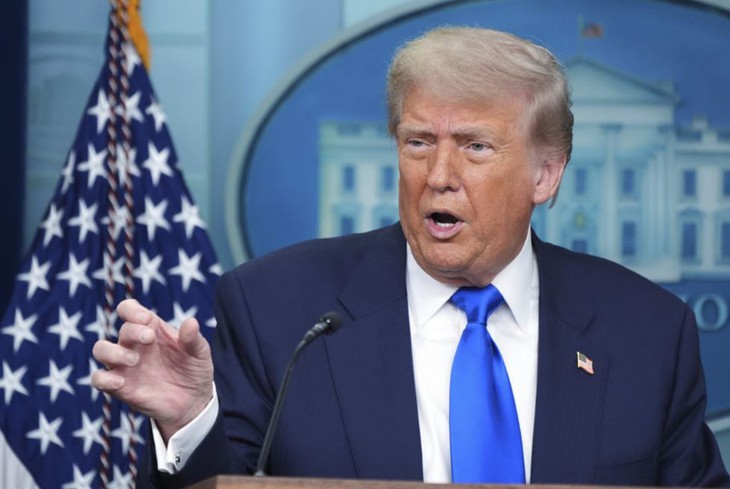
In a series of angry posts on Truth Social, Trump asserted that the U.S. blockade is “completely destroying” Iran and that the U.S. will not end it “until there is a deal,” in which the U.S. pressures Iran to make concessions on its nuclear program.
Trump also told PBS News that Iran “should have been present” at the talks in Pakistan. “We agreed to be there,” Trump said, warning that if the ceasefire expires, “many bombs will start exploding.”
Russia Calls for Maintaining the U.S.-Iran Ceasefire
After a phone call between Russian Foreign Minister Sergei Lavrov and his Iranian counterpart Abbas Araghchi on April 20, Moscow called for maintaining the ceasefire between the U.S. and Iran, urging Tehran to continue diplomatic efforts.
The Russian Foreign Ministry stated that “the Russian side once again emphasized the need to preserve the ceasefire agreement, which must be adhered to according to the initially agreed parameters and as announced by the Pakistani mediators,” while stressing “the importance of maintaining diplomatic efforts to prevent the situation from spiraling out of control and to avoid a repetition of armed confrontation.”
Russian diplomacy also criticized Washington’s “illegal naval blockade of the Strait of Hormuz and seizure of an Iranian container ship.”
Russia also said Iran has committed to ensuring unhindered passage for any Russian ships and cargo through the strait.
Israel and Lebanon to Hold Second Round of Talks in Washington
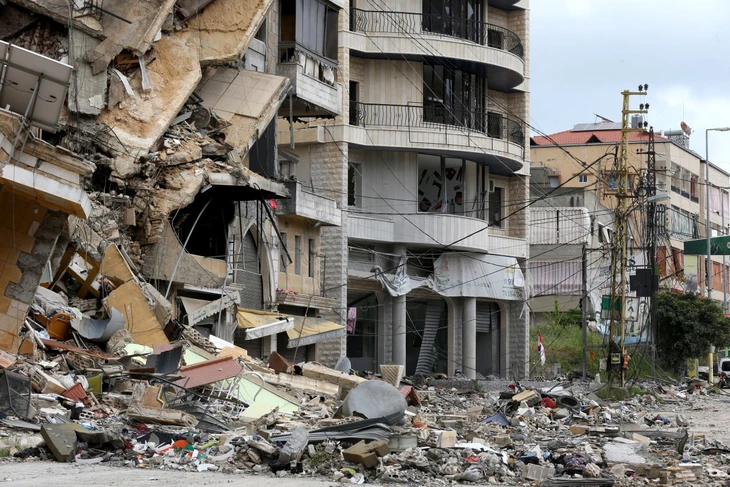
Representatives of Israel and Lebanon will hold talks in Washington on April 23. This information was shared by a U.S. State Department spokesperson and an anonymous Israeli source earlier this week.
The U.S. State Department spokesperson said the U.S. will host the second round of ambassador-level talks between Israel and Lebanon at the State Department headquarters.
U.S. Secretary of State Marco Rubio chaired the first round of talks between Israeli Ambassador to the U.S. Yechiel Leiter and Lebanese Ambassador to Washington Nada Moawad. This was the first direct talks between Israel and Lebanon in decades, taking place on April 14.
“We will continue to facilitate direct, good-faith discussions between the two governments,” the spokesperson said.</p
Strait of Hormuz
The Strait of Hormuz is a narrow, strategically vital waterway connecting the Persian Gulf to the Gulf of Oman and the open ocean. Historically, it has been a key chokepoint for global oil shipments, with about one-fifth of the world’s petroleum passing through it. Its importance has made it a focal point of geopolitical tensions, particularly between Iran and other regional powers, for centuries.
Pakistan
Pakistan, officially the Islamic Republic of Pakistan, is a South Asian country with a rich history that includes being part of the ancient Indus Valley Civilization and later a crossroads for various empires, such as the Mughal and British. It gained independence from British rule in 1947, created as a homeland for Muslims of the Indian subcontinent. Today, Pakistan is known for its diverse cultures, languages, and landmarks like the Badshahi Mosque and the ancient city of Mohenjo-Daro.
Middle East
The Middle East is a historically and culturally rich region spanning parts of Western Asia and North Africa, often considered the cradle of civilization. It was home to ancient empires such as Mesopotamia, Persia, and Egypt, and later became the birthplace of major religions including Judaism, Christianity, and Islam. Today, the region is known for its diverse cultures, strategic importance, and ongoing geopolitical significance.
Russia
Russia is the largest country in the world, spanning Eastern Europe and northern Asia, with a rich history that includes the rise of the Kievan Rus’, the Tsardom of Russia, the Soviet Union, and the modern Russian Federation. Its cultural heritage is vast, featuring iconic landmarks such as Moscow’s Red Square and Saint Basil’s Cathedral, as well as the literary works of Tolstoy and Dostoevsky. The country’s history is marked by significant events like the Mongol invasions, the reign of Peter the Great, and the Russian Revolution of 1917.
Washington
Washington, D.C., the capital of the United States, was founded in 1790 as a planned city to serve as the nation’s political center, with its design overseen by Pierre L’Enfant. It is home to iconic landmarks such as the White House, the U.S. Capitol, and the Washington Monument, which reflect its role in American history and governance. The city has witnessed pivotal events, including the War of 1812, the Civil War, and numerous civil rights movements, shaping its identity as a symbol of democracy and national heritage.
Israel
Israel is a country in the Middle East with a rich and complex history, serving as the birthplace of Judaism and Christianity and a holy land for Islam. Modern Israel was established in 1948 as a Jewish state, following decades of Zionist immigration and the British Mandate period. Its history is marked by ancient kingdoms, religious significance, and ongoing geopolitical conflicts, making it a focal point of cultural and political importance.
Lebanon
Lebanon is a country in the Middle East with a rich history dating back thousands of years, home to ancient Phoenician city-states like Byblos, Tyre, and Sidon. It later became part of the Roman, Byzantine, and Ottoman empires, and gained independence in 1943. Known for its diverse culture and stunning landscapes, Lebanon is famous for sites like the Beqaa Valley, the Jeita Grotto, and the vibrant capital, Beirut.
Nabatieh
Nabatieh is a historic city in southern Lebanon, known for its role as a cultural and commercial hub in the region. It gained prominence during the Ottoman era and is famous for its traditional souk (market) and the annual Ashura commemorations, which draw large crowds. The city has faced significant destruction in conflicts, particularly during the 2006 Lebanon War, but remains an important center for the local community.