Why do many localities in the Mekong Delta have low GRDP growth rates?
In the bright growth picture of the whole country, most localities in the Mekong Delta are at the bottom of the rankings, including Can Tho City, ranked 31 out of 34. What are the reasons?
Sliding down and “bottoming out”
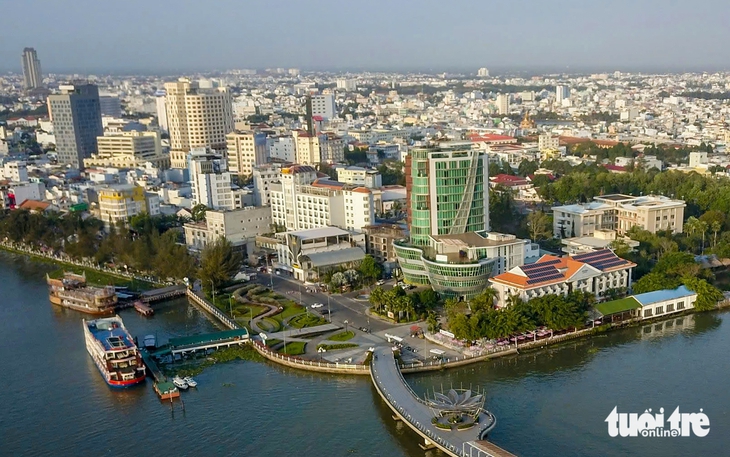
The GRDP growth ranking for Q1 2026 of 34 provinces and cities nationwide shows a thought-provoking reality. At the bottom of the ranking are 4 out of 5 Mekong Delta localities, including Can Tho – the economic, scientific, technological, medical, and educational center, as well as the transport hub of the Mekong Delta region.
Can Tho, from a GRDP growth rate of 7.23% in 2025, ranked 25 out of 34 provinces and cities nationwide, has “plummeted” to 31st out of 34, just above three “regional peers” at the very bottom: Vinh Long (5.3%), Ca Mau (5.64%), and Dong Thap (6.14%).
While many northern localities achieved high growth rates such as Ha Tinh (12.42%), Ninh Binh (11.63%), and Hung Yen (10.43%) thanks to industrial and service development, infrastructure advantages, and strong attraction of investment capital, most Mekong Delta provinces and cities are still “struggling” in the lower group and increasingly appear to be left behind.
The GRDP growth of Mekong Delta provinces in 2025, the first year after the merger, was already in the low group, and now it has fallen into the lowest group, being overtaken by provinces like Thai Nguyen, Tuyen Quang, Cao Bang, Gia Lai, and Dak Lak. Can Tho dropped from 25th to 31st, Dong Thap from 23rd to 32nd, Ca Mau from 26th to 33rd, and Vinh Long remains “bottom” at 34th out of 34 provinces and cities nationwide.
Is the “bottoming out” of these localities due to the region’s economic structure still being purely agricultural? Is it due to difficulties in transport infrastructure making it hard to attract investment and failing to create growth momentum, or are there other reasons?
If we simply “blame” the structure and difficulties in transport infrastructure, it is hard to explain the growth case of Can Tho City. As a regional center with an economic structure leaning towards services and industry, it has fallen to the bottom group.
Moreover, when compared among the six centrally-governed cities, Can Tho is also the locality with the lowest growth rate, behind Hai Phong (10.87%), Hue (9.88%), Da Nang (8.45%), Ho Chi Minh City (8.27%), and Hanoi (7.87%).
In the Mekong Delta region, only An Giang province – after merging the development spaces of former An Giang and Kien Giang provinces – achieved a GRDP growth rate of 8.31%, ranking 19th out of 34 localities nationwide. An Giang also ranked 14th in GRDP growth in 2025. This shows that even within a region with many similarities in natural conditions, there are still clear differences in growth outcomes.
These facts indicate that the issue is no longer about “which sector accounts for a large share,” but lies in the actual growth drivers of each locality.
Finding the reasons
Looking at the growth structure of Mekong Delta provinces, two different groups of problems can be seen. For many localities, the limitations are still “traditional.” The economic scale is small, dependent on raw material production, lacking processing industries and flagship enterprises. This makes growth vulnerable to market fluctuations and natural disasters.
However, stopping there would not explain the case of Can Tho, nor why a locality like An Giang can maintain a decent ranking. The difference lies in how localities create growth drivers.
<img alt="Can Tho –
Can Tho City
Can Tho City is the largest urban center in the Mekong Delta region of southern Vietnam, renowned for its vibrant floating markets and intricate network of canals. Historically, it was a key trading post during the Khmer and later Vietnamese expansion, and it played a significant role in the region’s agricultural development. Today, it serves as a major economic and cultural hub, attracting visitors with its iconic Cai Rang Floating Market and traditional riverside life.
Vinh Long
Vinh Long is a city and province in the Mekong Delta region of southern Vietnam, known for its peaceful riverside landscapes and vibrant fruit orchards. Historically, it was established in the 18th century and became an important administrative and economic center under the Nguyễn Dynasty, later playing a role in the region’s resistance during the Vietnam War. Today, Vinh Long is a popular stop for travelers exploring the delta, offering floating markets, ancient pagodas, and traditional craft villages.
Ca Mau
Ca Mau is the southernmost province of Vietnam, known for its vast mangrove forests and the iconic Ca Mau Cape, which marks the country’s southernmost point. Historically, it was a sparsely populated frontier region that became more developed during the 17th and 18th centuries as Vietnamese settlers moved south, and it played a significant role in the resistance wars against foreign invasions. Today, Ca Mau is recognized for its unique wetland ecosystem, floating markets, and the Cà Mau National Park, a UNESCO Biosphere Reserve.
Dong Thap
Dong Thap is a province in the Mekong Delta region of southern Vietnam, known for its vast rice fields, lotus ponds, and the Tram Chim National Park, a key wetland reserve. Historically, it was a frontier area during the Nguyen Dynasty and played a significant role in the resistance wars against French colonial forces and later the Vietnam War. Today, it is celebrated for its agricultural production and unique cultural festivals, such as the Lotus Festival.
Ha Tinh
Ha Tinh is a province in north-central Vietnam known for its rich history and cultural heritage. It was the birthplace of several prominent Vietnamese figures, including the poet Nguyễn Du, author of the epic “The Tale of Kiều,” and the revolutionary leader Phan Đình Phùng. The area also features historical sites such as the ancient capital of Hồng Lĩnh and the Vũ Quang National Park, reflecting its blend of natural beauty and historical significance.
Ninh Binh
Ninh Bình is a province in northern Vietnam known for its stunning karst landscapes, ancient temples, and rich history. It served as the capital of Vietnam under the Đinh and Early Lê dynasties in the 10th and 11th centuries, with Hoa Lư being the former imperial citadel. Today, it is a popular tourist destination featuring sites like Tràng An, Tam Cốc, and the Bai Dinh Pagoda.
Hung Yen
Hung Yen is a province in northern Vietnam known for its rich cultural heritage and historical significance. It was a major trading port during the 17th and 18th centuries, particularly famous for its Pho Hien port, which rivaled the bustling commerce of Hanoi. Today, the area features well-preserved ancient pagodas, temples, and traditional craft villages that reflect its storied past.
An Giang
An Giang is a province in the Mekong Delta region of southern Vietnam, known for its rich cultural diversity and stunning natural landscapes, including the Sam Mountain and the vast rice paddies along the Bassac River. Historically, it was a key area of the Khmer Empire before becoming part of Vietnam, and it later played a significant role in the resistance against French colonial rule. Today, An Giang is famous for its floating markets, ancient temples, and the unique Cham and Khmer ethnic communities that contribute to its vibrant cultural heritage.