ASEAN – a launchpad for Vietnam’s industrialization
In the global industrialization race, no single Southeast Asian nation can go it alone. ASEAN—with a market of over 660 million people and a global network of FTAs—is the strategic launchpad that Vietnam must fully leverage.
The story of Airbus, born from the collaboration of France, Germany, the UK, and Spain—creating a single entity capable of challenging Boeing—has long been a classic lesson in the power of alliance.
That lesson is entirely relevant to ASEAN today: when each individual economy in the region is too small to create economies of scale on its own, joining forces is the only path to a breakthrough. For Vietnam, ASEAN is not just a trade arena—it is about shaping its industrial position in the 21st century.
ASEAN – a trade and investment lever
After more than 30 years of integration, ASEAN has transformed into the ASEAN Economic Community (AEC)—a framework for regional economic integration moving toward a single market, though not yet reaching the level of comprehensive liberalization seen in the EU common market.
Thanks to the ASEAN Trade in Goods Agreement (ATIGA), most tariff lines on goods between Vietnam and other member countries have been reduced to 0%, creating a bustling flow of trade and making ASEAN one of Vietnam’s top trade partners.
ASEAN is Vietnam’s fourth-largest trading partner—after China, the United States, and South Korea.
Total import-export turnover between Vietnam and ASEAN reached over USD 91 billion in 2025—more than 25 times the approximately USD 3.5 billion recorded when Vietnam joined the bloc in 1995.
Of that, Vietnam exported about USD 38.4 billion to the bloc (agricultural products, seafood, textiles, electronic equipment) and imported about USD 52.6 billion in raw materials, electronic components, chemicals, and petroleum—essential inputs for Vietnamese factories to process, assemble, and produce export goods.
The bloc’s collective weight is also clearly felt at international negotiation tables. Standing alone, a developing economy like Vietnam would face many disadvantages, lacking leverage when negotiating with superpowers.
However, under the umbrella of a dynamic collective economic bloc of 10 nations, Vietnam and each member country have a solid launchpad to access major markets.
Through ASEAN’s common voice, Vietnam participates in and benefits from the ASEAN+ FTA network: ASEAN-China (ACFTA), ASEAN-Japan (AJCEP), ASEAN
Airbus
Airbus is a European multinational aerospace corporation founded in 1970 as a consortium to compete with American aircraft manufacturers. It is best known for producing commercial airliners like the A320 and A380, as well as military aircraft and space systems. Headquartered in France, Airbus has become one of the world’s largest and most influential aerospace companies.
ASEAN
The Association of Southeast Asian Nations (ASEAN) is a political and economic union of 10 member states in Southeast Asia, established on August 8, 1967, in Bangkok, Thailand, by Indonesia, Malaysia, the Philippines, Singapore, and Thailand. Its founding aimed to promote regional stability, economic growth, and cultural cooperation in the aftermath of Cold War tensions. Over time, ASEAN expanded to include Brunei, Vietnam, Laos, Myanmar, and Cambodia, becoming a key platform for dialogue and integration in the region.
ASEAN Economic Community (AEC)
The ASEAN Economic Community (AEC) is a regional economic integration initiative launched in 2015 by the ten member states of the Association of Southeast Asian Nations (ASEAN). Its goal is to create a single market and production base, facilitating the free flow of goods, services, investment, and skilled labor across Southeast Asia. Building on earlier ASEAN cooperation dating back to 1967, the AEC aims to enhance regional competitiveness and economic development.
EU common market
The European Union’s common market, also known as the single market, was established to allow the free movement of goods, services, capital, and people among member states. Its foundations were laid with the 1957 Treaty of Rome, which created the European Economic Community (EEC), and it was significantly deepened in 1993 with the Maastricht Treaty. Today, it stands as one of the world’s largest economic blocs, fostering trade and economic integration across 27 European countries.
ASEAN Trade in Goods Agreement (ATIGA)
The ASEAN Trade in Goods Agreement (ATIGA) is a landmark economic pact among the ten member states of the Association of Southeast Asian Nations, aimed at creating a single market and production base by reducing tariffs and non-tariff barriers on goods. Signed in 2009 and fully implemented by 2015, ATIGA replaced earlier preferential trade arrangements to deepen regional integration and boost intra-ASEAN trade. It has since facilitated the free flow of goods, supporting the bloc’s goal of becoming a competitive, globally integrated economic community.
ASEAN-China (ACFTA)
The ASEAN-China Free Trade Area (ACFTA) is a landmark economic agreement between the Association of Southeast Asian Nations (ASEAN) and China, established to reduce tariffs and boost trade and investment. Initiated in 2002 with a framework agreement, it fully took effect in 2010, creating one of the world’s largest free trade zones by population and economic output. ACFTA has significantly deepened economic integration between China and Southeast Asia, fostering mutual growth and cooperation.
ASEAN-Japan (AJCEP)
The ASEAN-Japan Comprehensive Economic Partnership (AJCEP) is a free trade agreement between the Association of Southeast Asian Nations (ASEAN) and Japan, signed in 2008. It aims to liberalize and facilitate trade in goods, services, and investment between the parties, reducing tariffs and promoting economic cooperation. The agreement has been progressively enhanced, with a revised protocol entering into force in 2022 to further deepen economic integration.
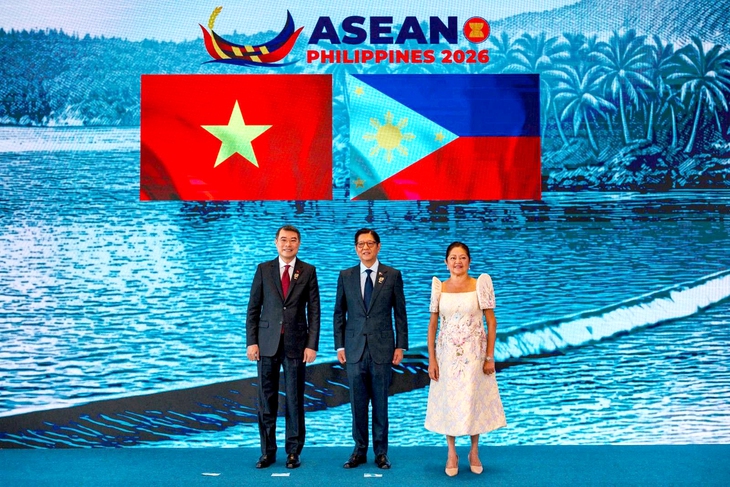
48th ASEAN Summit in Cebu
The 48th ASEAN Summit, held in Cebu, Philippines in December 2016, was a major diplomatic gathering of Southeast Asian leaders. Hosted under the theme “Partnering for Change, Engaging the World,” the summit focused on regional economic integration, security cooperation, and external relations. Cebu, as a historic trading hub, provided a symbolic backdrop for discussions on strengthening ASEAN unity and addressing challenges such as the South China Sea disputes and terrorism.