
Overcoming more than 3,848 entries, two essays, “The Culture of Legal Compliance – The Foundation of Discipline for Vietnam’s Era of Rising” and “Building a Culture of Legal Compliance among Students of Hanoi Law University,” have excellently won the First Prize of the 2025 “Culture of Legal Compliance” Writing Contest.
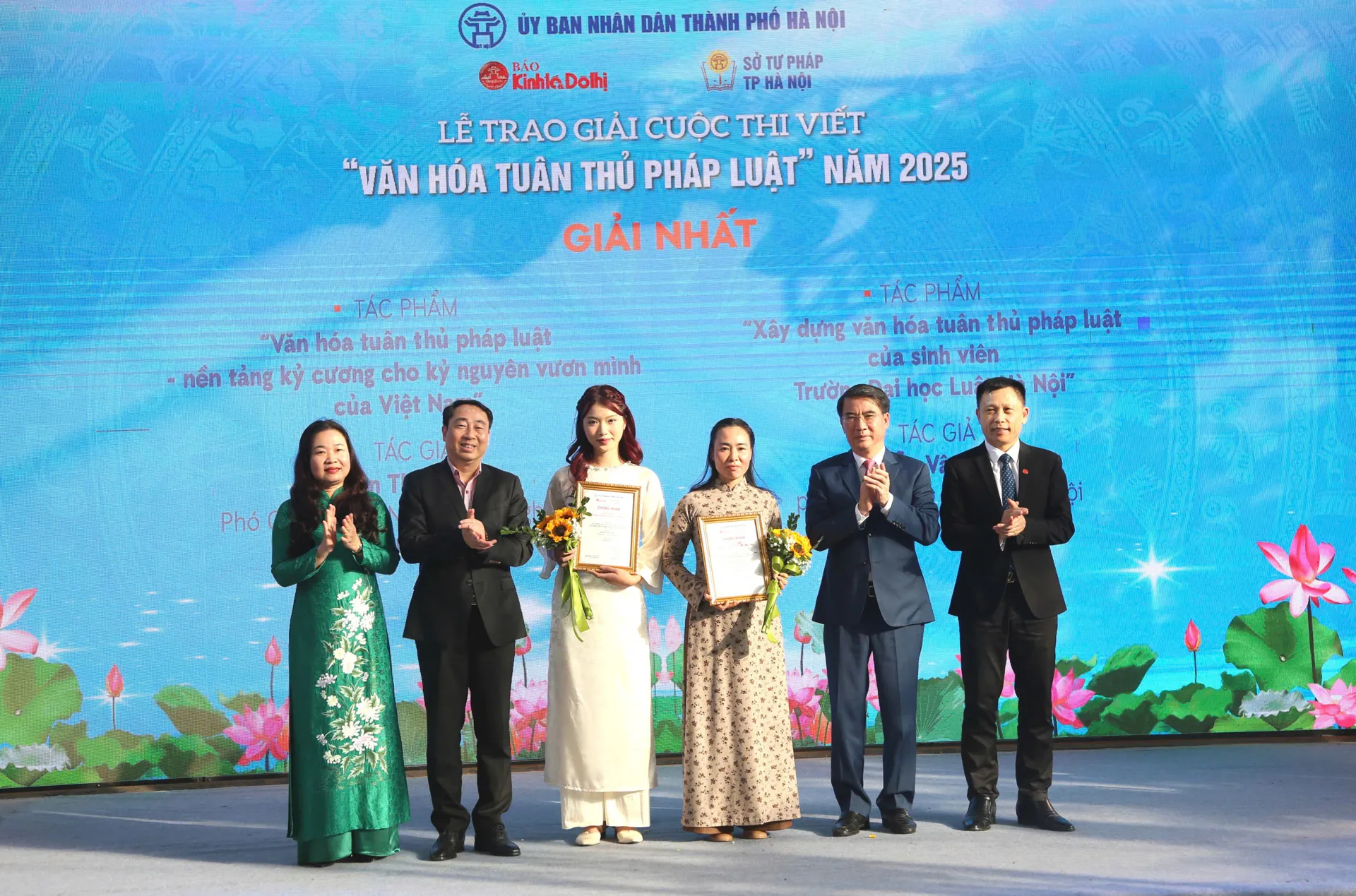
From the Reason of Law to Societal Legal Trust
The special meeting point of the two works from two different generations and social positions is their very down-to-earth, practical approach in moving legal compliance out of rigid conceptual layers and placing it into the daily conduct of officials, citizens, and the younger generation. This is precisely what created the persuasive power and lasting, spreading value for the message of “upholding the Constitution and the law.”
Sharing the reason for choosing the topic, the author stated that in the context of the country entering a new era of development, creating and maintaining a culture of legal compliance is not only an inevitable requirement but also the foundation ensuring the effective operation of the socialist law-governed state.
The concept of “culture of legal compliance” has been emphasized in recent years in the guiding speeches and was formally expressed in Politburo Resolution No. 66-NQ/TW dated April 30, 2025, requiring that upholding the Constitution and the law become a standard of conduct for all subjects in society.
Closely following that spirit, the essay vividly reflected the process of living and working according to the Constitution and laws from years of grassroots work experience. Not heavy on theory, the essay is a series of distilled professional experiences, showing that when officials truly understand the nature, objectives, and social benefits of the law, its enforcement becomes more persuasive and humane.
The author emphasized that the essence of law is reason and social consensus. When officials “feel” what is right and reasonable in each regulation, they develop an affection for the law, thereby conveying that spirit to citizens in the process of handling work. Mutual understanding and empathy are the important foundation for building legal trust.
“I simply wrote exactly what I believe in, what I have deeply felt, very simply. Our law, ultimately, is reason. When one can feel that reason, dialogue with citizens becomes easier, creating empathy and trust,” the author shared.
From years of experience in judicial and state management work, the author proposed many specific solutions to improve the effectiveness of building, implementing, and protecting the law at the grassroots level. These solutions were highly appreciated by the Organizing Committee for their feasibility, contributing to spreading the lifestyle of “upholding the law” among officials, civil servants, and the community – in line with the spirit of building civilized and elegant Hanoians in the new era.

Young People Complying with the Law from the Lecture Hall
If the first work shows the exemplary role of public officials, the essay by a student of Hanoi Law University impressed with its youthful, approachable method, directly targeting the student force – the future masters of a law-governed society.
Sharing feelings upon receiving the award, the student expressed: “I was both surprised and moved. What makes me happiest is that my concerns about the culture of legal compliance have been heard and spread.”

From the perspective of a Law student, the young author argued that a culture of legal compliance cannot be formed by coercion or fear of sanctions but must start from awareness and the conscious choice to comply as a way of life.
The law needs to be placed in