At the same time, the plan of the City People’s Committee on “Building National Highway 5 and National Highway 10 through Hai Phong City as safe routes” was implemented.
Accordingly, Hai Phong aims to reduce traffic accidents by at least 6% annually and create a clear change in the urban landscape; simultaneously, it aims to successfully build the model of safe National Highway 5 and National Highway 10 for traffic.
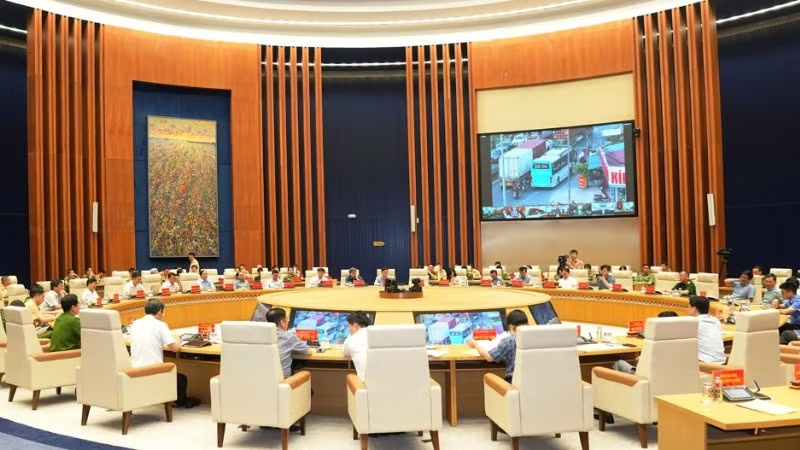
Discussing specific solutions, representatives from various agencies, units, and localities under Hai Phong City put forward many valid opinions, including the need for a breakthrough in management thinking, organization of traffic infrastructure and urban space; application of artificial intelligence and information technology in traffic management, monitoring, and real-time handling of traffic safety and urban order violations; eliminating the mindset of periodic “campaign-style” enforcement to ensure traffic safety and urban order, and instead implementing it resolutely, regularly, and thoroughly to prevent recurrence of violations; strengthening full and accurate dissemination of legal regulations on traffic and urban matters…
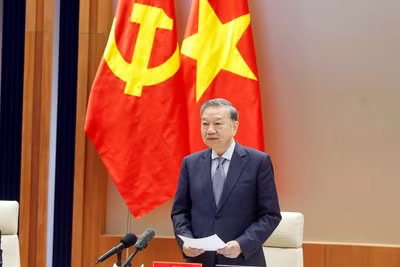
According to Standing Vice Chairman of Hai Phong City People’s Committee Le Anh Quan, departments, branches, and localities need to implement solutions resolutely and synchronously; in which the Department of Construction shall take the lead and coordinate to review and adjust traffic infrastructure planning in sync with new development spaces; must thoroughly handle locations where traffic accidents frequently occur and potential accident black spots, and eliminate 100% of unauthorized level crossings with railways in the period 2026-2028.
In addition, focus on key projects and grade-separated intersections at industrial park gateways, while mobilizing socialized resources to build a smart parking system in the central area.
Communes, wards, and special zones must restore urban order and sidewalk discipline, linked to the responsibility of leaders, and implement it regularly and continuously to maintain a bright-green-clean-beautiful-civilized environment.
The City Police must take a pioneering role, quickly put the Smart Traffic Operation Data Center into operation in the second quarter of 2026, and continue to invest in its completion; must strongly shift from direct patrols to image-based fines (remote fines)…
Le Anh Quan emphasized that the core content of the plan is the construction of safe, civilized, and secure traffic models. He requested the City Police to take the lead in guiding departments, branches, and localities to complete the pilot in 2026 of models such as “Traffic-Safe Industrial Park/Cluster” for strict management of worker shuttle vehicles; the “Traffic-Safe Commune, Ward, Special Zone” model linking responsibility to each residential group; and especially the “Orderly, Disciplined, Civilized Urban Commune, Ward, Special Zone” model… so that the directives and plans of the City Party Committee and City People’s Committee truly take effect in life, creating a safe environment for people and serving the best development of the city.