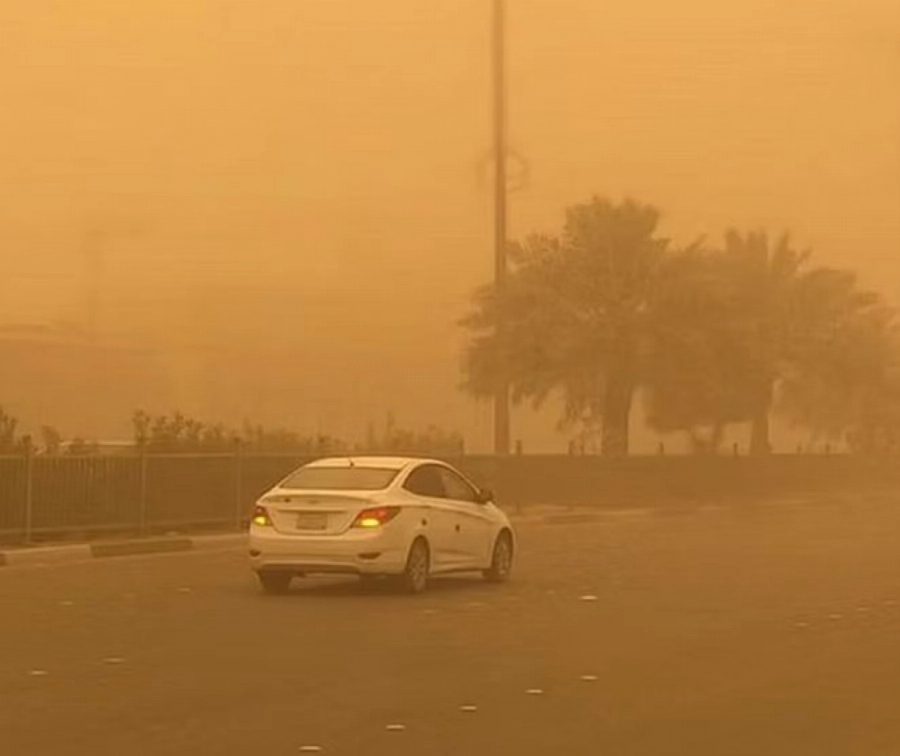
The National Center for Meteorology has warned of the continued impact of active winds stirring up dust and sand in parts of the Eastern Region, Riyadh, Al-Qassim, Hail, Tabuk, Al-Madinah Al-Munawwarah, and Makkah Al-Mukarramah.
The center confirmed that rainy thunderclouds accompanied by active winds will continue to form over parts of the highlands of Jazan, Asir, Al-Baha, and Makkah Al-Mukarramah.
It pointed out that surface wind conditions over the Red Sea will be northwesterly to northerly at speeds of 15-40 km/h in the northern and central parts, and northwesterly to westerly at speeds of 12-30 km/h in the southern part.
Eastern Region
The Eastern Region is a broad term that can refer to multiple cultural areas, but in the context of Ghana, it is a historic administrative region known for its lush hills and cocoa farming. It is home to the Akwapim-Togo Ranges and important cultural sites like the Aburi Botanical Gardens, established in the 1890s. Historically, the region played a key role in the trans-Atlantic slave trade and later became a center for colonial and post-independence economic activities.
Riyadh
Riyadh is the capital and largest city of Saudi Arabia, located in the heart of the Arabian Peninsula. Originally a small, walled oasis town, it rose to prominence in the 18th century as the stronghold of the Al Saud dynasty and later became the unified kingdom’s capital in 1932. Today, it is a modern metropolis that blends its historic roots, including landmarks like the Masmak Fortress, with rapid urban development and a growing global profile.
Al-Qassim
Al-Qassim is a region in central Saudi Arabia known for its fertile agricultural land, particularly its date palm groves, and is often called the “breadbasket” of the kingdom. Historically, it has been a significant crossroads for trade and pilgrimage routes, with its capital, Buraydah, playing a key role in the unification of Saudi Arabia in the early 20th century. Today, the region is famous for its annual date festival and traditional Najdi architecture.
Hail
Hail is a historic city in northwestern Saudi Arabia, known for its rich cultural heritage and strategic location as a crossroads for ancient trade and pilgrimage routes. It was once the capital of the Al Rashid dynasty in the 19th century, playing a key role in the region’s political history before being incorporated into modern Saudi Arabia. Today, Hail is celebrated for its traditional architecture, including the well-preserved A’arif Fort and Barzan Palace, and hosts vibrant festivals like the Hail Rally.
Tabuk
Tabuk is a city in northwestern Saudi Arabia with a rich history, serving as a strategic military and trade hub since ancient times. It is famously associated with the Islamic Prophet Muhammad’s expedition to Tabuk in 630 CE, which strengthened Muslim influence in the region. Today, Tabuk blends its historical heritage with modern development, featuring landmarks like the Tabuk Fortress and the nearby Al-Hijr (Madain Saleh) archaeological site.
Al-Madinah Al-Munawwarah
Al-Madinah Al-Munawwarah, often simply called Medina, is the second holiest city in Islam, located in western Saudi Arabia. It is revered as the city where the Prophet Muhammad migrated in 622 CE (the Hijra) and established the first Muslim community, and it houses his final resting place within the Prophet’s Mosque (Al-Masjid an-Nabawi). Historically a major oasis settlement, Medina served as the capital of the early Islamic caliphate and remains a key pilgrimage destination for millions of Muslims each year.
Makkah Al-Mukarramah
Makkah Al-Mukarramah, located in Saudi Arabia, is the holiest city in Islam and the birthplace of the Prophet Muhammad. Its history centers on the Kaaba, a sacred structure built by Prophet Abraham and his son Ishmael, which Muslims face during prayer. Today, Makkah is the destination of the Hajj pilgrimage, a religious duty for Muslims worldwide, and is home to the Masjid al-Haram, the largest mosque on earth.
Red Sea
The Red Sea is a narrow seawater inlet of the Indian Ocean, lying between Africa and Asia, renowned for its vibrant coral reefs and rich marine biodiversity. Historically, it has been a crucial trade route since ancient times, connecting the Mediterranean to the Indian Ocean via the Suez Canal since 1869. Its name may derive from seasonal blooms of red-hued algae or the reddish mountains along its shores.