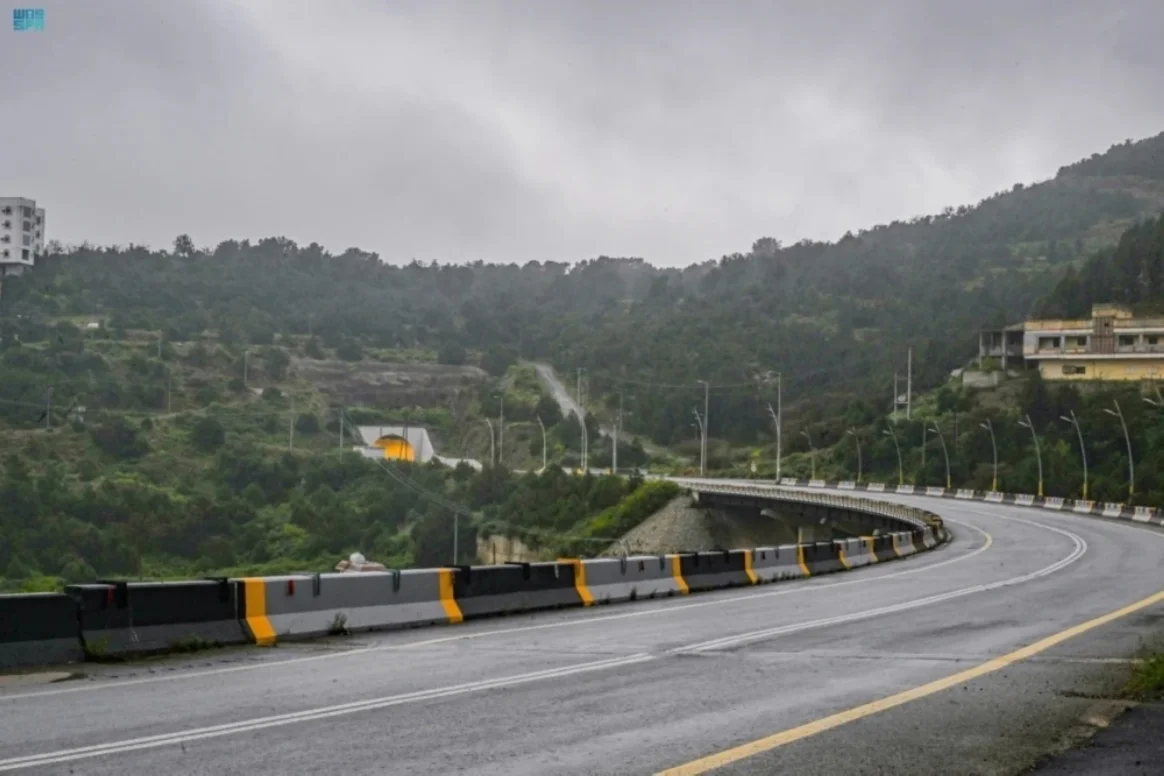
The National Center of Meteorology has warned of the continued impact of active, dust-raising winds on the eastern parts of the highlands in the western and southwestern regions of the Kingdom, as well as on parts of the Al-Madinah, Hail, Al-Qassim, and Riyadh regions, extending to the northern parts of the Eastern Province.
The center noted that scattered rainfall and fog formation cannot be ruled out in parts of those areas, as well as in parts of the Al-Jawf and Northern Borders regions.
It indicated that surface winds over the Red Sea will be northwesterly to northerly over the northern and central parts, and southeasterly to southerly over the southern part, with speeds of 15-30 km/h reaching up to 45 km/h, accompanied by the formation of rainy thunderclouds over the central and southern parts.
Al-Madinah
Al-Madinah, officially known as Medina, is a city in western Saudi Arabia revered as the second holiest city in Islam. It is historically significant as the site where the Prophet Muhammad migrated to in 622 CE (the Hijrah), establishing it as the first capital of the Islamic community and the location of his tomb within the Prophet’s Mosque (Al-Masjid an-Nabawi). The city remains a major pilgrimage destination and a central religious and scholarly hub in the Islamic world.
Hail
Hail is a historic region and city in northern Saudi Arabia, known for its central role in the classical Arabic poetry and folklore of the **Arabian Peninsula**. It was the capital of the **Emirate of Jabal Shammar** in the 19th and early 20th centuries, ruled by the influential **Al Rashid dynasty**, who were rivals to the House of Saud. The area is also famous for the iconic **Barzan Palace** and its surrounding desert landscapes, which are part of the traditional Najd cultural heartland.
Al-Qassim
Al-Qassim is a central region of Saudi Arabia, historically known as a major agricultural heartland and a crossroads for ancient trade routes. It is famous for its date palm groves and traditional Najdi architecture, and its history is deeply tied to the early formation of the First Saudi State in the 18th century, with the city of Unaizah serving as a key cultural and commercial center. Today, it hosts the popular annual **”Buraidah Dates Festival,”** celebrating its most famous agricultural product.
Riyadh
Riyadh is the capital and largest city of Saudi Arabia, serving as the nation’s political, financial, and administrative center. Historically a walled oasis town and the historic seat of the Al Saud dynasty, it transformed dramatically in the 20th century after the discovery of oil, evolving from a modest desert settlement into a modern, sprawling metropolis.
Eastern Province
The Eastern Province is a key region in Saudi Arabia, historically known as **Al-Ahsa** or **Al-Hasa**, which was a major center of trade and agriculture for centuries due to its vast oasis. Today, it is the heart of the nation’s oil industry and is home to the UNESCO-listed **Al-Ahsa Oasis**, one of the world’s largest, showcasing a rich history of human settlement dating back to prehistoric times.
Al-Jawf
Al-Jawf is a historical region in northwestern Saudi Arabia, known for its ancient oasis settlements and archaeological significance. It was home to the early kingdoms of Dadan and Lihyan, and later the Nabateans, serving as a crucial crossroads for frankincense trade routes. Key sites include the ruins of Al-Ula (nearby), the standing stones of Rajajil, and the old city of Dumat al-Jandal.
Northern Borders
The Northern Borders region is a vast, historically significant area in Saudi Arabia, known for its ancient trade routes and archaeological sites like the rock art at Jubbah. It served as a crucial crossroads for civilizations and caravans traversing the Arabian Peninsula. Today, it is a developing frontier province that preserves this deep heritage while focusing on modern growth and cultural tourism.
Red Sea
The Red Sea is a seawater inlet of the Indian Ocean, lying between Africa and Asia, and is historically one of the world’s most important trade routes, connecting to the Mediterranean via the Suez Canal. Its name is often thought to derive from seasonal blooms of red algae or from the reddish mountains along its shores. For millennia, it has been a vital corridor for commerce and cultural exchange between empires, from ancient Egypt to the Roman and Ottoman empires.