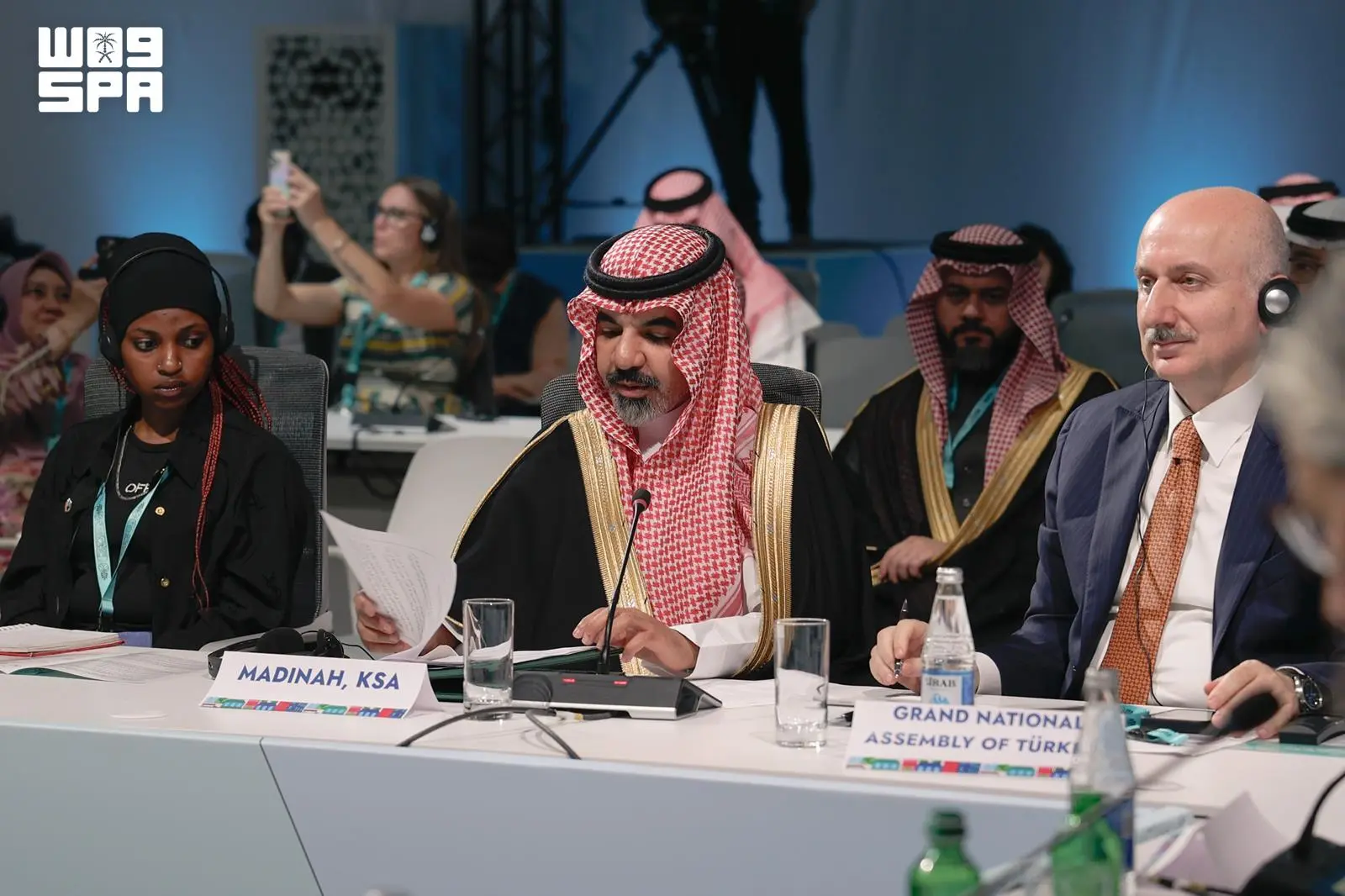
The Mayor of Madinah Region and CEO of the Region Development Authority, Engineer Fahd bin Muhammad Al-Bulaishi, confirmed that the global challenge in the housing sector is no longer limited to providing housing units, but has become about building integrated urban systems that ensure quality of life and create more resilient and sustainable cities. This came during his participation in the roundtable meeting of local and regional governments as part of the 13th World Urban Forum (WUF13) held in Baku, Azerbaijan, with city leaders and decision-makers to discuss the future of housing and urban development. He explained that Madinah presents an advanced urban model in addressing housing challenges at the local level, based on aligning global goals with local realities through voluntary reviews of sustainable development goals, transforming international commitments into tangible development outcomes. He pointed out that using data as a foundation for urban decision-making has improved planning efficiency, directed investments, and achieved a better balance in service distribution, enhancing residents’ quality of life and elevating visitor experiences. He clarified that Madinah, under Saudi Vision 2030 and with the support and empowerment of the wise leadership, and under the follow-up and supervision of Prince Salman bin Sultan bin Abdulaziz, Governor of Madinah Region and Chairman of the Region Development Authority Board, is moving towards achieving a balanced equation that combines preserving its cultural identity with managing rapid urban growth, as part of its preparation to receive 30 million visitors annually by 2030, within a flexible and sustainable urban environment. He emphasized that the role of local government and private sectors forms the cornerstone in formulating effective urban solutions, noting that understanding the local context and integrating efforts with global frameworks are key to building cities capable of facing challenges and achieving sustainable development. Madinah Region’s participation is part of the Kingdom’s delegation in the 12th World Urban Forum (WUF12), which serves as an international platform for shaping future urban directions, with city leaders, decision-makers, and international organizations to discuss innovative solutions for housing and urban development issues, and to enhance building safe and resilient cities and communities, contributing to advancing sustainable development paths globally.
Madinah
Madinah, also known as Medina, is a city in western Saudi Arabia and the second holiest city in Islam after Mecca. Its history is deeply tied to the Prophet Muhammad, who migrated there in 622 CE, marking the beginning of the Islamic calendar, and it became the capital of the early Muslim community. The city is home to the Prophet’s Mosque, which contains his tomb, and it remains a major pilgrimage destination for Muslims worldwide.
Madinah Region
The Madinah Region in western Saudi Arabia is historically and religiously significant as the site of Medina, the second holiest city in Islam. It was originally known as Yathrib before being renamed Madinat al-Nabi (City of the Prophet) after the Prophet Muhammad’s migration there in 622 CE, marking the beginning of the Islamic calendar. The region houses the Prophet’s Mosque, his tomb, and numerous historic mosques and battlefields from early Islamic history.
Baku
Baku is the capital and largest city of Azerbaijan, located on the Caspian Sea. Its history dates back to ancient times, with the walled Inner City (Icherisheher) containing medieval structures like the Maiden Tower and the Palace of the Shirvanshahs. In the modern era, Baku became a major oil boomtown in the late 19th and early 20th centuries, and today it blends its rich cultural heritage with futuristic architecture like the Flame Towers.
Azerbaijan
Azerbaijan, located at the crossroads of Eastern Europe and Western Asia, has a rich history shaped by its position along the ancient Silk Road and successive empires, including Persian, Russian, and Soviet rule. Its capital, Baku, is renowned for its medieval walled Inner City (Icherisheher) and modern Flame Towers, reflecting the country’s blend of tradition and oil-driven modernity. Since regaining independence from the Soviet Union in 1991, Azerbaijan has developed a unique cultural identity, with UNESCO World Heritage sites like the Gobustan Rock Art and the cultural landscape of the Khinalug village.
Saudi Vision 2030
Saudi Vision 2030 is a comprehensive economic and social reform plan launched in 2016 by Crown Prince Mohammed bin Salman to diversify Saudi Arabia’s economy away from oil dependency. The initiative aims to develop sectors like tourism, entertainment, and technology, while also empowering women and improving quality of life. It represents a historic shift for the kingdom, moving toward a more open and globally integrated society while preserving its cultural heritage.
Prince Salman bin Sultan bin Abdulaziz
Prince Salman bin Sultan bin Abdulaziz is a prominent member of the Saudi royal family, serving as the Governor of Al-Baha Province since 2017. A son of the late Crown Prince Sultan bin Abdulaziz, he has held various governmental roles, including Deputy Governor of Al-Baha and advisor in the Ministry of Defense, contributing to regional development and cultural preservation in Saudi Arabia.