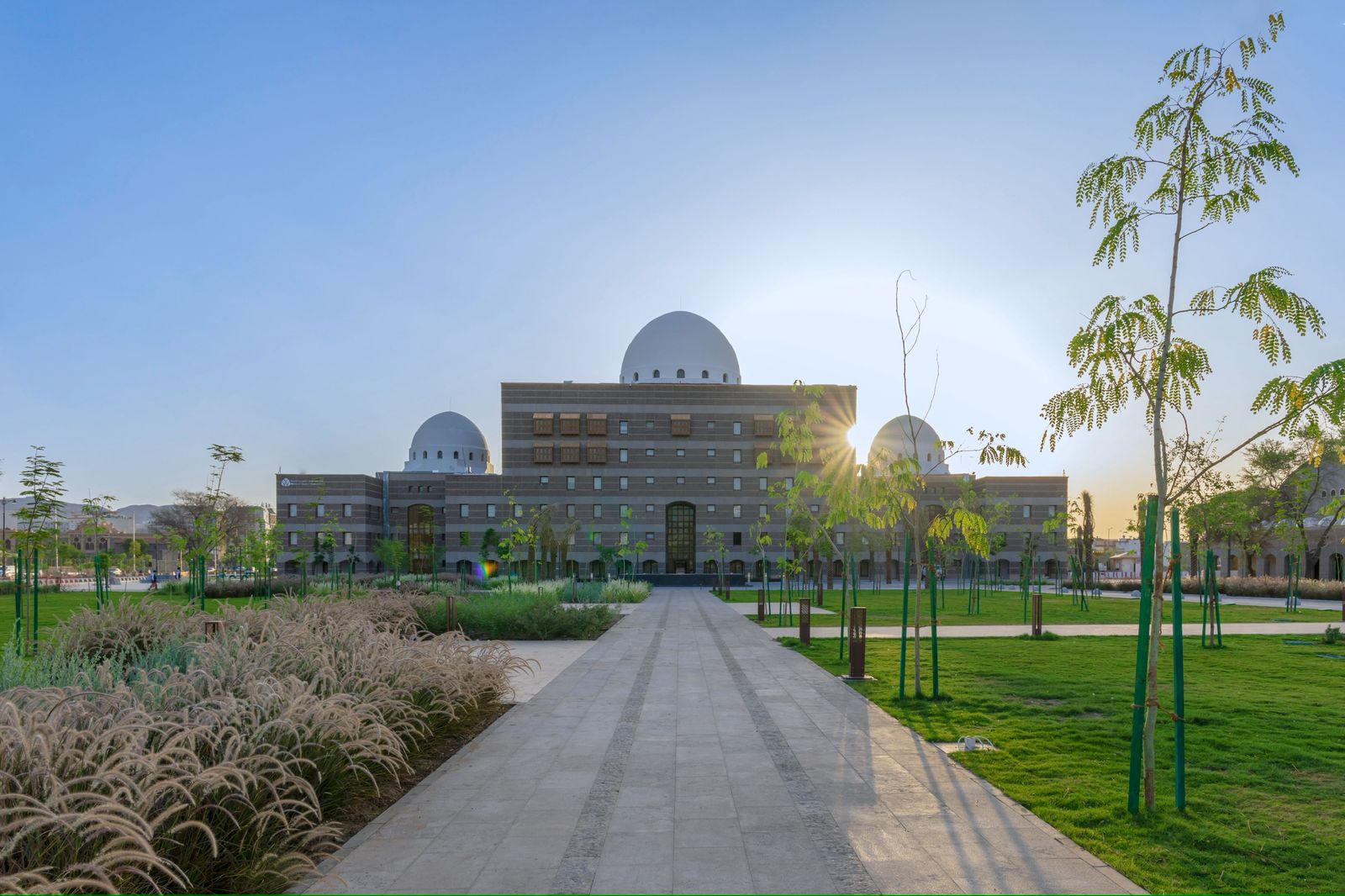
The Medina Region Municipality has strengthened the guidance and direction system in various locations and main roads in Medina, as part of its operational plans for the Hajj season of 1447 AH. The aim is to facilitate the movement of pilgrims, visitors, and residents, improve the quality of life, and enhance the travel experience and access to vital and historical sites. The municipality stated that efforts included installing 105 pedestrian guidance signs to help ensure safe movement, along with 334 signs for hotel numbering to make it easier to reach accommodations, and 344 traffic signs to improve road safety and increase traffic flow efficiency on main roads and axes. It also noted that the work included installing 150 signs for pedestrian walkway numbering to organize smooth movement, 89 street name signs to improve route clarity, in addition to 4 vehicle guidance signs to support traffic and movement. The system also included 4 structures at the entrances to the Prophet’s Mosque parking lots to facilitate entry and exit, 4 structures for identifying the central area, and 4 clock structures to help with time management and movement, as well as 9 informational signs about historical sites to enrich the religious and cultural experience for pilgrims and visitors to Medina. The municipality emphasized that these efforts are part of an integrated system that harnesses its capabilities to serve pilgrims during the Hajj season, reflecting the level of care for municipal services and supporting the goals of improving the urban landscape and quality of life in Medina.
Medina
Medina, officially known as Al-Madinah Al-Munawwarah, is a city in western Saudi Arabia that holds immense religious significance as the second holiest city in Islam, after Mecca. It is famously the burial place of the Prophet Muhammad, who migrated there in 622 CE (an event known as the Hijra) and established the first Muslim community, with the Prophet’s Mosque (Al-Masjid an-Nabawi) serving as its spiritual heart. Today, Medina is a major pilgrimage destination, visited by millions of Muslims annually who come to pray at the mosque and pay respects at the Prophet’s tomb.
Prophet’s Mosque
The Prophet’s Mosque, located in Medina, Saudi Arabia, is one of Islam’s holiest sites, originally built by the Prophet Muhammad himself in 622 CE after his migration from Mecca. Over centuries, it has been expanded and renovated by various Islamic rulers, including the Umayyads, Ottomans, and most recently the Saudi dynasty, now featuring a distinctive green dome marking the Prophet’s tomb. It serves as a major pilgrimage destination and a center for worship and Islamic learning.
Medina
Medina, located in western Saudi Arabia, is the second holiest city in Islam after Mecca, known as the final resting place of the Prophet Muhammad. Historically called Yathrib, it was renamed Medina (meaning “the city”) after the Prophet emigrated there in 622 CE, an event known as the Hijra, which marks the beginning of the Islamic calendar. The city is home to the Prophet’s Mosque (Al-Masjid an-Nabawi), a major pilgrimage site for Muslims worldwide.
Prophet’s Mosque
The Prophet’s Mosque, located in Medina, Saudi Arabia, is one of the holiest sites in Islam, originally built by the Prophet Muhammad himself in 622 CE. It served as his home, a community center, and the first mosque where he led prayers, later becoming his burial place. Over centuries, it has been expanded and renovated, notably by the Umayyads, Ottomans, and modern Saudi rulers, now accommodating millions of worshippers annually.
Prophet’s Mosque parking lots
The Prophet’s Mosque parking lots in Medina, Saudi Arabia, are large, modern facilities designed to accommodate the millions of pilgrims who visit the mosque annually. Before the expansion projects of the 20th and 21st centuries, parking was limited, but recent developments—part of the Saudi government’s efforts to enhance the Hajj and Umrah experience—have created vast, multi-level parking areas surrounding the mosque. These lots are essential for managing the immense flow of visitors while preserving the sacred site’s accessibility and tranquility.