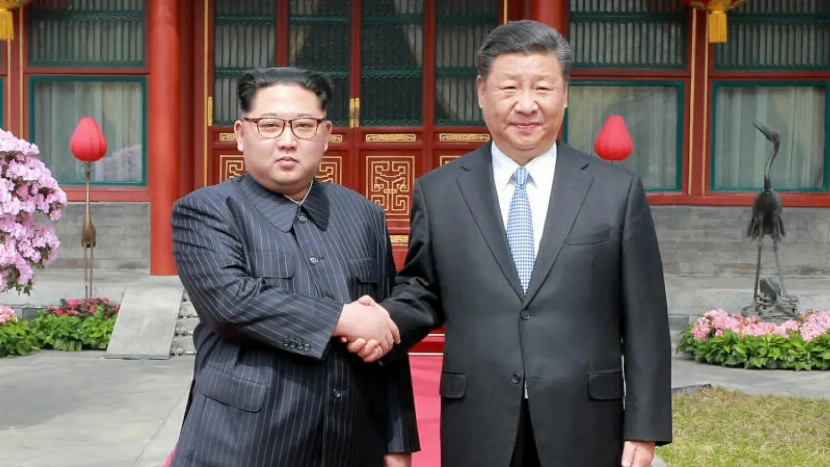
The Korean Peninsula is a region in East Asia divided into two distinct nations: the democratic Republic of Korea (South Korea) and the socialist Democratic People’s Republic of Korea (North Korea). Historically unified for centuries under various dynasties, it was annexed by Japan in 1910 and liberated in 1945, only to be divided along the 38th parallel after World War II, leading to the Korean War (1950-1953) and a lasting conflict. Today, the peninsula is known for its rich cultural heritage, including ancient sites like Gyeongju, as well as the stark political
Pyongyang
Pyongyang, the capital of North Korea, is one of the oldest cities in Korea, with a history dating back over 2,000 years to its founding as the capital of the ancient kingdom of Goguryeo. Heavily rebuilt after being devastated during the Korean War (1950–1953), the city is now characterized by monumental architecture, grand squares, and socialist realist statues, including the iconic Juche Tower. As the political, cultural, and economic center of the country, Pyongyang remains largely isolated from international influence, offering visitors a carefully curated glimpse into North Korea’s ideology and history.
Korean Peninsula
The Korean Peninsula is a region in East Asia divided into two distinct countries: democratic South Korea and communist North Korea, separated by the heavily fortified Korean Demilitarized Zone. Its history spans thousands of years, from ancient kingdoms like Goguryeo, Baekje, and Silla, through unified dynasties such as Goryeo and Joseon, to Japanese colonization and the devastating Korean War (1950–1953). Today, the peninsula remains a site of cultural richness and ongoing political tension.
Kim Il-sung Square
Kim Il-sung Square is a large public square in Pyongyang, North Korea, named after the country’s founding leader. It was completed in 1954 and has served as the main venue for military parades, mass rallies, and other state events, often showcasing the regime’s political and military power. The square is historically significant as a symbol of the Kim family’s leadership and North Korea’s socialist ideology.
Juche Tower
The Juche Tower is a monumental granite structure in Pyongyang, North Korea, completed in 1982 to commemorate the 70th birthday of Kim Il-sung. It symbolizes the Juche ideology, which emphasizes national self-reliance and independence. The tower stands 170 meters tall, with a torch at the top representing the guiding light of this state philosophy.
Joseon Dynasty
The Joseon Dynasty was a Korean dynastic kingdom that lasted for over five centuries, from 1392 to 1897. Founded by General Yi Seong-gye, it succeeded the Goryeo Dynasty and established Neo-Confucianism as the state ideology, profoundly shaping Korean culture, society, and governance. The dynasty is renowned for creating the Korean alphabet, Hangul, under King Sejong the Great, and for its enduring cultural and architectural legacies, such as the royal palaces in Seoul.
Gyeongju
Gyeongju, often called “the museum without walls,” is a historic city in South Korea that served as the capital of the ancient Silla Kingdom for nearly a millennium. Its rich history is preserved in numerous UNESCO World Heritage sites, including the Bulguksa temple, the Seokguram grotto, and the royal tombs of the Silla rulers in the form of massive grassy mounds. Today, it stands as a major cultural destination, offering a deep glimpse into Korea’s ancient Buddhist and royal heritage.
Gojoseon
Gojoseon was the first known Korean kingdom, traditionally founded in 2333 BCE by the legendary figure Dangun. It controlled much of the Korean Peninsula and parts of Manchuria before its fall in 108 BCE, when it was conquered by the Chinese Han dynasty. Today, Gojoseon is considered a foundational state in Korean history and culture.
38th parallel
The 38th parallel is a circle of latitude that roughly divides the Korean Peninsula, most famously serving as the pre-Korean War boundary between North and South Korea following World War II. Established in 1945 as a temporary measure to accept Japan’s surrender, it became a permanent political and military demarcation line after the 1953 armistice, which created the Korean Demilitarized Zone (DMZ). Today, the 38th parallel remains a symbol of the Cold War division and ongoing tensions between the two Koreas.