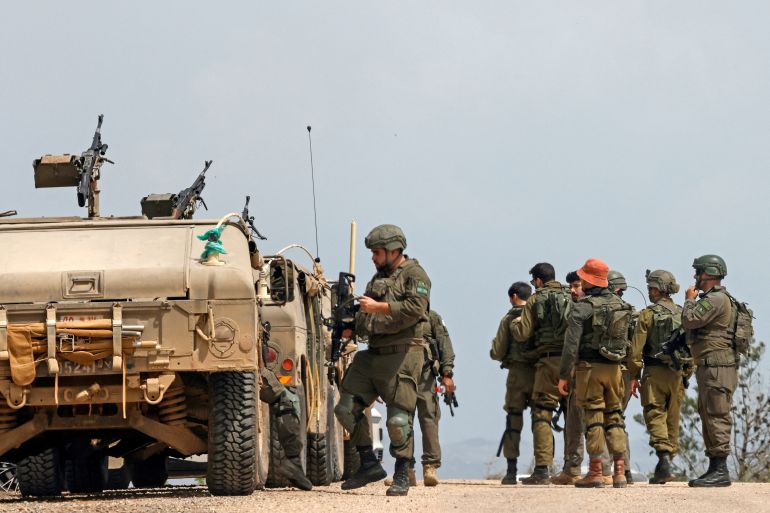
Israeli newspaper Haaretz reported that regular and reserve soldiers of the Israeli occupation army are looting large quantities of civilian property from homes and shops, according to testimonies from soldiers and field commanders.
The newspaper explained that stealing motorcycles, televisions, paintings, sofas, and carpets has become a widespread recurring phenomenon, and that both senior and junior field leadership are aware of it, yet they take no disciplinary action to eliminate it.
In response, the newspaper quoted the Israeli army as saying it takes disciplinary and criminal action when necessary, and that the military police conduct inspections “at the northern border crossing when leaving combat zones.”
However, the irony pointed out by the newspaper is that some military police checkpoints set up at exit points from southern Lebanon to prevent looting have been removed, and no checkpoints were ever established at other exit points.
Looting in the Open
Regarding the details of the thefts, the newspaper quoted witnesses saying that occupation army soldiers load their vehicles with stolen equipment without attempting to hide it while leaving.
One soldier was quoted as saying: “It’s on a crazy scale; anyone takes something—TVs, cigarettes, tools, or anything else—immediately puts it in their vehicle or hides it aside, not inside the base, but it’s no secret. Everyone sees and understands.”
According to the soldiers, some commanders ignore this phenomenon, while others condemn it but refrain from punishing the thieves.
One soldier testified: “With us, they don’t even comment or get angry. The battalion commander and brigade commander know everything.” Another said: “In one field case in Lebanon, a commander caught fighters leaving in a jeep with items. He yelled at them and ordered them to throw away the loot, but that was the end of it; it didn’t lead to an investigation.” A third soldier added: “Commanders speak openly against this phenomenon and say it’s serious, but they do nothing.”
No Punishment for Thefts
Haaretz quoted soldiers saying that looting is not part of the official policy of the Israeli army, but they noted it is exacerbated by weak enforcement of the law.
One witness explained that “the battalion commander and brigade commander complain and get angry, but without actions, these remain just empty words.” Another soldier added that “leniency in enforcing the law sends a clear message. If they had dismissed or imprisoned someone, or deployed military police at the border, it would have stopped immediately. But when there is no punishment, the message is clear.” Indeed, the soldiers estimated that the variation in the scale of looting between units—nearly non-existent in some, while widespread in others—is largely linked to the level of law enforcement by commanders and the standards they instill in their subordinates.
Theft for Service
The newspaper noted that some soldiers linked the continuation of fighting since October 7, 2023, to the decision not to involve military police in investigating looting committed by reserve soldiers.
One said: “Soldiers have been serving here for over 500 days, and commanders today—whether company, battalion,