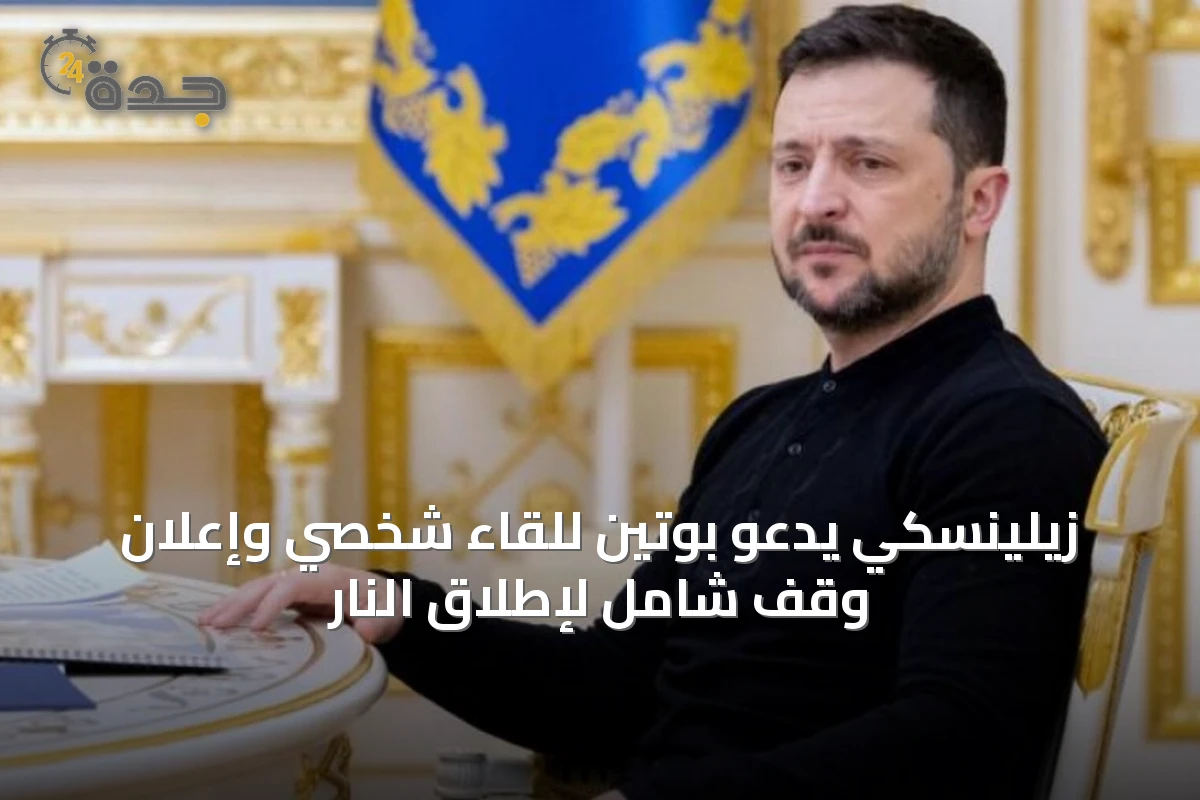
Ukrainian President Volodymyr Zelenskyy sent an open letter addressed to his Russian counterpart, Vladimir Putin, proposing a direct meeting between them, affirming his readiness to negotiate a comprehensive ceasefire.
Proposal for prisoner exchange
In the same letter, Zelenskyy mentioned the possibility of exchanging all prisoners of war from both sides, considering that this step could serve as a good prelude to ending the ongoing conflict.
Kremlin’s response to the proposal
The Russian administration responded to the letter, stating that Zelenskyy could visit Moscow at any time he chooses, according to what official media reported from Kremlin spokesman Dmitry Peskov. Peskov added that the Russian president has not yet reviewed the content of Zelenskyy’s letter.
Few direct initiatives since 2022
This open letter is one of a limited number of attempts in which Zelenskyy has directly addressed Putin since the start of the Russian invasion in 2022.
Obstacles to international negotiations
Talks between the two sides have been at a standstill for several months, especially with the shifting of American attention, which plays a mediating role, to the conflict with Iran. Negotiations held in the cities of Istanbul, Abu Dhabi, and Geneva have not yielded any progress on the core issue of territorial sovereignty, particularly in the eastern regions of Ukraine.
Moscow
Moscow is the capital and largest city of Russia, with a history dating back to its founding in 1147 by Prince Yuri Dolgorukiy. It has served as the political, economic, and cultural heart of the country, witnessing key events such as the rise of the Tsardom of Russia, the Soviet era, and the modern Russian Federation. Today, Moscow is known for iconic landmarks like the Kremlin, Red Square, and St. Basil’s Cathedral, reflecting its rich and turbulent past.
Istanbul
Istanbul, historically known as Byzantium and later Constantinople, is a transcontinental city in Turkey that straddles Europe and Asia across the Bosphorus Strait. Founded by Greek colonists around 660 BCE, it served as the capital of the Roman/Byzantine Empire and later the Ottoman Empire, leaving a rich legacy of landmarks like the Hagia Sophia and Topkapi Palace. Today, it remains Turkey’s largest city and a vibrant cultural hub, blending ancient history with modern life.
Abu Dhabi
Abu Dhabi is the capital of the United Arab Emirates and has transformed from a modest pearling and fishing village in the 18th century into a modern global metropolis after the discovery of oil in the 1950s. The city is renowned for its cultural landmarks, including the Sheikh Zayed Grand Mosque, and its commitment to preserving heritage through sites like Qasr Al Hosn, the oldest stone building in the city. Today, it serves as a hub for commerce, culture, and tourism while balancing rapid development with traditional Emirati values.
Geneva
Geneva is a major global city in Switzerland, known for its role as a hub for international diplomacy and humanitarian efforts, hosting the European headquarters of the United Nations and the Red Cross. Historically, it was a key center of the Protestant Reformation under John Calvin in the 16th century, and it later became the seat of the League of Nations after World War I. The city’s picturesque setting on Lake Geneva and its cultural landmarks, such as the Jet d’Eau fountain and St. Pierre Cathedral, reflect its blend of natural beauty and rich history.